Lawrence Jones reviews Ancestry, by Albert Wendt.
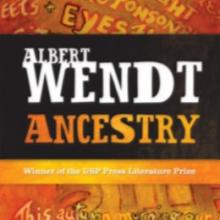
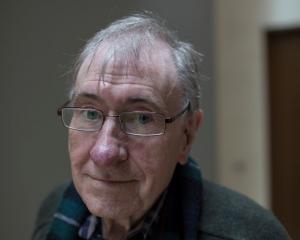
Albert Wendt
Huia
When Sons for the Return Home, Albert Wendt's first novel, appeared in 1973, he was, as Iain Sharp said recently in the Listener, "the only Pacific Island writer on the horizon", and he was taken by readers and critics as the representative literary voice of Oceania.
He confirmed this position with his next two novels, Pouliuli (1977) and Leaves of the Banyan Tree (1979), as well as with his first collections of poetry and short fiction.
He has always taken seriously the task of the representation of his culture, as he reaffirmed in a recent online interview with Maryanne Pale: "We need to write, paint, sculpt, weave, dance, sing and think ourselves into existence.
"For too long other people have done it for us - and they've usually stereotyped us, or created versions of us that embody their own hang-ups and beliefs and prejudices about us. So we have to write our own stories!"
But he has also insisted that his representation of his culture is personal, that other writers and artists produce their own representations, and that cultural understanding emerges from a range of representations, not from a single "representative" cultural spokesman.
In a long tertiary academic career, from 1974 to 2008, at the University of the South Pacific, the University of Auckland and the University of Hawaii, as teacher of creative writing and of Pacific and New Zealand literature, as essayist, and as anthologist, he has helped to foster the development of a multivoiced Pacific Island literature.
Since his return to New Zealand from Hawaii in 2008, Wendt has had a busy retirement, based in Ponsonby, writing fiction and poetry and painting, an early interest he had resumed in 2000.
Ancestry, a collection of 14 stories, was launched at the same time as From Manoa to a Ponsonby Garden, a collection of poems, and a new novel is due out next year.
The stories in Ancestry, he told Maryanne Pale, "are about people in the Samoan and Pakeha middle class - mainly successful university teachers and students, architects, accountants etc and their families. It looks at love and culture and people trying to survive in sometimes very trying circumstances".
That last sentence reads almost like a general description of Sons for the Return Home, and the book bears an interesting relationship to that novel.
The novel came out of Wendt's experience as a young Samoan coming to New Zealand for secondary and tertiary education, while the new stories come out of the experience of returning to New Zealand in retirement.
Wendt's fiction of the later 1970s and the 1980s focused on the Samoa in which he grew up, while the fiction of the 1990s was more "international" in its subject and its postmodern-influenced narrative mode.
Ancestry is a return to the relatively straightforward realism of Sons for the Return Home as well as to the Samoan-New Zealand subject matter.
However, the "sometimes very trying circumstances" that Wendt's characters encounter in Ancestry are very different from those encountered by the protagonist of that first novel, for the New Zealand of these stories is very different from that of the novel and those Samoans trying to deal with it are very different.
The young Samoan males of Robocop in Long Bay and Absences do not face the aggravations of the narrow racism of Palagi society circa 1960 but rather the dangerous temptations of an immediate-gratification youth culture of drugs and alcohol, electronic entertainments, free sex and a sense of entitlement to the fruits of affluence.
The retired and successful achievers of One Rule have to bring themselves, against their own cultural family values and wishes, to reject the grandson who charmingly and cynically tries to exploit them as cash-cows to feed his own self-indulgent lifestyle.
Or, a very different "trying circumstance" - the successful retired architect of Interrogations and the title story must learn to accept his wife, daughter and grandson going to the "colonialist" Anzac Dawn Parade because the grandfather of the daughter's estranged Palagi husband died at Gallipoli, while his wife does not accompany him (but his beloved and loving grandson does) on his monthly visit to his parents' grave.
Wendt told Maryanne Pale most of the stories in the volume came "in 2012 in one intense period of compulsive writing"; the stories feel as if he had been visited by a host of characters with their own life stories who might have been the basis of novels (the feeling that a collection of Alice Munro stories can give), but that he decided to use them in longish stories, some of which feature recurring characters.
The stories average 22 pages each; almost all of them include some summaries of the central characters' personal histories - marriages, divorces, childhoods, careers, friendships - what we need to know to understand the stories, the kind of things that would be dramatised in earlier chapters in a novel.
The back stories are told in outline, but in the narrative present there is rich, sensuous detail in the sight, sound and especially the smell of things - clothing, food, gardens, cold showers.
The stories are also rich in psychological detail, the nuances of thought and feeling, especially the small irritations and pleasures of relationship in marriages and partnerships, in parent-child or grandparent-child interchanges, in friendships.
Most of the point-of-view characters are Samoan, but there are also some nice touches with Palagi characters' views of Samoans, as in Neighbours, where we see the responses of a Palagi lecturer and his wife to the family celebration of the 75th birthday of their Samoan neighbour as the lecturer lies about his own whakapapa to keep secret the shameful circumstances of his mother's death, which still obsess him and which he has not even shared with his wife.
Especially novelistic in its fullness is the presentation of Laura, a withdrawn young Palagi woman who had an extremely painful childhood, as she comes out of her shell first in Friendship in her relationship with a young Maori woman student and her Pacific Island circle of friends and then, after her marriage to a Samoan student in the group in her first visit to his village in Samoa when she throws herself into learning traditional Samoan village skills (aided by a reading of an Albert Wendt novel). The two stories could easily be chapters in a novel about Laura's life.
Wendt's extension of his range to the representation of the Ponsonby Samoan and Palagi society around him in this extremely readable collection of short stories is a contribution to the evolving depiction of an incipiently multicultural New Zealand and of the Samoan New Zealanders who are part of it.
• Lawrence Jones is an emeritus professor of English.