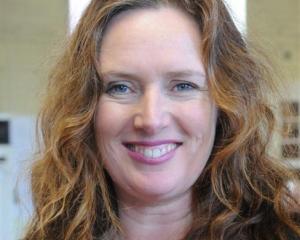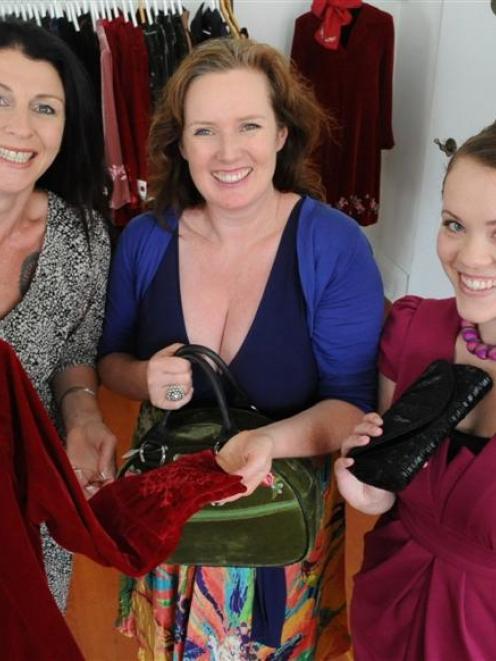
The experience of clothes can be triumphant or mortifying, nostalgic or sad, and evoke relationships of all kinds, according to Lara Macgregor, artistic director of the Fortune Theatre. She is directing the New Zealand premiere Love, Loss and What I Wore, which explores the joys and tribulations of clothes and their funny poignant stories. It will be playing during iD Fashion Week.
She remembers the mortifying experience of being taken by her mother to buy her first bra.
''I've never spoken to anyone about it, but you forget that every woman goes through that experience - or when your dad realises that you've matured and he can no longer hug you the way he used to. All those things pertain to being a woman,'' she says.
''Essentially [the play's] a celebration of what it is to be a woman. It overtakes you in a very subtle and beautiful way. For me personally, I don't feel I have a connection to clothing and I don't collect shoes. I get up, put on whatever's clean, and that's about it. So I wasn't sure how much I would personally be able to relate to it, but it moved me a great deal because it was about mothers and sisters and daughters. It's quite beautiful,'' Macgregor says.
The play was recommended to her by Elric Hooper, former director of the Court Theatre in Christchurch, who had seen it in New York where it was playing off-Broadway.
''I found it interesting that a play that's essentially for women and about women, would have so much resonance with men as well. I think any man who has a daughter, loves his wife or his mother is also going to benefit a great deal from these women sharing these fragments.''
The main character, Gingy, is a wealthy New York woman, but the others come from different backgrounds and all over the United States. They share stories and memories, their emotions triggered by clothes or accessories.
They talk about brownie uniforms, Gingy's mother in a fox stole is a trigger for a memory, a coral wool jersey dress when jersey dresses were in fashion, a pink satin dress with a bouquet that leads to stories about proms, maternity dresses, the wrap dress, a paper dress when that became a trend, jewellery, boots, mini-dresses and, of course, fashion faux pas, which we all have, she says.
''There's a wonderful monologue in there about the handbag and how it's basically a woman's rubbish bin for everything in life. They talk about things you have in a handbag and why - it sounds sort of trite when you are talking about it in this vein but it has a surprising depth in it and there's a lot of personal history.''
One woman has a tender, heartfelt story about a bathrobe that belonged to her mother who died when she was a child, and some time later her stepmother came downstairs in an identical bathrobe which brought up a lot of memories.
''A lot of the stories are to do with mothers and daughters and the arguments about what mother wanted you to wear and what she felt was in fashion and what you felt was in fashion.''
As well as the longer stories there are snappy ''clotheslines'' where the actresses interchange brief, chorus-like lines on a topic, such as fitting rooms, fashion crimes or having nothing to wear.
''It's about how relationships shift and change, a sisterhood, I suppose, in a lot of respects. Older sisters looking after younger sisters and mothers and daughters particularly, and how delicate and dependent and fragile that relationship can be. It's about relationships, but they are elicited through women's clothes.''
Written by sisters Delia and the late Nora Ephron, and based on Ilene Beckerman's book of the same name, the show has been playing off-Broadway for several years. Five actresses play many characters, including Gingy, the key character and mother figure who ties it all together.
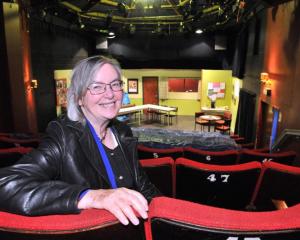
Unusually, the cast changes week by week. Rima te Wiata and Alison Quigan, who are permanent members, will be joined by some of the country's finest actresses for a week at a time. They include the grand dame of New Zealand theatre, Dame Kate Harcourt, Claire Dougan, Jennifer Ward-Leyland, Ginette McDonald, Sara Wiseman, Jennifer Ludlum, Barbara Power, Lara Macgregor, Claire Dougan, Nadya Shaw-Bennett and Jen Ludlam.
''There's a lot of talk about fashion faux pas. I hope the actresses bring their own so I can highlight them in the programme and talk about things like the years when we tried to squash ourselves into spaghetti jeans,'' Macgregor says.
See it
Love, Loss and What I Wore, written by Norah and Delia Ephron, based on the book by Ilene Beckerman, opens at the Fortune Theatre on March 2 and plays until March 23.