Despite the cold rain on the windows and the fresh snow on the hills, in the garden it is obvious that spring is almost here.
After a hiatus of several months, there is discernible movement in the vege patch - seedlings planted too late in autumn are starting to take off, mature sprouting broccoli that should have made it to the chicken coop long ago has now released a welcome myriad of new shoots and broad beans that have germinated over the past couple of months are now beginning to reach for the sky.
All this is pretty exciting stuff after a long winter when growth seems to slow to almost a complete standstill for even the hardiest of plants.
However, it takes more than just a few days without frosts to make a real difference on our plates right now.
Cooking-wise, the first month of spring is almost like a "false spring": Everything is growing but not much is ready to harvest.
In the meantime, it makes sense to make use of a few kitchen staples to help us out until fresher fare is available.
Onions have always been a great standby vegetable as they keep for ages and are cheap and tasty. Simply melted down they make for a wonderful satisfying soup.
I really love chickpeas and always try to have some in the pantry.
Economical and easy to use, chickpeas can be quickly turned into delicious hummus. Served with seared squid, chorizo and some harissa, you can have a fantastic meal in literally minutes.
A warm poached egg always adds another dimension to any salad. Partnered with peppery radicchio and Brussels sprouts, splashed with balsamic and some crisp prosciutto, this is a really satisfying lunch to tickle anyone's taste buds.
Don't fret that there is no local asparagus on the supermarket shelves just yet. There is still plenty of good eating to be had.
Just use what is available, enjoy the changing view, keep warm and eat well. Spring is nearly here and all the good things it brings are just around the corner!
• Bevan and Monique Smith own the award-winning Riverstone Kitchen restaurant on SH1 in North Otago, just south of the Waitaki bridge. Bevan is also author of Riverstone Kitchen: recipes from a chef's garden.
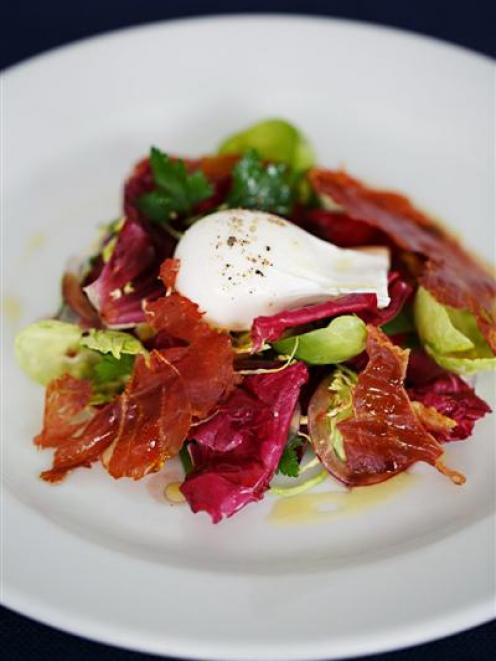
serves 4
Ingredients
4 free-range eggs
1 small head radicchio
4 Brussels sprouts
1 cup baby spinach leaves
½ cup parsley leaves, picked
¼ small red onion, finely sliced
½ tsp wholegrain mustard
juice of quarter of a lemon
60ml extra virgin olive oil
30ml aged balsamic vinegar
8 slices prosciutto, grilled until crisp
Method
Add a good splash of white vinegar to a medium-sized pot of simmering water. Gently crack eggs into the pot and poach until just cooked and still very soft. Remove eggs from water and place into a bowl of cold water to stop any further cooking.
Tear radicchio leaves apart and place into a large mixing bowl. Discard outer tough leaves from Brussels sprouts then peel the next several layers of Brussels sprout leaves into the bowl.
Using a sharp knife, finely shred remaining Brussels sprouts and add to the bowl with spinach, parsley, red onion, mustard and lemon.
Add half of the olive oil and gently toss together before dividing between 4 plates.
Place eggs back into simmering water for 30sec to 40sec to bring back to temperature. Remove from water, drain on absorbent kitchen towel and place on top of salad. Drizzle with balsamic vinegar, remaining olive oil and crisp prosciutto. Serve immediately.
Wine match:
A dry white wine would pair well with the salad. A dry-style sauvignon blanc would cut through the egg and prosciutto while complementing the peppery flavours in the leaves. The balsamic vinegar would provide a good balance to the match.

serves 4
Ingredients
60ml olive oil
9 medium brown onions, peeled, cut in half and finely sliced
6 cloves garlic, peeled and finely sliced
1 Tbsp unsalted butter
150ml dry white wine
600ml cream
1 Tbsp Dijon mustard
salt and pepper
extra virgin olive oil
1 litre vegetable oil
1 large Jerusalem artichoke, washed and scrubbed
Method
Gently heat olive oil into a medium-sized heavy-based saucepan over a medium heat. Add onions, garlic and butter and sweat, without colour for 45 minutes, adjusting temperature as necessary until onions are very soft and tender. Add wine and continue to cook until wine has reduced to almost nothing. Add cream and bring to the boil. Reduce heat to a simmer and cook for a further 10 minutes. Place soup into a food processor in batches and blend until smooth.
Pass through a fine sieve, whisk in mustard and season to taste. Reserve for later use. Heat vegetable oil in a large pot over a medium to high heat until it reaches 160degC. Finely slice artichoke and fry until golden. Drain crisps on absorbent kitchen towel and season with a little sea salt. Reheat onion soup in a small saucepan over a high heat. Divide soup between 4 bowls, drizzle with extra virgin olive oil and finish with artichoke crisps. Serve immediately.
Wine match:
We serve the onion soup as the first course in our chef's tasting menu at the moment and pair it with a non-vintage brut from Central Otago. I think a lightly oaked chardonnay would be a second choice, especially with a nutty character complementing the artichoke and olive oil.
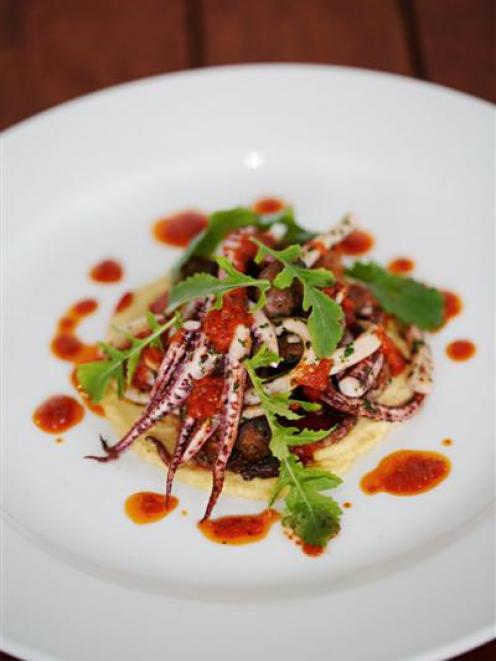
serves 4
Ingredient
80ml olive oil
4 chorizo sausages, sliced into rounds
500g baby squid, cleaned and finely sliced
salt and pepper
½ cup finely chopped parsley
juice of half a lemon
1 cup hummus
½ cup harissa
1 cup rocket leaves
Method
Heat half of the olive oil in a large heavy-based frying pan over a high heat until it just begins to smoke. Add chorizo and quickly fry for 30 seconds before adding squid. Spread squid evenly out in the pan so it can cook as fast as possible.
Add remaining olive oil, lightly season and continue to fry until the squid is almost cooked. Add parsley and lemon juice to pan and toss to combine. Turn squid and chorizo out of pan and into a large stainless steel bowl to prevent it from over-cooking.
Spread hummus over the centre of four plates and spoon the squid and chorizo on top. Drizzle with harissa and finish with a few rocket leaves. Serve immediately.
Harissa
makes 1½ cups
5 pinches chilli flakes, ground
1½ tsp cumin seeds, roasted and ground
1½ tsp caraway seeds, roasted and ground|
3 cloves garlic, peeled
3 red capsicums, roasted, skin and seeds removed
2 tsp tomato paste
2 tsp red wine vinegar
1 tsp sweet Spanish smoked paprika
½ cup extra virgin olive oil
salt and pepper
Method
Place chilli, cumin, caraway, garlic and roasted capsicums into a food processor and blend until as smooth as possible. Add tomato paste, red wine vinegar, smoked paprika and combine. Place puree into a mixing bowl, whisk in olive oil until just combined and season to taste. Store in refrigerator for up to 1 month.
Hummus
makes 2 cups
400g tin of chickpeas, drained and rinsed
2 cloves garlic
2 Tbsp tahini paste
juice of 1 large lemon
½ cup olive oil
1 cup water
salt and pepper
Method
Place chickpeas, garlic and tahini paste into a food processor and blend for one minute. Add lemon juice, olive oil and water and blend until as smooth as possible. Adjust consistency with a little more water if desired and season to taste with salt and pepper. Store in the refrigerator in an airtight container for up to 1 week.
Wine match:
The squid would go well with an off-dry pinot gris.
Something from the Waipara Valley, where grey limestone is prominent would ensure that it was light enough not to override the squid but complex enough to match the strong spicy flavours of the harissa.