Stony ground is lending its character to the wines of Bendigo, writes Charmian Smith.
Rudi Bauer leaves the main road and drives through the dry, matagouri-peppered hills on the north side of Lake Wanaka. Above is the high country where Shrek the merino sheep roamed before he became famous.
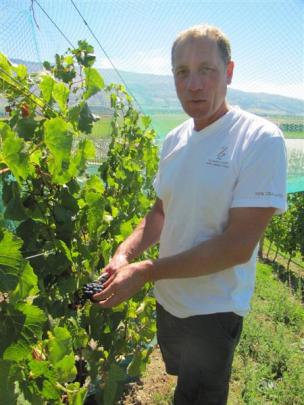
It is bony soil with no organic matter because the rabbits eat everything as soon as it grows, Bauer, winemaker at Quartz Reef and the first to plant vines in the Bendigo area, says.
He is taking the back way to the vineyards to show me what the land was like before the widespread vineyard planting 12-15 years ago.
More than 20 years ago he and John Perriam, owner of Bendigo Station, drove round looking for suitable vineyard land. Perriam was losing his productive lowland farm to Lake Dunstan and was wanting to diversify the high-country land he was left with, and Bauer was looking for a place to plant a vineyard.
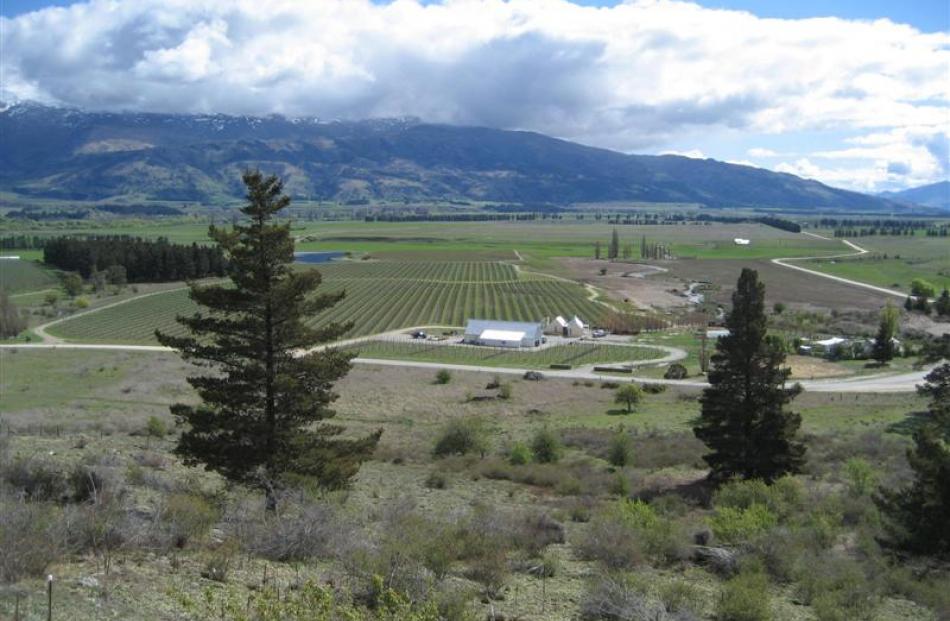
Up another gully and over the brow we see the Bendigo vineyards spreading widely across the lower slopes of the north-facing amphitheatre. At the end of September when I visited there were no leaves, although the first buds were about to burst, probably the earliest in Central Otago. The Bendigo viticultural subregion is said to be the warmest in Central. Sheltered from the cold southerlies, it basks in the sun and retains the heat.
Besides the lower slopes and flats, there are two higher vineyard terraces, Chinaman's Terrace and higher up the hill on the other side of the creek Schoolhouse Terrace, names recalling the goldmining past of the once thriving settlement of Bendigo.
I had come to have a close look at this area, hoping to learn what made it different from other Central Otago subregions and to see if I could discern any difference between wines from grapes grown on the lower terraces, the slopes or the upper terraces.
As many of the vines are now 10-12 years old, they should be starting to express some of the terroir, or so the theory goes.
Bauer started planting his Quartz Reef vineyard in 1991, fencing out the rabbits and applying irrigation. It was one of the earliest in the Cromwell Basin - even at Bannockburn and Lowburn planting was only beginning and pinot noir was not yet the star of the region.
"It needed someone with vision to give it a shot," Bauer said modestly.
Other vineyards soon followed in Bendigo, especially once irrigation water was available on the terraces. Soon the unprecedented green of vines showed the difference water, hard work and rabbit fencing can make to the dry bony soils.
We come down the track and into the Quartz Reef vineyard on the lower slopes alongside Loop Rd. Sheep are grazing the grass and weeds under the vines, manuring the vineyard at the same time, but it is spring and the first leaves are starting to appear. The sheep have to go before they start eating the shoots, Bauer says and gets on the phone to organise their removal.
Quartz Reef pinot noirs are grown on this steep vineyard.
Across the road on the flatter Loop Rd vineyard are pinot gris, chardonnay and pinot noir for the sparkling wines, and the nerve centre of his biodynamic operation with its large compost heap and herbs for other preparations. Unlike other regions, many vineyards in Central are biodynamic or organic.
Bauer makes two pinot noirs, a spicy, red-fruited Quartz Reef with an underlying savoury suggestion of mineral, and a richer, dark-fruited, silky-textured, firmly structured Quartz Reef Bendigo.
Dominic Mondillo was another early planter in the Bendigo subregion.
As viticulturist for Gibbston Valley Wines for 14 years, he was looking for possible vineyard sites and walked over a lot of Central Otago. However, he kept coming back to Bendigo. It is the warmest site in the coolest region, he said.
In the late 1990s he established vineyards for Gibbston Valley Wines, two on the lower slopes alongside Loop Rd, one on the high Schoolhouse Terrace and one on Chinaman's Terrace.
He was attracted to the Chinaman's site because it was protected and retained the heat and he liked its schisty soils which give the wine a structural content, he said.
He liked the region so much, he also planted a vineyard for himself on another, lower terrace above Bendigo creek, with pinot noir and riesling.
His Mondillo pinot noirs, made by Rudi Bauer, are richly fruited, velvety in texture with supple but definite tannin structure.
From the top of his vineyard he points out other large and small vineyards, among them Mudhouse, Zebra, Folding Hill, Prophet's Rock, Van Asch, and the Gibbston Valley and Peregrine vineyards.
Sascha Herbert, Gibbston Valley assistant winemaker, explains the differences in their four Bendigo vineyards.
The western vineyard on the lower slopes alongside Loop Rd is on sandy alluvial soils and produces grapes for the fruity Gold River pinot noir because it can handle slightly higher crops. The eastern vineyard a few metres along the road, has different soils and clones and produces darker-fruited, more aromatic pinot for the premium wine, she says.
Up on China Terrace (they changed the name on their labels as "Chinaman's" was offensive to Chinese, she said) there is more clay with less silt and sand, and hence better water retention. It has its own character and from it comes an attractive, intense and textural single vineyard pinot noir.
On Schoolhouse Terrace, at about 450m above sea level, grapes ripen 10 days later than on the flats below, she says.
Gibbston Valley's single vineyard Schoolhouse pinot noir is more perfumed than wines I tasted from other parts of Bendigo and hints of blueberry and cranberry with a mineral undertone.
Back alongside the road, Peregrine has two vineyards: Logan Town vineyard is planted in curved blocks of riesling and pinot noir laid out according to soil type, according to viticulturist Nick Paulin. Nearer the creek is Peregrine's Bendigo vineyard with pinot noir and pinot gris.
Winemaker Nadine Cross says the pinot gris here is rich, ripe and floral with peach and brown spice such as cinnamon.
They blend it with wine from their Lowburn and Pisa vineyards across the lake, which bring pear and apricot characters to the finished wine.
Peregrine wines tend to be blends from many vineyards in different subregions of Central as they believe the sum is greater than the parts. They get aromatics from Gibbston, soft plummy fruit from Bannockburn and other parts of the Cromwell basin, and dark fruit and structure from Bendigo, Cross said.
If you do not have vineyards in several areas, according to Mondillo, you can get the complexity you are looking for by using several different clones and rootstocks. He believes these contribute more to the differences in character of the wines from the different blocks in Bendigo than the soils.
However, Cross and Paulin from Peregrine think that with younger vines the clonal characters are more important but when older, vines will reflect the soils and vineyard exposure. Even at a decade or so, the Bendigo vines are still relatively young.
However, winemakers seem to agree that pinot noir from Bendigo tends to show darker fruit and is more structural with bolder tannins, compared with the lush, sweeter fruit from further down the valley, and that's also my impression from the few single-vineyard wines and samples that I tasted on this trip.
But as always with wine, there are so many variables and so many different opinions, that it's rare to reach a consensus.
That's what makes it so fascinating.