

Garden books abound in book shops. Gillian Vine delves into some recent releases.

Tabitha Becroft goes further in The Friendly Kiwi Garden (Reed Publishing, pbk, $30) by suggesting ways to attract insects and fish, as well as birds, to your property.
As expected, there are lists of plants that provide food for birds such as tui and bellbirds.
Becroft has gone one better than most writers by providing charts of fruiting and flowering times, so readers can gauge what to grow to give continuous food for native birds.
There is a chapter on growing native plants, a useful section on pest plants and a very good chapter on animal pests and how to get rid of them.
Helpful photographs by Claire Watkins enhance an extremely good introduction to this important topic.
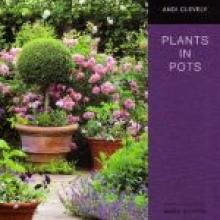
Container gardening was known to the ancient Greeks and Romans, who probably pioneered growing citrus in pots that could be moved indoors in winter, an idea that was to lead to the orangery as part of the English castle or manor in the 18th century.
Clevely points out that with many people having little or no garden, pots and growing bags can be used not only to maintain or develop gardening skills but to produce food and changing floral displays throughout the year.
Plant suggestions are fairly standard and Clevely's containers generally conservative, but it comes together nicely in this well-priced, attractive book.
And water? Plants in containers get the water they need - none is wasted, unlike general watering of a garden bed.

After a short general history, Geddes-Brown moves to specifics.
There are Islamic and Oriental water gardens, the latter including Suzhou's Humble Administrator's Garden, great landscapes and little town gardens.
Examples come from all over the world and the colour photographs make the garden lover long to head off to see every one.
There are half a dozen 20th- and 21st-century gardens before the writer wraps up with a section on the water garden of the future, a short list of not-very-inspiring plants and a number of water gardens open to the public.
At the price, the book is probably beyond the reach of many gardeners but this is a fine introduction to the use of water.

Like Spry before her, Paula Pryke - described as "the most brilliant florist in London" - runs a flower school, but that's the end of the connection, as Classic Paula Pryke (Mitchell Beazley, pbk, $59.99) illustrates.
The emphasis is now on the art form and if that involves presenting flowers in a vase made from a hollowed out pumpkin or a "kebab" of rose petals on a bamboo spear, Pryke will do it.
There are some classical designs, mainly large arrangements of mixed blooms with lots of foliage, but the bulk of the book is contemporary, with flowers so tightly pressed together it seems almost cruel.
Although it is a little disappointing to see how conventional her choice of blooms and foliage is, those interested in floral design will find much of interest in Classic Paula Pryke if they're prepared to shell out $60.

Naturally, that is spawning a raft of gardening books as gardeners must respond to the effects of the weather.
If Gill Farrer-Halls' Gardening for Our Changing Climates (Angela Patchell Books, pbk, $59.99), is anything to go by, we are well ahead of the Brits in our gardening.
Her advocation of composting, using drought-resistant plants and mulching beds sounds a bit ho-hum to New Zealand gardeners, most of whom have been doing these things for years.
One section shows a garden "designed to be environmentally friendly, drought tolerant and low maintenance".
It may be environmentally friendly - slaters will love the bark mulch on beds - but the closely clipped lawn will need watering to stay as beautiful as in the photos.
Moreover, low maintenance is a joke in a garden with dozens of pavers set in the lawn: clipping around them is a time-consuming and tedious task.
At $59.99, Gardening for Our Changing Climates is expensive for a soft-cover book and reversed captions on two photographs on page 74 suggest inadequate checking.
In short, this pretty volume has little merit.


