Big House, Small House, New Homes by New Zealand Architects, the latest book by John Walsh and photographer Patrick Reynolds, shows why New Zealand's residential architecture is so well-regarded. Here's an edited extract.
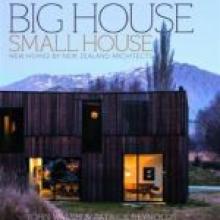
For a while now, going back to the late 1990s, the neo-modernist pavilion has had a good run as the favoured form of top-end architects and their clients and, as haute couture always does, it has inspired imitation lower down the market.
As a successor to a couple of decades of post-modernist adventurism, one can see why the pavilion became popular, even though its clarity is cruel to lesser talents working with fewer means. (As can only be the case: the modern pavilion, it could be argued, is but a footnote to Mies van der Rohe's peerless Farnsworth House.) But, like all human pursuits, architecture has its natural-term limits; architects eventually come up with new angles, and lately these have been diverging from 90 degrees.
Contemporary computing, materials and construction technologies enable a shifting of shapes beyond the straight and narrow. The forms resulting from twists and turns in the plan - 3-D contortions infelicitously described as "cranks" - make you wonder whether architects have felt professionally challenged by the robot reconfigurations portrayed in Transformers.
There's the same sense of planes sliding, meeting and locking, and not just on the sides of a building, but also on top.
Houses given this treatment look as well-shielded as Roman legionaries in tortoise formation. With their many facets, their cut-outs and their kinks, these buildings look dynamic, but of course all architecture is rooted to the spot. Implied movement as stationary object?
Surely the name for that is sculpture.
Architects, especially in New Zealand, where pretension is quickly scoffed down to size, are wary of describing their craft as art, although many have mastered the convenient skill of attaching politically correct bromides to their projects. But Thom Craig has never had a problem discussing the art in his architecture, just as he has never settled for comfortable options in his practice.
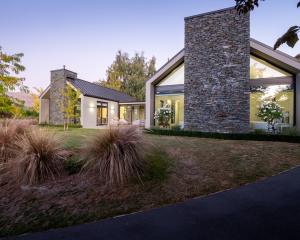
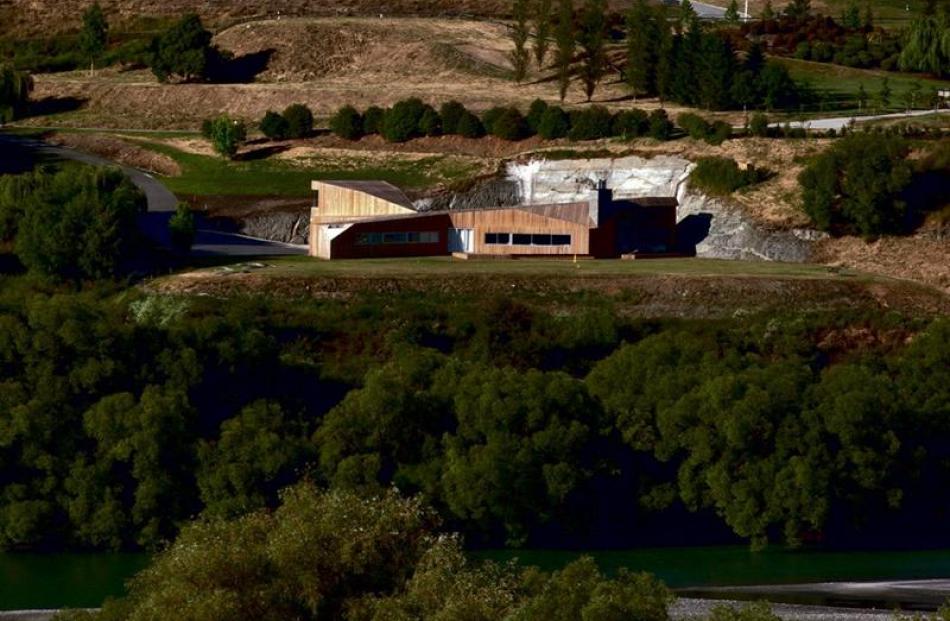
This house, sited above a stretch of the Shotover River near Queenstown, is a realisation of his skill and, perhaps, a revelation of his character. It's rather wilful and, deliberately, I suspect, a little awkward. Craig is not a contrarian, but his personal courtesy co-exists, amiably but unusually, with his resistance to fitting in. More than a decade ago, he caused a fuss in Fendalton, Christchurch's old-money suburb, when he designed for his family a striking black box of a house.
For shock value the house could almost match the agitation that would ensue if an expensively-schooled daughter brought a labourer home for dinner.
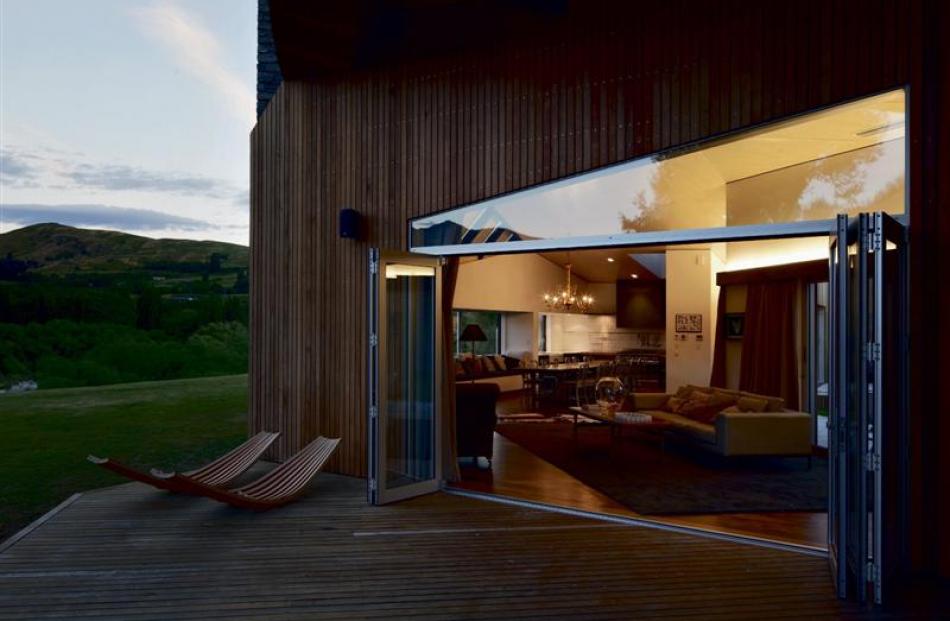
There are fewer people to be outraged on the banks of the Shotover and this house is harder to see, but that doesn't detract from its provocative quality. It's not rebel architecture - today, the really dissident holiday house is the modest holiday house - but it's definitely not mainstream.
Unsurprisingly, the house is designed by an outsider; Craig is not from these parts (he grew up in South Africa and left to get away from apartheid) and I think he has not just accepted his expatriate condition, but also recognised its strengths. In a small and remote country, restlessness and inquisitiveness are antidotes to professional atrophy.
Just because Craig maintains a little distance from the culture it doesn't mean he can't connect with the place. When he looked out from this site - the house's platform had already been cut from the slope by a developer - he saw a foreground of braided river and a backdrop of mountains. How to respond?
With a braided house of strong and singular form. It's not neo-modern, although it is certainly minimal, and as free of ornament as a rock outcrop. It's an adventurous building in a region of risky pursuits, and it extends an appropriate invitation: you don't want to stroll down to this house, you want to take a running jump on to it.