Five years ago this week a Taupo schoolboy brutally murdered a Scottish tourist. Now a local clergyman is trying to work with both their families to find hope for the future. Andrew Laxon, of The New Zealand Herald, reports.
Thursday, January 17, 2008. On a warm summer's night in Taupo, the bars and restaurants along the lakefront were buzzing as crowds poured in for the international A1 Grand Prix motor race that weekend. Scottish backpacker Karen Aim joined her friends for a few drinks at nearby Mulligan's pub, where her Irish flatmate Collette Martin was working behind the bar.
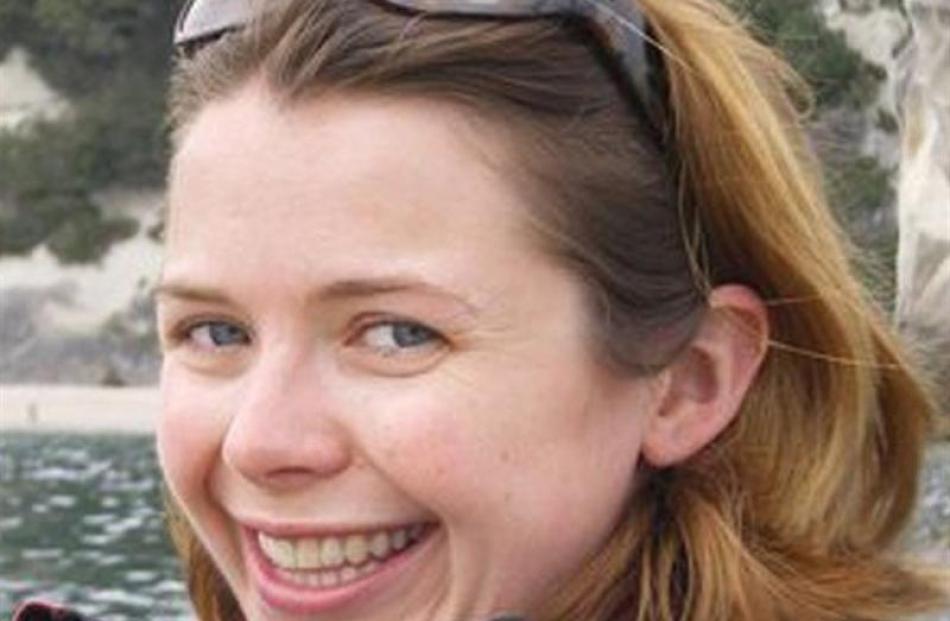
Life was looking up for the 26-year-old from the remote Orkney Islands, who first visited New Zealand in 2006, fell in love with the country and came straight back the following year to live and work in Taupo. A passionate artist, she found a job in a local glass-blowing factory and a flat within walking distance of town.
She was outgoing, fun-loving and, in the words of her New Zealand flatmate Lisa Hughes, the kind of girl ''you met and fell in love with''. That night she and her friends stayed in Mulligan's until after midnight, before moving on to a couple of other backpacker bars. Aim left just before 2am, walked past the cheap ethnic restaurants in Tuwharetoa St and ducked into the BP Service Station on the corner to buy a pie.
A security camera shows her walking out at 2.04am. It was the last time she was seen alive.
As she walked home, 14-year-old Jahche (pronounced Jaa-chay) Broughton rode his retro chopper-style bike into the grounds of Taupo-nui-a-tia College, took out a baseball bat and began smashing windows and glass doors in a furious rage. He was a local boy from Nukuhau, a poor, predominantly Maori suburb not far from the town centre. Friends said he liked to quiff his gelled hair, show off his diamond earring and brag about his girlfriends on Bebo.
Police youth aid officers also knew him well and it was not the first time he'd been out in the early hours of the morning causing trouble. Aim would have heard the noise as she reached the top of Ruapehu St and looked across the Spa Rd car yards to the school. Her normal route home was to cut across the college grounds, bringing her close to Broughton just as the school alarm sounded.
Apparently realising he had been spotted, he jumped on his bike, still holding the baseball bat, and followed her down the street to an intersection just three houses away from her modest brick and tile flat. Outside the Happy Days Early Learning Centre, he smashed the bat into the left side of her face, making her fall over backwards. As she lay on the ground with her head on the concrete footpath, Broughton brought the bat down again, even harder this time, smashing the bones of her face and mouth and fracturing her skull.
A few minutes later Constable Matthew Barton was walking down Waikato St, looking for the vandals who had caused so much damage to the school. He found Aim's body lying in a pool of blood. At Taupo Hospital she was pronounced dead on arrival.
A VIDEO shows Karen Aim hurtling into space on a tandem skydive to the music of Tom Petty's Free Falling. Her smiling face fills the screen, then zooms away as the chute opens high above Lake Taupo on a bright, sunny day. Aim's parents Brian and Peggy and her brother Alan watched the video with about 300 other mourners on a winter's day in East Mainland Church in Holm, the small Orkney village off the northern tip of Scotland where Aim grew up. The church is a grey, barn-like building with thick walls to keep out the cold. Brian, a local builder, is an elder there.
Inside, the Rev Miriam Gross read a prayer from the Aim family.
''We pray for the person or persons who fatally injured Karen. Forgive the pain brought over us by this taking of Karen's life and forgive their family as well.''
Half a world away at a packed memorial service at St Paul's Union Church in Taupo, mourners heard the same prayer and the Rev John Howell echoed the message.
''Those who committed this murder must feel scared and afraid,'' he said.
''Life must be hell for them, hiding and waiting. I want to say to them, it's time for you to have courage.
''Have the courage to accept the forgiveness offered by the Aim family and then come and share your secret with the police.''
The memorial service marked the start of a connection between the two communities. Karen's boss at the Lava Glass Blowing Studio, Christine Robb, donated a glass vase to the Aim family and a Taupo-based Air New Zealand international pilot, Hugh De Lautour took it to Orkney, ensuring the vase had its own seat on the plane from Heathrow onwards.
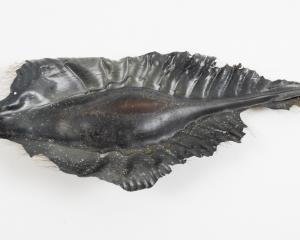
Mr Howell carried on the connection, with help from the Taupo District Council and local Rotary group, by establishing an arts scholarship in Karen's memory. The first completed work was a sculpture by Taupo-nui-a-tia student Kate Bevan. It was a white female torso in an exaggerated hourglass shape, made of wire and papier mache and wrapped in bandages.
Suede leather rosettes covered the neck and breast one bright red for anger - and a fishtail plait ran down the middle, opening at the bottom to symbolise mourners letting go their grief.
In September this year Mr Howell took the sculpture to Orkney and presented it to the East Mainland congregation. Then he told them how he had used it to talk to the teenage boy who killed Karen.
Halfway through their first conversation, Howell put a photo of the Kate Bevan sculpture on the table in front of Jahche Broughton in the visiting room at Waikeria Prison.
''I thought to myself, `he's either going to engage with this or tell me to mind my own business','' Mr Howell says.
''He took it seriously. And that was a good thing, because it means he's starting to engage with the story, rather than deny it.''
Broughton had remained an impassive figure throughout his court appearances, showing no emotion and further agonising the Aim family by trying to change his plea to not guilty, until he realised the evidence against him was overwhelming.
He admitted remorse through his lawyer - a necessary step for any defendant seeking a reduced prison sentence - but insisted throughout he was only an accomplice to the real murderer, a mysterious Mongrel Mob figure called Bryan.
Broughton was sentenced to life imprisonment with no chance of parole for at least 12 and a-half years, the judge dismissing any suggestion another was involved.
It was not a promising start for Mr Howell but he felt the sculpture might succeed where words could not. Last year he worked through the prison chaplain to ask Broughton if he would like to know about Bevan's sculpture before its public unveiling.
On his second visit to Te Ao Marama, the Maori focus unit at Waikeria Prison, near Te Awamutu, Mr Howell says Broughton opened up to him about his life at the time of the murder. He can't repeat the details, not just because of professional confidentiality, but because they would put Broughton and others in danger. But he admits he was badly shaken.
''I was in tears by the end of that second visit. It just hit me in the guts. Can't say more than that. He told me the circumstances of his life and what led to the murder. I was the second person he has told (the first was the prison psychologist). On the third visit I obtained his consent to share that story with the Aims.''
Mr Howell says he knows criminals often tell lies about their past and that Broughton has told more than his fair share so far. He says he's sceptical about some aspects of his story but most of it rings true.
''There'll be people ... who say `why the hell are you visiting him?'.''
He answers himself by quoting Jesus from Matthew 25 in the Bible, ''I was sick and you took care of me, I was in prison and you visited me. Truly I tell you, just as you did it to one of the least of these who are members of my family, you did it to me.''
Mr Howell explains he goes partly because he sees it as a duty and a privilege.
''I do it quite deliberately to say `we haven't forgotten you, you're part of our prayer and concern'. That message on its own does two things. One thing is it says to the Taupo community, `this is not just about Karen Aim, it's about Jahche'. And the second thing is it's saying to Jahche `I'm interested in what happens to you while you're in prison and when you get out'.''
Mr Howell, who is police chaplain for the Taupo-Turangi area, believes
public discussion about justice in New Zealand has been hijacked by the Sensible Sentencing Trust, which has generated a climate of fear among the public and pushed politicians into taking more populist policies based purely on retribution.
''They're literally saying `lock 'em up and throw away the key'. There needs to be a priority on rehabilitation and ensuring that when [prisoners] return to society they're not just going to go through the whole process again so they're a lifelong criminal - but rather they can re-enter society in some way and we can start to value them for what they can give to us.
''People in this category are usually the products of a dysfunctional family but what is it about the family environment that's creating these kinds of monsters? What is it about our society that is failing to support families to come to terms with these kinds of issues?''He argues
whether people like it or not, Broughton will probably be out of prison some day as a relatively young man with much of his life
ahead of him. Broughton will be 28 when he becomes eligible for parole in 2021.
Broughton's mother Eugenie got pregnant at 16 when she was living at home in her family's green, single-storey weatherboard house opposite an overgrown sports ground in Nukuhau. Her parents, Monty and Moana, are members of the local Ratana church - Broughton was arrested for Karen's murder on a bus trip with his family to the church's annual conference - and heavily involved in local Maori immersion schools.
It's a tough neighbourhood: neighbours are friendly when this reporter calls just before 9am, many working-aged adults and school-aged children are still at home and one mother, who smells strongly of alcohol, is on to her third beer.
Eugenie says she had no idea she was even pregnant but she was happy to have a baby boy. She called him Jahche Te Manawa Kawa Broughton - ''Jah'' for Jehovah, ''che'' for an Indian chief, ''Te Manawa'' meaning strong-hearted. Eugenie says Jahche knows who his birth father is but he's never been part of his life. Until they split up recently, her former partner was his real father.
The 37-year-old says Broughton loved music, sport - he was a Bay of Plenty hockey rep - and even school, which he attended regularly. Asked how he could go from such a happy childhood to committing a brutal murder, she replies, ''I've never really got the answer to that one. At the end of the day I've accepted that he's taken responsibility for his involvement, for his actions. As a mother, though, I can only take the experience out of it and help my other children.''
She says she doesn't want to blame his behaviour solely on alcohol and drugs because there were other factors involved.
''I could say that it's hormone-related. It's a whole lot of things really. It's society, it's our lifestyle. I don't know, I think maybe I spoilt him too much. Because all he ever got was love and support. Still does.''
The court heard a similar story about Broughton's upbringing, which he described as ''awesome''. His mother and other family members were there to support him after his arrest and continue to visit him each month in prison.
But in an earlier interview with 60 Minutes soon after his sentencing, Eugenie admitted her son was struggling academically, dropping in and out of schools and getting into increasing trouble with the police, including for truancy and burglary.
She says
about the age of 12, ''he was going through a bit of a rebellious stage''. Child, Youth and Family intervened and he was placed in a foster home with her family's agreement. It lasted only two months - ''we missed him too much and brought him home''.
Other evidence suggests by this stage Broughton's life was going off the rails. A cousin told the court he was drinking alcohol and smoking cannabis from the age of 12 and police found a stash of pornographic videos and magazines under his bed when they searched the family house.
By the age of 14 he was frequently drinking and roaming the streets at night - a pattern of behaviour Taupo coroner Wallace Bain said he wanted to raise ''head-on'' in his inquest finding last November as ''a classic example of what can happen when young people are not properly supervised''.
One of Broughton's regular drinking buddies was his ''uncle'', Leigh Herewini, his aunt's former partner and a security guard who helped Broughton cover up the savage bashing of another young woman about a fortnight before he killed Karen.
Zara Schofield was walking home from a party at 2.37am on January 5, when she realised someone was lurking behind her. The 17-year-old texted a friend for help but it was too late. She fended off the stranger's first attack but as she turned to leave, he smashed her on the head with a rock he had picked up from a nearby garden. Schofield kicked out again at the male wearing a diamond earring as she lay on the ground but he continued to hit her with the rock until she lost consciousness. Then he stole her pink handbag.
It was Broughton.
Afterwards Broughton went back to Herewini's house with blood all over his hands and T-shirt. He told Herewini he'd been in a fight at the party and ''might have broken the other guy's nose''.
Herewini took Broughton to an outside tap to wash his hands, put the bloodied T-shirt in the washing machine, gave Broughton a clean one to wear and drove him home.
Meanwhile, Schofield had regained consciousness and staggered to a nearby house. As the attack made headlines, Herewini quizzed Broughton, who told him he had not attacked Schofield and that he found the handbag on the footpath.
Eugenie Broughton visits her son in prison every month, along with the rest of her family. The Corrections Department refused to allow an interview or give any report on his progress but he is in Te Ao Marama, which only takes prisoners with a drug-free, good behavioural record.
Eugenie thinks he is less angry now and says he is mentoring younger prisoners. Brian Aim wants to see Broughton change but is sceptical, based on his sudden attempt to plead not guilty and refusal to face up to his crime. After the sentencing he spoke to Eugenie and her sister Josephine, and asked to speak to Broughton but was turned down.
''His mother said she didn't want to put her son through the pressure of meeting me,'' he recalls. He wasn't looking for an apology or even an explanation why - just an honest account of what really happened.
''We wanted to find out from the one person who knew what happened that night whether Karen was chased and terrified before she was murdered or was she murdered from behind and never knew the incident ever happened.''
Broughton's refusal to admit what he did even though he eventually pleaded guilty has confused and angered many people involved in the case. One theory is
he still can't face admitting the enormity of his crime to his own family, who continue to see him as their beloved boy, incapable of such actions. It's a common mindset in cases involving violence or sexual abuse, as criminals formally acknowledge guilt to the court but cannot bear to do the same to their loved ones.
Brian Aim later wrote to the police, asking what kind of prison Broughton was in and how he was getting on. He is following Mr Howell's efforts with interest, including Broughton's account of his life circumstances, but has pulled back from his own attempt to engage with his daughter's killer.
''We're coming to New Zealand again some time within the next few years and I might make contact with him then. I just don't have the same necessity to speak to him that I did.''
He has also written a letter to the Parole Board to be opened when Broughton applies for parole, arguing
he should remain in prison for the rest of his life.
Mr Howell has visited Broughton six times. He gave him a book of prayers and bought the family gift vouchers for Christmas on his behalf, with Broughton writing a letter to accompany the present.
He says the 19-year-old is still in denial about the murder but this is normal. Prisoners often go through the same stages of grief as victims, and denial is the first stage on the road to acceptance. The important thing, he argues, is that he is willing to talk.
One of his Rotary audience recently asked if there was any hope for Broughton. Mr Howell didn't try to sugar-coat the answer.
''I said, 'He's got a lot of work to do'.''