The Government accounts crept into surplus in the three months ending September, without fanfare and without any comment from Finance Minister Bill English.
However, before there is too much celebration, the surplus was a minuscule $90 million and was achieved through some higher-than-expected returns on investments by the New Zealand Superannuation Fund ($1.1 billion) and ACC ($600 million).
The operating deficit for the three months ended September last year was nearly $7 billion.
The Government has made much of returning the accounts to surplus by the 2014-15 financial year. The Government has two measures in its Crown accounts: the operating balance excluding gains and losses (obegal) and the operating balance.
Mr English, as former Labour finance minister Sir Michael Cullen did before him, focuses on the measure that suits the Government's policy of the day.
At present, it suits Mr English to focus on the obegal because it remains in deficit and sits with his message that careful management of the country's finances is still needed.
Looking at the obegal alone, the deficit is $2.12 billion compared with the Budget Economic and Fiscal Update forecast of $1.7 billion. Core Crown tax and interest revenue were both lower than expected, partly offset by lower core Crown expenses.
In the three months ended September last year, the obegal was a deficit of nearly $2.5 billion.
Tax revenue this year of $13.5 billion was $295 million, or 2.1%, lower than expected. Most major types of tax revenue were below forecast, the exception being "other individuals" tax revenue which was higher than expected.
Wage growth and private consumption below forecast led to lower-than-forecast source deductions and GST of $166 million for both those types of tax.
Lower-than-forecast provisional tax resulted in $103 million lower corporate tax.
Other core Crown revenue was higher than forecast. Dividend revenue from state-owned enterprises was $248 million higher than forecast, mainly due to dividends received earlier than forecast.
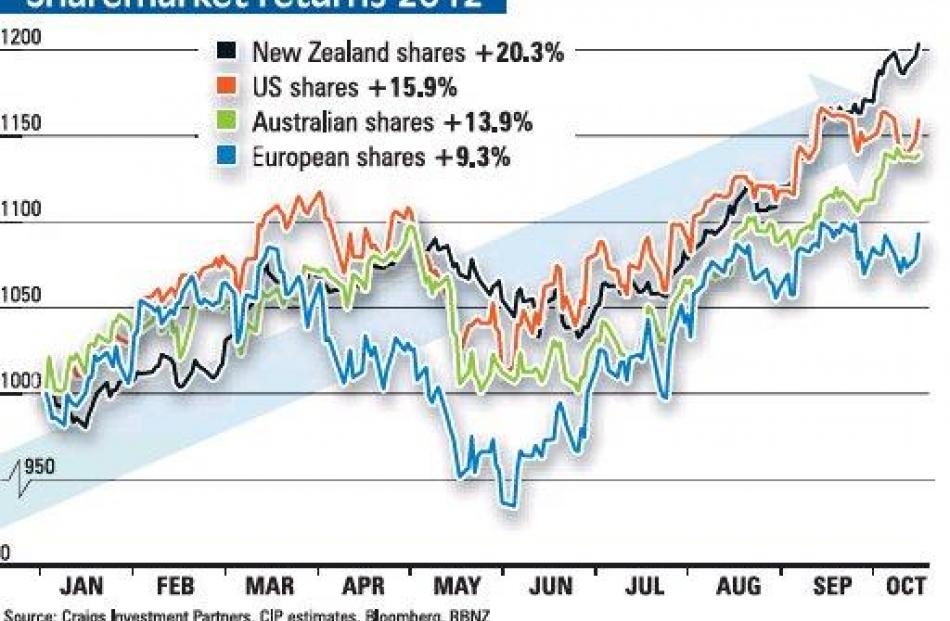
Craigs Investment Partners broker Chris Timms said the global background to the better returns by Crown investments showed interest rates at an all-time low around the world but investors getting good returns from stocks.
"We are seeing a significant rebound in sharemarket activity as people look for better returns.
United States companies are in a strong position. The US economy may be flat, but these companies are multinationals and are performing well."
In Australia, there had been a move away from investments in mining towards the financial sector, and bank shares were performing well.
In New Zealand, companies had been paying down debt, there had been an influx of KiwiSaver funds into the market and investors had been following good companies to receive an income through dividends, he said.
Mr English said the accounts reinforced the need for careful financial management.
"The accounts confirm the Government is keeping its spending under control but that revenue can be affected by the uncertain global economic situation and its impact on New Zealand. This effect will continue."
As the Government worked to reduce its deficits and meet the target of returning to surplus by 2014-15, it needed to remain prudent with new spending and ensure existing spending delivered better public services and good value for taxpayers, he said.
Net debt, at $54.9 billion, was close to forecast, at 26.9% of gross domestic product (GDP).
At a glance
Government accounts for three months ended September.
• Crown tax revenue: $13.5 billion, down 2.1% on forecast.
• Crown expenditure: $17.3 billion, down 1.1% on forecast.
• Operating balance excluding gains and losses: -$2.12 billion.
• Operating balance: $90 million.