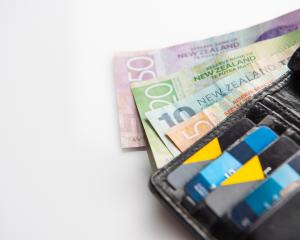
Primary producers and manufacturing exporters appear to be in for a long wait before they get some relief from the rising value of the New Zealand dollar. The kiwi hit a nine-month high yesterday as hopes Germany would avoid recession and optimism the US Federal Reserve would enact more easing measures helped stocks rally and lift risk sentiment.
Across the Tasman, the Australian dollar rallied to its highest level in almost three months on the same data and sentiment.
German investor confidence helped quell fears Germany would dip into recession, BNZ currency strategist Mike Jones said.
''We saw European equity markets rally quite strongly and that positive sentiment spilled over into the US session and into currencies like the Aussie dollar,'' he said.
Currency forecasts for the New Zealand dollar, released yesterday by Craigs Investment Partners, showed a wide range of values from major banks.
The December 2012 forecasts for the NZD/USD cross were relatively even at between US81c and US83c. But the December 2013 forecasts ranged from a low of US79c to a high of US84c to give an average of US81c.
The average forecast for December 2014 fell to US75c and the following year the dollar was forecast to trade at US69c.
However, against the Australian currency the NZ dollar is predicted to rise from an average A79c to A80c from 2013 to 2015 inclusive. Australia remains New Zealand's largest trading partner.
Craigs broker Chris Timms said the range of forecasts showed how difficult it was to predict where currencies would trade.
''You can give a forecast but it doesn't take much to change things. One unforeseen event and it all goes out the window.''
There was not much anyone could do in New Zealand to push down the value of the dollar, as most of the movements were controlled by offshore events, he said.
Risk was back on the table and investors were more comfortable investing in New Zealand. The country was seen as having a stable political environment and being a producer of commodities.
However, if the United States Congress failed to agree to measures to address the looming ''fiscal cliff'', it was likely the kiwi would fall as US investors took their money home, Mr Timms said.
''If they bumble through the cliff, Australia continues to cut its official cash rate and global interest rates remain at all-time lows, you can expect our dollar to remain high. I'm not sure that even if our Reserve Bank cut its OCR that our dollar would fall, such is the appetite right now for risk.''
The rise and fall of the kiwi almost exactly matched the movements in the Dow Jones Industrial Index, he said. When the Dow was up, so was the value of the kiwi and when the Dow fell, so did the kiwi. It was all related to risk in the market, Mr Timms said. Asked who bought the dollar, keeping it high, he said overseas investors wanting to buy shares in New Zealand's listed companies needed to settle in the local currency. They bought the dollar, often pushing the value up beyond where many believed it should be.
The ''fiscal cliff'' relates to about $US600 billion ($NZ716 billion) of tax increases and spending cuts that will automatically come in on January 1 unless Congress can agree on a solution. US President Barack Obama is pushing for higher tax on those earning more than $US250,000 and the Republicans want lower tax for the high-income earners, but the closing of tax loopholes coupled with budget spending cuts.