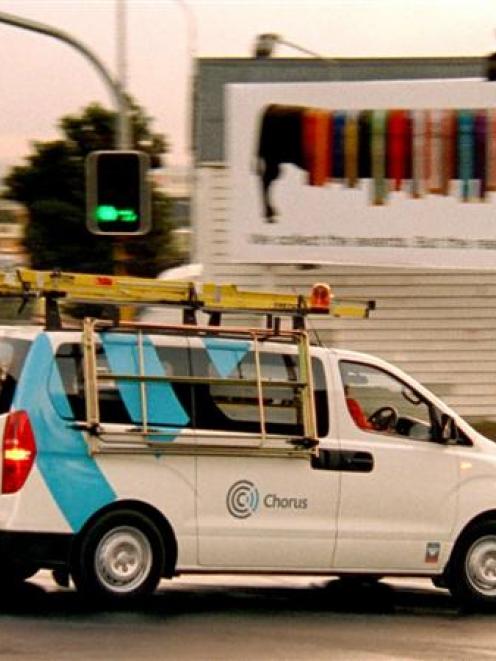
Two major themes were playing out. Regulatory wholesale pricing uncertainty was weighing on Chorus while Telecom would continue to defend market share from a larger competitor - Vodafone - in the retail sector, he said.
''For Chorus, we expect discussions between industry players and the regulator to lead to a better outcome in the final decision, as was the case for wholesale copper price. However, the final decision is not expected until mid-2013, which will likely prevent Chorus' share price from converging on our fair value in the near-term.''
Chorus was Morningstar's one positive recommendation but regulatory changes created a highly uncertain environment.
In the retail market, Morningstar expected competition to increase, Mr Doherty said.
Telecom's market share in the fixed line business had been pressured for some time and that was expected to continue this year. The acquisition of TelstraClear by Vodafone in July had strengthened Vodafone's competitive position.
While it would take time to integrate the two businesses, Morningstar expected Vodafone to benefit from increased scale in the future, he said.
''In our view, rationalisation of costs could flow through to lower retail pricing and a more competitive market. While Telecom's return is likely to be pressured in the near-term, there is no change to our positive long-term view.''
Upfront capital costs, coupled with low population and dominant positions by existing players, acted as barriers to entry. Telecom was expected to compete more aggressively in the mobile market. Higher costs from handset subsidies, mainly in smartphones, and value included in post-paid plans could reduce margin in the short-term, Mr Doherty said.
By putting smartphones in the hands of users, the strategy was expected to lift data usage and raise revenue over the long term.
Rollout of the 4G network was not immediate with auction for additional spectrum scheduled for later this year, he said. Trials were under way and Telecom was expected to launch its services later this year or early next year.
Healthcare was one of the most expensive areas of investment, Mr Doherty said.
The healthcare sector consisted of three companies - Ryman Healthcare, Fisher & Paykel Healthcare and Ebos. Morningstar was predicting good earnings growth from each business but their prices were trading above fair value estimates.
The consumer sector was also expensive, he said. The sector encompassed retailing and other discretionary industries such as gambling and media. Overall, consumer spending in New Zealand remained lacklustre despite low interest rates. High debt levels racked up by consumers during the boom years of 2002-08 stifled household balance sheets.
''As a result, consumers have imposed their own austerity measures.''
The recent surge in house prices could provide a fillip to consumer spending, Mr Doherty said. However, he expected little house price appreciation in the near term, particularly given expensiveness relative to global peers. Any further rate reductions were unlikely to meaningfully improve housing affordability.
Against that economic backdrop, he expected discretionary retailers to struggle, while retailers trading in food and other essentials should fare better.
The slowdown in discretionary spending was also hurting gambling and media companies, Mr Doherty said.
SkyCity Entertainment, which was the only listed casino company on the NZX, was bucking the trend by winning market share from pubs and clubs. Also, it had been successful in attracting a high number of international VIP players to its Auckland property.
Sky Network Television was performing much better than its free-to-air counterparts, which were more reliant on advertising revenue. Sky TV's subscription-based business model was proving to be ''somewhat immune'' to economic headwinds, he said.
''There are few buying opportunities in the New Zealand market following a strong run last year. The market is very close to fair value.''
Most stocks were in the hold zone and Morningstar was finding outright buy and sell calls hard to come by, Mr Doherty said.
Given depressed interest rates globally, quality companies providing sustainable and above average yields would continue to be popular for a while yet, he said.
Most preferred
Chorus, accumulate, fair value $3.80.
Nuplex Industries, hold, fair value $3.50
SkyCity Entertainment, hold, fair value $4
Sky Network TV, hold, fair value $5.50
Telecom NZ, hold, fair value $2.50