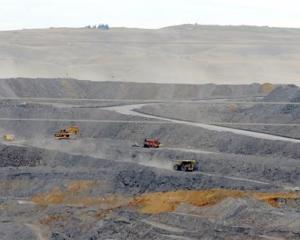
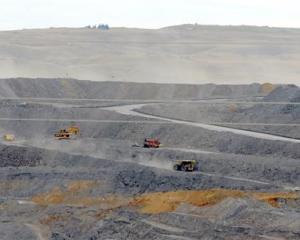
Oceana Gold's proposed Macraes mine extension is unlikely to affect water quality or quantity at Macraes Flat or the local school, hydrogeologist Brett Sinclair says.
Mr Sinclair was giving evidence on behalf of Oceana Gold on the third day of its resource consent hearing in Dunedin.
The company had been monitoring water quality in bores for many years and only barely detectable amounts of contaminants had been found, he said in his response to concerns from the Education Minister about the Macraes-Moonlight School.
"Nothing has changed as the consequences of the mining operation."
While water quality at existing compliance monitoring sites had "almost always" complied with consent criteria, trends of increasing sulphate concentration had been observed at several surface-water compliance points, mostly related to seepage from waste-rock stacks.
Sulphate concentrations were likely to eventually exceed the relevant compliance limits on a seasonal basis, so mitigation was required on all creeks intersecting the mine site, he said.
He proposed an adaptive management plan be adopted, requiring a high-quality water monitoring programme.
Flows in Tipperary Creek would be substantially reduced during the operating period of the new tailings storage facility, but they would recover after the closure and rehabilitation of the existing tailings storage facility, he said.
Oceana Gold counsel Stephen Christensen said Mr Sinclair was picking up on long-term trends in relation to sulphate levels.
"It's not a problem today and not a problem while the mine is going."
The specialists were looking "way out" to the future and the company was planning for those after-closure issues, he said.
"The company is being proactive."
Acoustic engineer Nevil Hegley said noise levels, and their effect on nearby homes, had been predicted for each stage of the proposed extension.
"During busy mining periods of each stage, the noise level at all of the closer houses will remain well within the current mine consent conditions ..."
Although noise levels were relatively low around the Macraes township, the predicted noise level was also low, he said.
"While the mining might be heard in calm weather conditions and with wind speeds up to 1m or 2m per second, even under these conditions there will be little to no noise impact for neighbours."
Technical services engineer Richard Taylor said provided blasting operations continued in a controlled manner, similar to as it was done now, adverse effects from ground vibration and air blast were expected to be no more than minor.
Engineer Prudence Harwood said as the proposed works were similar in scale to the present operation, "consequently the effects of the operation were not expected to be significantly different".
Dust levels were within consented levels and there had been no reported adverse effects on plants or wildlife in the vicinity of the mine.
"Providing particular care is taken with activities that have a high potential to create dust in sensitive areas, such as the remediation of the tailings storage facilities and the construction of the extended waste-rock stacks, the effects of the MPIII [Macraes phase 3] project should not be significantly more."
The hearing continues today.
Oceana Gold hearing
Day 3
Applicant: Oceana Gold
For: Resource consents to extend the life of Macraes mine.
Panel: Otago regional councillors Louise Croot (chairwoman) and Duncan Butcher.
Submitters: Golder Associates senior hydrogeologist Brett Sinclair; Golder principal geochemist Rens Verberg (read); acoustic engineer Nevil Hegley; Orica Mining Services technical services engineer Richard Taylor; Beca Infrastructure associate engineer Prudence Harwood.
Macraes Phase III project
• Close existing mixed tailings impoundment and southern pit impoundment.
• Construct a new tailings storage facility called Top Tipperary.
• Construct a new dam on Camp Creek for water storage.
• Mining Round Hill - southern pitContinuation and expansion of Frasers underground mine.
• New waste rock stacks and extensions to existing rock stacks.