However, New Zealand First says the latest report into Whanau Ora confirms it is wasting millions of taxpayer dollars on a scheme which provides little more than money for family reunions.
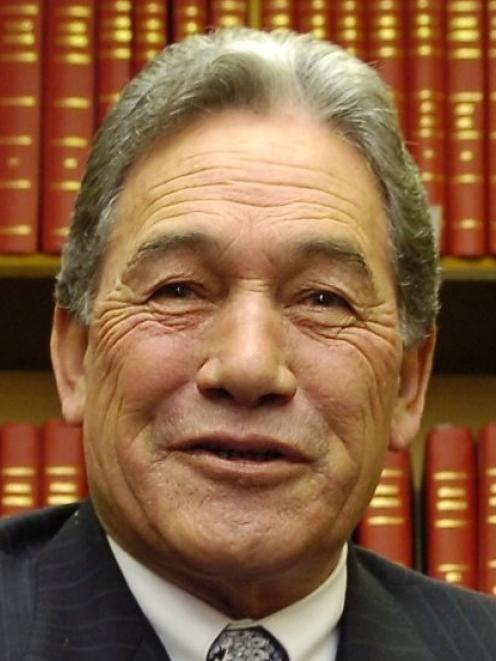
Party leader Winston Peters' comment came after the release of an evaluation of the Whanau Ora Integration, Innovation and Engagement (WIIE) Fund, which found $7.7 million taxpayer money was distributed to families this year without the results being measured.
The fund distributed $4.9 million in 2010-11, $7.7 million in 2011-12 and was expected to be allocated $6.4 million for 2012-13 and $8.4 million in later years.
The fund allows families to apply for up to $20,000 in grants to create and implement personalised plans to achieve goals like stopping gambling or leading healthier lifestyles.
The evaluation was reported on by Radio New Zealand this week, the day after a Dunedin gang member, who used $20,000 of Whanau Ora funding to buy cannabis to sell, was sent to prison for four years.
The court heard police intercepted calls in which Korrey Teeati Cook (36) outlined a plan to increase the bank balance of a trust he helped operate by initially claiming $5000 fees for building a whanau plan, and keeping the money instead of giving it to families.
He talked about how he hoped to raise through the trust $115,000 this year from submitting such plans, and calls revealed he was mentoring another local gang on how to obtain government funding.
The evaluation report on the WIIE Fund said although there was some evidence the fund was helping families, it was not known how many whanau plans had been written or completed and what the outcome of them was.
It also found the funds were being unevenly allocated across New Zealand - a high-needs area such as Northland was only receiving 7% of the funding.
Despite that, Te Puni Kokiri said it was happy with the performance of the fund, although it would refine its procedures and practices in response.
About 33,000 people in more than 2000 families had accessed support from the fund to put together development goals and plans for their members, a statement from the ministry said.
The independent evaluation found bringing whanau together, backed up by good-quality support, was transformative in itself.
"This is a positive indication of the impact that the fund is having, but gathering a stronger evidence base will be a priority for the fund and the wider Whanau Ora effort going forward."
Comprehensive performance and outcome data for Whanau Ora had always been a key requirement for Te Puni Kokiri and a range of information gathering and performance reporting processes had been developed since Whanau Ora started.
The most recent was a trial to collect information on whanau satisfaction with services provided through the wider Whanau Ora programme and support offered to families, which was piloted by seven providers and provider collectives this year.
The results were similar to the WIIE Fund evaluation, and indicated early positive changes for whanau as a result of Whanau Ora, the statement said.
Mr Peters, a long-time critic of Whanau Ora, said he found the WIIE Fund evaluation report largely indecipherable.
"In that regard it's just like the ill-conceived Whanau Ora, which is a touchy-feely scheme which ignores the real plight of Maori.
"Struggling Maori families need help in vital areas such as health, education, housing and employment, not taxpayer funding for rugby games and sausage sizzles."
The report identified alarming deficiencies with the scheme, he said.
"There is no basic data available on participation levels, and glaring monitoring gaps on where millions of taxpayer dollars are going."
The report would have called for Whanau Ora to be scrapped had it been conducted by a truly independent organisation, he said.