It feels as if the Southern District Health Board is going ''around in circles'' trying to find a solution to after-hours medical care, a board member says.
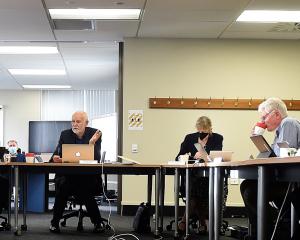
At its meeting in Dunedin this week the community and public health committee considered a report detailing problems with after-hours care in Otago and Southland.
Member Kaye Crowther said the report, commissioned by the Southern Primary Health Organisation, consisted of nothing she had not heard for the past six years.
''I think we're just going round in circles with this report,'' she said.
Mrs Crowther was concerned the PHO was the lead agency in finding solutions to the problem, rather than the board. The board had an interest, particularly as its emergency departments bore the brunt of additional presentations due to lack of access to after-hours care.
She was particularly concerned by reports children under 6 in Invercargill were attending Southland Hospital emergency department instead of after-hours services, an issue highlighted this year by a new nationwide entitlement for free visits for this age group.
Finance and funding executive director Robert Mackway-Jones said action was under way in the main trouble spots, Invercargill and Central Otago.
Fixing after-hours care in Invercargill would address the needs of under-6s, who were just one of the groups affected by lack of access.
Providers needed to negotiate local solutions and there would not be a single after-hours system for Otago-Southland, Mr Mackway-Jones said.
The PHO was leading the project because it was contracted by the DHB to provide GP services, which it did by subcontracting to practices. The DHB's role was supporting the PHO to find solutions.
Chief medical officer Dr David Tulloch said while he was not saying ''whoopee'' just yet, the issue was gaining traction.
Committee chairman Dr Malcolm Macpherson voluntarily relinquished the chair - and his right to take part in the discussion - because of a conflict of interest. In his place, acting chairman Neville Cook was also dubious an easy solution could be reached, saying GPs he knew said providing after-hours care was not financially worthwhile.
In response, Mr Mackway-Jones said the recent High Court finding in the South Canterbury District Health Board's favour confirmed GPs were responsible for after-hours care. However, the type of service was flexible and could include phone-call triaging.
Member Mary Flannery was keen for the project not to fall ''off the radar'' and asked for regular updates on the PHO's progress.
Independent facilitator Valerie Meyer's report based on sector feedback said many clinicians were disenchanted to the point of walking away from providing after-hours care. Problems included safety issues due to tiredness, unsustainable rosters, recruitment to rural areas, and young doctors not interested in after-hours work.