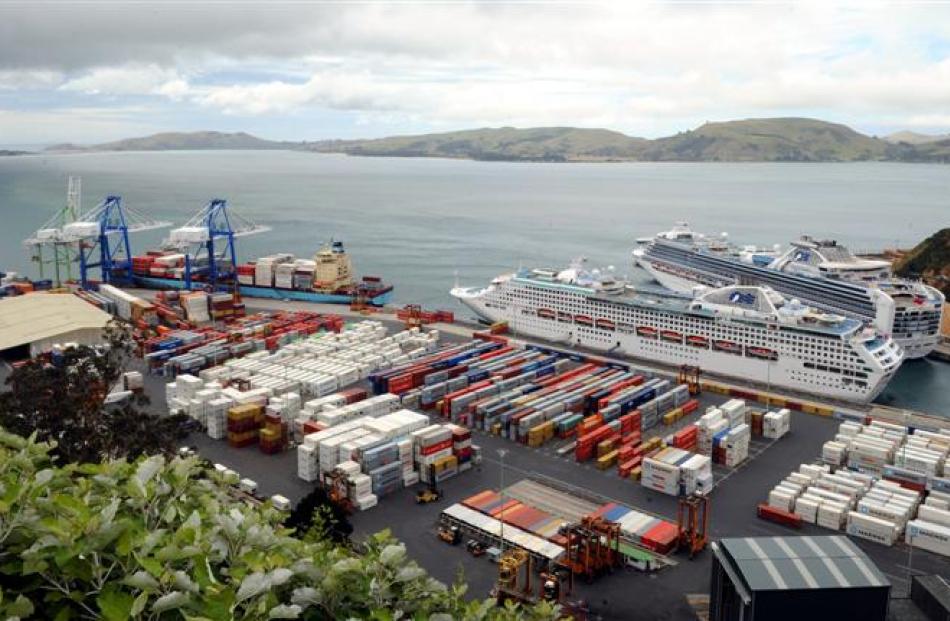
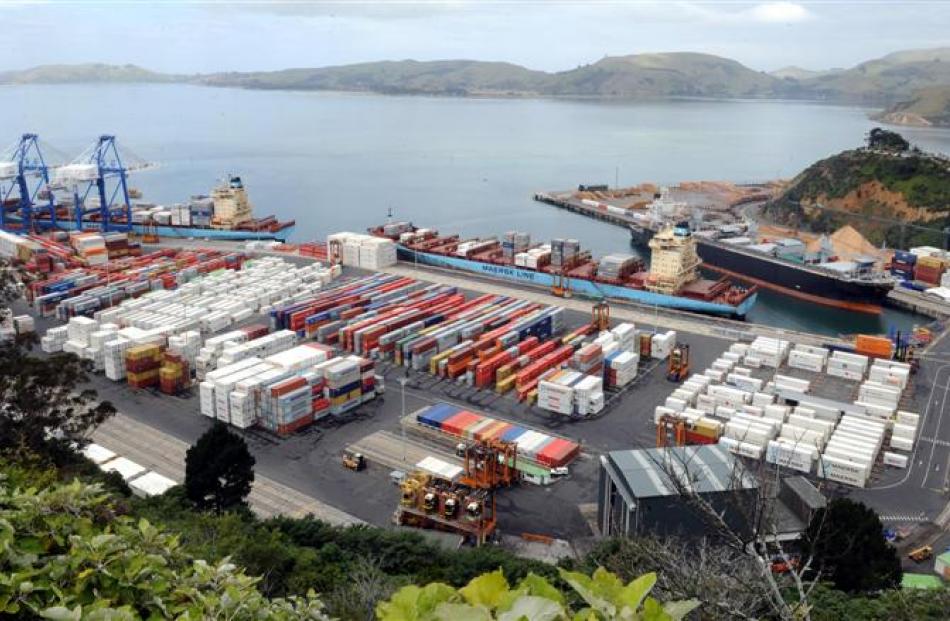
More than 4000 shipping containers are being handled across Port Chalmers' wharves in a continuous operation to swap the cargoes of the Maersk vessels Oluf Maersk and Olivia Maersk, which when reloaded will continue on their separate global trading routes.
Port Chalmers had a busy weekend, with the container ships, two cruise ships and a chip ship all vying for space, prompting chief executive Geoff Plunket to predict a ''busy but manageable weekend''.
Beginning at 7am on Saturday, container swapping on the Maersk vessels could continue until 11pm tomorrow - up to 88 hours of continuous loading, Port Otago operations manager Ron Horner said.
A total of 4100 containers, some with cargo and others empty, would be swapped, in what he said could be the longest continuous exchange of containers at the port.
Staff were working a three-shift rostering system and using two cranes throughout the exchange period, he said.
''There's been no hiccups and everything has gone very smoothly,'' he said yesterday afternoon.
The Oluf Maersk had come from Australia, and after loading at Port Chalmers would depart for Malaysia, while the Olivia Maersk had worked its way down the country from Auckland and Lyttelton. After loading, it would return to Auckland before heading to North America.
Mr Horner understood Port Chalmers was chosen for the swap because the vessels arrived at about the same time on their respective trading routes.
Port Otago became the fastest container handling port in the country for the first time last year, having lifted its container handling productivity rates about 20% during the year to June, largely because of better shipping schedules and equipment use.
It went from an average handling rate of 27.5 an hour to 33, ahead of Wellington in second place and Tauranga in third.
The actual number of containers handled at Port Chalmers was down 23%, or 49,000 containers, from 221,000 to 172,000 TEUs (20 foot equivalent units) for the year.
Tauranga moved more than 796,000 containers last year and was expected to reclaim first place within the group of six major ports, but Port Otago was predicted to remain in the top three, having jumped from fifth to first.