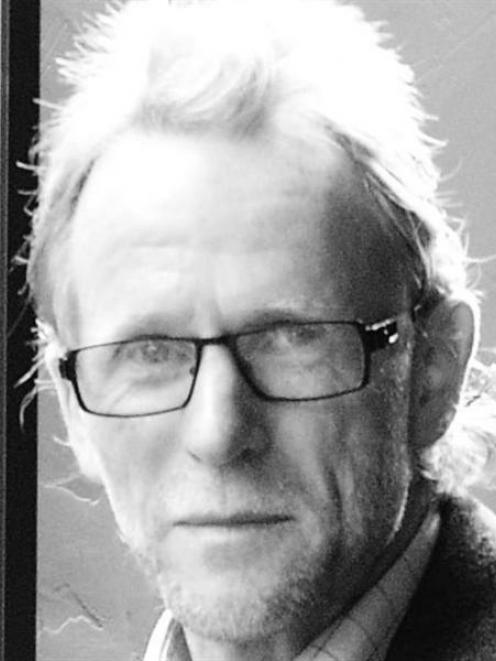
Mr Howard, who is the Robert Burns Fellow at the University of Otago this year, said that in many other countries other kinds of people, such as members of a royal family, could usually be expected to win such a poll.
Strongly backing a poet, as in the Scottish newspaper poll, could have happened in almost no other country, except, perhaps, in Russia.
He gave a public talk at the Dunedin Public Library on Friday at an event billed as a celebration of the Burns Fellowship, and of Burns' 254th birthday. Mr Howard outlined to more than 50 people his ''hopes'' and literary plans for the year ahead, and helped award prizes to poets who had participated in the latest annual Robert Burns Poetry Competition.
He was born in 1959, the year novelist Ian Cross had become Otago's first Burns Fellow. That year also marked the 200th anniversary of the birth of Burns, on January 25, 1759.
He was well aware he was following some ''terrifyingly impressive'' previous fellows, including Janet Frame, James K. Baxter and Maurice Gee.
He planned to work on a long poem involving a plot drawn from an opera, and involving a woman and a Chinese man. Another project was inspired by the time which 19th century Scottish novelist and poet Robert Louis Stevenson had spent in Samoa.
Mr Howard enjoyed working on long poems, which required skills different from those needed to write a lyric poem.
''You can't sing for 30 pages.''
In longer works, more focus on structure and character was required.