According to a confidential report on David Bain's claim for wrongful imprisonment, obtained by the New Zealand Herald, Canadian Supreme Court judge Ian Binnie believes that on the balance of probabilities, Mr Bain is innocent and should be compensated.
Justice Binnie came to New Zealand in July to interview Mr Bain and other people, including the police, whom the defence accused of planting a spectacle lens, a key piece of evidence in the prosecution case.
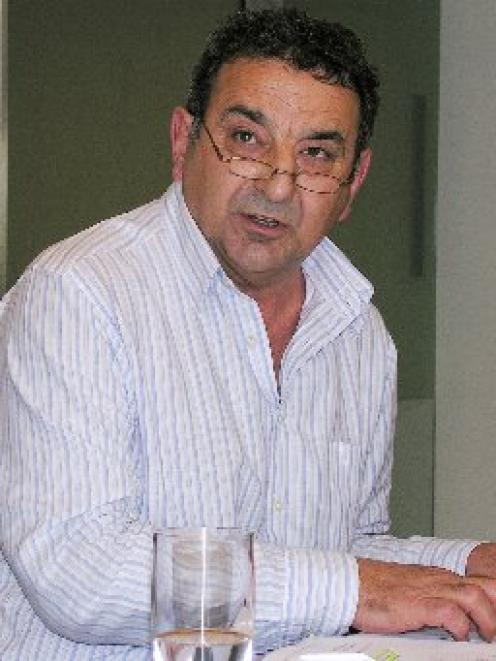
Mr Karam, who has campaigned for years for Mr Bain, told TV3's Firstline programme today he was not surprised by this finding.
"If the report is accurate, and on the assumption that it is, I'm not at all surprised that Justice Binnie has found that David Bain is innocent because anyone who analyses the evidence carefully, as Justice Binnie certainly has done over the last 12 months, would come to the same conclusion.
"As I've always said, I believe that the evidence shows that David Bain is innocent and according to this report that is what Justice Binnie has determined after his very lengthy and careful analysis of getting on to 10,000 pages of evidence."
Mr Karam said it was difficult to put a dollar figure on how much compensation Mr Bain should receive.
"Having your freedom taken away and being incarcerated for years for something that you didn't do, no amount of money can probably fix that up because your life is irrevocable destroyed."
Speaking to reporters in Japan, Prime Minister John Key refused to offer a view on Mr Binnie's recommendations.
"I know the Minister of Justice has received the report and is taking some advice. I personally haven't read the report. I've had some top line indications of what is in the report. I'm just not in a position to comment."
The Cabinet would need to fully consider the recommendations and advice it might receive before making a decision, Mr Key said.
Mr Bain was convicted of murdering his parents, Margaret 50, and Robin 58, and his siblings, Arawa, 19, Laniet, 18, and Stephen, 14, in June 1994 by shooting them with a .22 rifle.
He had served almost 13 years of his minimum 16-year life sentence when the Privy Council quashed his convictions in 2007 and ordered a retrial. He was acquitted after the three-month retrial in Christchurch in 2009.
Former Justice Minister Simon Power chose an overseas judge to examine Mr Bain's application for compensation because of the high-profile nature of the case in New Zealand.
The Cabinet faces a difficult decision over Justice Binnie's findings because of the polarised views about Mr Bain's innocence and because his case falls outside the 1998 guidelines for compensation for wrongful conviction and imprisonment.
Under those guidelines, eligible claimants must have had a pardon or had their convictions quashed on appeal without the order of a retrial.
But it has the discretion to pay compensation if it is convinced there are "extraordinary circumstances".
And there is a precedent for compensation in a case that falls outside the guidelines.
Last year, Aaron Farmer was paid $351,575 by the Government and received a statement of innocence and an apology for his conviction in 2005 for rape. He served two years and three months of an eight-year sentence.
If a similar formula were applied to 13 years' imprisonment, the figure would be $1.94 million, with possible add-ons for pecuniary loss and improper conduct by the authorities.
The Ministry of Justice will report to the Cabinet on whether "extraordinary circumstances" exist, and if so, how much should be paid.
- New Zealand Herald and Matthew Theunissen