A tip-off by a suspicious Bunnings employee led to the discovery of a Rotorua drug manufacturing operation, a court has heard.
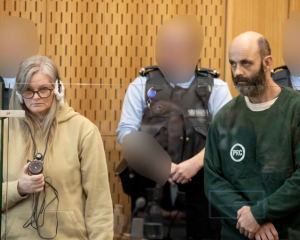
Phillip John Vant Leven, 53, is on trial in Rotorua District Court after pleading not guilty to nine charges relating to the manufacture of methamphetamine and its ingredient pseudoephedrine. Vant Leven faces one charge of manufacturing Class A drug methamphetamine, one of conspiring to manufacture methamphetamine and one of producing Class B drug pseudoephedrine.
He is also charged with one count of possession of a pre-cursor substance, three charges of possession of materials and two of possession of equipment, all with the intent to use them to manufacture methamphetamine.
He had earlier admitted one charge of possession of equipment and one of possession of a pre-cursor substance for the manufacture of the drug.
In her opening address yesterday, Rotorua Crown prosecutor Amanda Gordon told the jury the charges arose from three separate search warrants, carried out in 2009, 2010 and this year.
In October 2009, as part of an organised crime squad investigation, police searched a Riri St property owned by Vant Leven, although he was not personally a target. The property contained one large building divided into three sheds. In one shed, rented out by Vant Leven, two people were discovered in the process of manufacturing methamphetamine.
Police then searched the shed used by Vant Leven and found a number of items commonly used in the manufacture of methamphetamine, including pseudoephedrine and hydrochloric acid, glass pyrex dishes containing remnants of the drug, glass beakers and tubing.
In a desk drawer they found documents on the drug including a step by step guide or "recipe" which it was accepted was written by Vant Leven.
Ms Gordon said that when questioned by police, Vant Leven said some of the items were for legitimate use, while others he had "found" outside the shed.
In July 2010, police visited a Kaharoa home as part of a missing person investigation. While there they saw a car parked in the garage that was registered as stolen so a search warrant was obtained. On the back seat they found a large metal urn described by Ms Gordon as a mobile clandestine laboratory, with Vant Leven's fingerprints on some of the items.
The occupier of the house confirmed she had rented the garage to Vant Leven. Ms Gordon said Vant Leven told police he was a user and was addicted to methamphetamine but was not involved in its manufacture.
Ms Gordon said that in May this year Vant Leven's partner entered Bunnings Rotorua and bought two litres of spirits of salts. She left the store then returned a minute later and exchanged them for one litre of spirits of salts and one litre of acetone - both used in the manufacture of methamphetamine.
An employee followed her to the car park and saw her get into a car driven by Vant Leven. The employee told her supervisor who alerted police.
The next day police executed a search warrant at Vant Leven's home in Edward Payton Grove. At the front door, the officer noticed a strong chemical smell coming from the house and Vant Leven. The fire department and specialist police "clan lab" team were called and found the extraction of pseudoephedrine occurring.
Pseudoephedrine is the starting drug used in the manufacture of methamphetamine.
Ms Gordon said Vant Leven told police he had been offered $6000 to do the extraction for a man he refused to name, but claimed he didn't know what it would be used for. The trial is expected to run until Friday.
- By Katie Holland of The Daily Post