A search and rescue expert today denied a lack of specialist equipment cost lives at the CTV Building collapse, which killed 115 people in last February's earthquake.
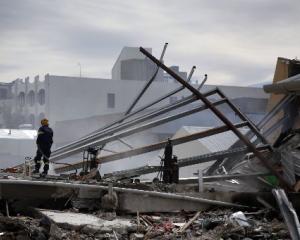
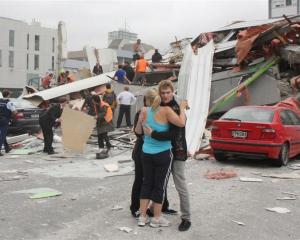
The six-storey Christchurch office block came down in the magnitude-6.3 quake, and some survivors trapped in the rubble used cellphones to alert friends, family and emergency services that they were still alive.
Urban Search and Rescue (USAR) teams from across New Zealand rushed to the disaster site.
One specialist USAR technician Ian Penn today told an inquest how he used hand tools, including crowbars, bolt-cutters, sledgehammers and breakers, to dig a hole to try to rescue one survivor.
He denied claims from fellow USAR colleagues that the slow-moving process to cut through layers of the "pancaked" building, including through reinforced steel and concrete, was hampered by a lack of concrete cutting tools and core drilling equipment.
The machinery would have got caught up in the tangled debris and become "un-useable", he said.
Mr Penn was speaking at a coroner's inquest into the deaths of Dr Tamara Cvetanova (Eds: correct) of Serbia, Cheng Mai of China, Japan's Rika Hyuga, and Jessie Redouble, Emmabelle Anoba, Ezra Medalle, Reah Sumalpong and Mary Amantillo, all from the Philippines.
All were students at King's Education School for English Language on the concrete tower's third floor, and survived the collapse but could not be rescued alive.
Mr Penn was scrambled from Palmerston North's USAR taskforce, and arrived at the CTV site around 12.30am on February 23 - 12 hours after the quake hit, bringing down the building and starting a fire.
USAR is a crack unit that specialises in finding and recovering people in dangerous situations. It comprise firefighters, dog handlers, communications experts, engineers, doctors and paramedics.
Mr Penn told of getting a "live hit" when searching for survivors.
He'd yelled and tapped on one patch of debris and got an instant reply. He repeated it three times, and got three responses.
"It sounded so close and right below me," he said.
USAR workers then spent several hours wearing breathing masks, goggles, and heavy duty jackets to cut the hole as "yellow/green acrid smoke" poured out of it, getting more intense the deeper they went.
Only two corpses - a male and a female - were found.
Under cross examination from Nigel Hampton QC, on behalf of Srecko 'Alec' Cvetanov (correct) who spoke to his wife Tamara via cellphone while she was trapped, Mr Penn admitted he was unaware that Delsar listening equipment was being used by USAR colleagues on the other side of the CTV site.
Mr Hampton said the lack of communication over such a potentially critical piece of equipment appeared an "extraordinary" oversight.
Mr Penn agreed and accepted that the site lacked a central command point to control logistics, which might have been able to step in and "solve the Delsar issue".
A lack of understanding by the Fire Service over what USAR did and how it operated was an issue at the time of the Canterbury earthquakes, he said.
Senior fire managers should be made to go on USAR courses to learn more about them, he said, but he had not seen any evidence of that happening yet.
The inquest, before Coroner Gordon Matenga, continues.