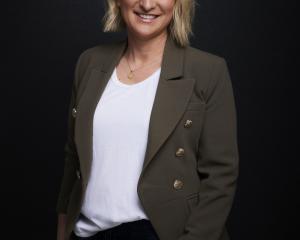
Arrowtown book buyer Miranda Spary continues her regular column about her recommendations for a good read and life as she sees it ...
There's obviously some sort of plot to get me as homesick as possible and it's working perfectly.
Thanks to everyone who's sent me photos of beards and miners and goldpans and the beautiful Earnslaw and the new cycleway opening ... they have made me sick as a dog to have missed it all.
We've spent the last week in Berlin where it isn't possible to be bored.
It's been heavenly autumn weather and it is hard to make ourselves make the most of Berlin's hundreds of museums and art galleries.
Instead, we have been hiring bikes and sucking up the history that just won't leave you alone.
Opposite the apartment we are in is the graveyard where the brothers Grimm are buried.
Honestly, how those brothers can sleep after all the sleepless nights they caused to children around the world ... they are still my heroes, though.
And the train station near us is where all the Jews were herded and packed off.
There's one of the best museums I've ever been to there called "The Topography of Terror" - mostly outdoors along a remaining stretch of the wall and it tracks the history of the Nazis and their rise to power.
The Brothers Grimm could never have invented a fairy tale as gruesome as the Holocaust.
But history keeps repeating itself, and in one of the many exquisite squares in Berlin where all the books were burnt, there is a plaque with a bit of Heinrich Heide's poem from 1820, "where they burn books, they will, in the end, burn people". Eerie foresight.
Everywhere in Berlin there is evidence of the great and ghastly things that have coloured the history of this city and our world.
When we biked through the Tiergarten, the huge park in the middle of Berlin, it was hard to reconcile these glorious green spaces and all the enormous trees turning every autumn colour imaginable with the poverty and deprivation after the war. All the trees were chopped down for firewood as it was such a cold winter.
We took the train to Potsdam and cycled through impossibly beautiful parks, looking at the ridiculously lavish palaces built by the Prussians. In contrast, the plantings are simple and perfect.
I felt like royalty biking up great avenues of golden trees with gold-topped garden houses popping up here and there.
One king built a colossal terraced vineyard and fig orchard - every fig tree lives in its own little copper-doored niche - you have to see it to believe it.
I think there are more than 100 niches - I want a niche like that for my fig tree, although my darling pointed out I could have fresh figs flown in every week of the year for the cost of a pair of the huge copper doors with all those windows.
A 10-minute cycle away is the former KGB prison and interrogation rooms.
Strange contrasts.
Christchurch has just been named as one of the world's top "must visit" cities for 2013 and its council should definitely visit Berlin.
They should see how they have turned total devastation and tragedy into an energetic, efficient and happy place.
I interviewed Sarah Quigley, a Christchurch-born author who has lived in Berlin for 12 years. She's mad about the place and loves the fact that everyone's lifestyle is tolerated here.
Even smokers aren't the pariahs they are in NZ. Her favourite bar in former East Berlin had obeyed the no smoking laws for a while but now they have a rule - no smoking till after 9pm when they finish serving food. So sensible!The Berlin mayor is gay and coined the phrase "poor but sexy" - sex plays a huge part in their lives here if the number of sex shops and posters are anything to go by. Berlin alone has managed to clock up over 60 billionin debt. No-one seems worried.
When I was in Frankfurt, I went to a reading at the International Club by A. D.
Miller,who was once The Economist's correspondent in Moscow.
His novel Snowdrops was longlisted for the Booker Prize last year.
It's not autobiographical but came about from the scary things he saw about living in a city where you have to make dubious moral calls about all sorts of things to keep yourself out of trouble, and in favour with people who can make things run easily for you.
Snowdrops is a Russian term for bodies that appear in the spring, having been covered by the snow during winter. He called his book this because there are many things in people's lives they hope are hidden, but most bad things surface again at some time.
It's a frightening story and more frightening in that he says it is just how life is for the people there. Fantastic read.