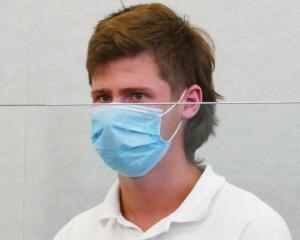
The midwife at the centre of professional misconduct allegations will know her fate this morning, after the Health Practitioners Disciplinary Tribunal retired to deliberate in Queenstown last night.
The woman, known as ''Ms P'', was charged under the Health Practitioners Competence Assurance Act 2003, in relation to alleged failures in her care of Sara Gutzewitz and her son Francis (Frankie), between January 20, 2010, and February 7, 2010.
The allegations centre around Ms P's actions during and immediately after Frankie's birth on February 7, 2010, when she said she had an unusually severe episode of supra-ventricular tachycardia (SVT), causing her heart to race and leaving her feeling faint.
While Ms P had previously experienced SVT, she said it had not affected her ability to provide midwifery care before February 2010.
Ms P said she began to feel unwell before Frankie's birth, called for assistance and then asked the assisting midwife, Valerie Drake, to remain in the room following Frankie's birth as she had to leave.
However, that was disputed.
Since the incident, Ms P had formalised a management plan, which included clear communication about her condition with expectant mothers at their first meeting.
Director of proceedings Aaron Martin said in Ms Gutzewitz's case Ms P failed to communicate her medical condition before the labour; her unwellness during the labour; her requirement for Ms Drake to look after Ms Gutzewitz and her son; or that she was leaving the room. He contended, whether viewed separately or cumulatively, her actions amounted to professional misconduct.
For the tribunal to find the charges proven, it had only to be satisfied there was a ''significant departure from acceptable professional standards warranting sanctions''.
However, Anita Miller, counsel for Ms P, argued given the seriousness of the charge, the burden of proof needed to be higher.
Mr Martin said by defending the charge, Ms P was attempting to blame a ''clear departure'' from the standards - resulting in Ms Gutzewitz feeling ''abandoned by her LMC (lead maternity carer) at a critical time - on her underlying medical condition which she ''kept to herself, before, during and after Ms Gutzewitz's labour''.
''Her communication failures amount to professional misconduct.''
Mr Martin said Ms P was aware she had SVT since at least 2003, was physically capable of communicating with Ms Gutzewitz, her family and other staff to the ''limited extent necessary to meet the requisite professional standard'', yet failed to do so.
Saying Ms P could do nothing about her SVT but would communicate better in future could not sit alongside her ''refusal to accept her communication in this case was a significant departure from professional standards''.
Ms P's ''acts and omissions'' were sufficiently serious to warrant a disciplinary sanction to protect the public, maintain professional standards and punish the practitioner.
Ms Miller argued having regard to all of the circumstances her conduct could not be said to ''fall so seriously short of the acceptable it amounts to misconduct''.
The key matter in dispute was whether Ms P left the Gutzewitz family alone immediately after Frankie's birth, without first ensuring adequate midwifery care was available.
''It is submitted that when the evidence is considered in totality there is considerable uncertainty in a number of witness accounts ... given the seriousness of the charge, and consequently the high burden of proof on the Director of Proceedings, [Ms P] should benefit from any doubt as to what occurred.''
Ms Miller said even if the tribunal found the charges proven, it was a ''two stage test'', the second of which was to determine whether the conduct was ''significant enough'' to warrant disciplinary sanction. She submitted it was not.
''This is an unusual case. It's also a significant case and it raises difficult questions about communications for hundreds, if not thousands, of health practitioners with health concerns.''
She argued even if the tribunal found the charges proven, it could not be satisfied discipline was warranted.
''The case of professional misconduct cannot be made out and as such the charge ought to be dismissed,'' Ms Miller said.