An Australian counter terrorism team has arrested seven teenagers linked to a boy charged with a religiously-motivated terror attack on a Sydney bishop and questioned another five people.
The Prince and Princess of Wales have thanked the public for their messages which had been sent to mark the sixth birthday of their youngest son Louis.
Elon Musk's X has taken its fight against Australia's internet safety watchdog to court, arguing the online regulator cannot police what global users see.
Prosecutors on the first day of Trump's criminal hush money trial say the former president broke the law and corrupted the 2016 election by trying to cover up sexual encounters with a porn star and a Playboy model, while his defense lawyer said he committed no crime.
British Prime Minister Rishi Sunak has promised to start sending asylum seekers to Rwanda within 10 to 12 weeks as the upper house of parliament finally passed required legislation.
A Belgian man was acquitted of a drink-driving charge because he suffers from auto-brewery syndrome, a rare condition whereby the body produces alcohol.
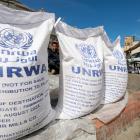
Israel has yet to provide evidence for its accusations that hundreds of staff with the UN agency for Palestinian refugees (UNRWA) are members of terrorist groups, according to a review of the agency's neutrality.
Australian opposition leader Peter Dutton has joined a bipartisan push for stronger misinformation laws for social media companies following stabbing attacks in Sydney.
Accused triple mushroom killer Erin Patterson is happy to wait behind bars for more than a year if it means the case is held near her regional Victorian home.
A crowd is gathering at Sydney's Bondi Beach to share in a minute's silence honouring six people killed in a stabbing attack, as a wounded baby leaves hospital.
A Palestinian ambulance driver was killed on his way to evacuate the wounded during a raid by violent Jewish settlers and at least 12 Palestinians died during a separate incident in the occupied...
Former Dutch prime minister Dries van Agt died hand in hand with wife Eugenie on February 5, aged 93, taking advantage of a law passed after his fall from power for a double euthanasia.
Explosions echoed over an Iranian city on Friday in what sources described as an Israeli attack, but Tehran played down the incident and indicated it had no plans for retaliation.