The BBC, reeling from revelations that a former star presenter was a paedophile, brought further problems on its head when a flagship news programme, Newsnight, aired a mistaken allegation that a former senior politician sexually abused children.
The broadcaster issued a full apology on Friday, but early on Saturday (local time) Entwistle had to admit under questioning from his own journalists that he had not known in advance about the Newsnight report, weeks after being accused of being too hands-off over a previous scandal involving the same programme.
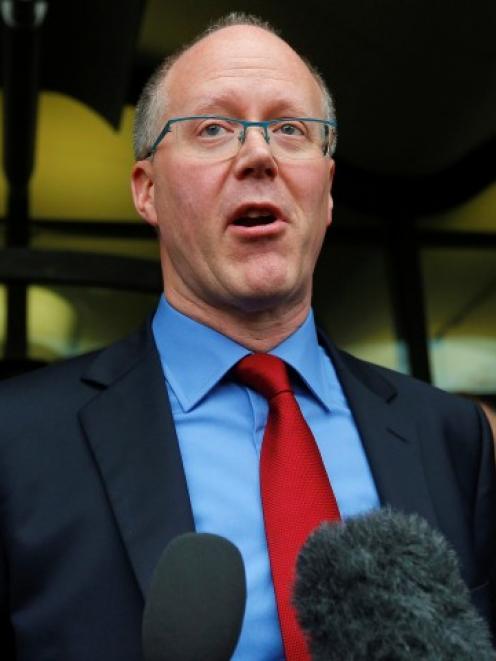
Later on Saturday Entwistle announced his resignation, saying the unacceptable journalistic standards of the Newsnight film had damaged the public's confidence in the 90-year-old BBC.
"As the director general of the BBC, I am ultimately responsible for all content as the editor-in-chief, and I have therefore decided that the honourable thing for me to do is to step down," he said.
Entwistle succeeded Mark Thompson, set to take over at the New York Times Co, in September and almost immediately faced one of the biggest crises in the history of the BBC, funded by an annual licence fee levied on all TV viewers.
This was the revelation by rival broadcaster ITV last month that the late Jimmy Savile, one of the most recognisable personalities on British television in the 1960s, 1970s and 80s, had sexually abused young girls, some on BBC premises.
Suggestions have surfaced of a paedophile ring inside the broadcaster at the time and a BBC cover-up. A large-scale police inquiry has been launched.
Entwistle was condemned for the BBC's slow response over the Savile furore and then lambasted after it emerged that Newsnight had axed an expose into Savile shortly after his death and that the broadcaster had gone ahead with planned tributes instead.
His appearance before a parliamentary committee provoked mockery, with one lawmaker saying he had shown a "lamentable lack of knowledge" of what was going on at his own organisation.
Thompson has also had to explain what he knew about the Savile episode and has faced questions from staff at the New York Times over whether he is still the right person to take one of the biggest jobs in American newspaper publishing.
MISTAKEN ALLEGATION
For Entwistle, the knives were sharpening on Friday after the BBC had to apologise following an admission Newsnight had broadcast a mistaken allegation that an ex-politician, later identified on the Internet as a close ally of former Prime Minister Margaret Thatcher, had sexually abused children.
The final straw came when under questioning from his own journalists, he said he had not known in advance about the Newsnight report nor who the alleged abuser was until the name appeared in social media.
"He showed no sign of being in control the first time (over the Jimmy Savile issue) and this morning's interview on the Today programme I think was fatal, because it happened again," said Steve Hewlett, a media consultant and former BBC editor.
"You could forgive him for the Savile situation, he could have survived that if he'd shown he was on top of this situation and he didn't," Hewlett told Reuters.
Senior lawmakers said Entwistle's decision was right because it appeared that under him the BBC, long affectionately known as "Auntie" and widely respected in many parts of the world, was systematically incapable of addressing its failings.
"It is vital that credibility and public trust in this important national institution is restored," Culture Secretary Maria Miller said in a statement. "It is now crucial that the BBC puts the systems in place to ensure it can make first class news and current affairs programmes."
QUESTIONS NEED ANSWERING
John Whittingdale, chairman of parliament's powerful media committee, said the crisis had done enormous damage to public trust and confidence, and that Entwistle's departure did not spell the end of the matter.
"There are still a lot of questions which need answering. Who did take the decision to approve that (Newsnight) programme because quite plainly it was a deeply flawed decision," he told Reuters.
The sudden departure of Entwistle, and the journalistic mistakes that prompted it, is the latest drama to hit the British media industry after two years of soul-searching sparked by a phone-hacking scandal at Rupert Murdoch's newspaper empire.
Any lack of integrity at the BBC is serious for a broadcaster that has been widely respected for decades and is funded by the public. A judge-led inquiry into media standards prompted by the illegality at a Murdoch tabloid is due to be published soon.
Lord Patten, chairman of the BBC's governing body and long a prominent figure in British politics, said it was one of the "saddest nights" of his public life to accept Entwistle's resignation.
"George has very honourably offered us his resignation because of the unacceptable mistakes and the unacceptable shoddy journalism which has caused so much controversy," said Patten.
"He has behaved as editor with huge honour and courage and would that the rest of the world always behaved the same."
Patten announced that Tim Davie, the BBC's director of Audio and Music, would be the acting director general.
Some commentators have said the hierarchical management of the 22,000-strong organisation left it unable to respond to large-scale problems and criticism.