Pakistan, a nuclear-armed U.S. ally, is suspending phone coverage in many cities this weekend, an important one in the Shi'ite Muslim calendar, after a series of bomb attacks on Shi'ites triggered by mobile phones.
Hardline Sunnis have threatened more attacks as the Shi'ite mourning month of Muharram comes to a climax. More than a dozen people have already been killed this week observing Muharram.
Some Shi'ites have been receiving text message death threats.
Saturday's attack occurred in the city of Dera Ismail Khan in Pakistan's northwest, a stronghold of al-Qaeda-linked Sunni militant groups who regard Shi'ites as non-Muslims and have stepped up sectarian attacks in a bid to destabilize Pakistan.
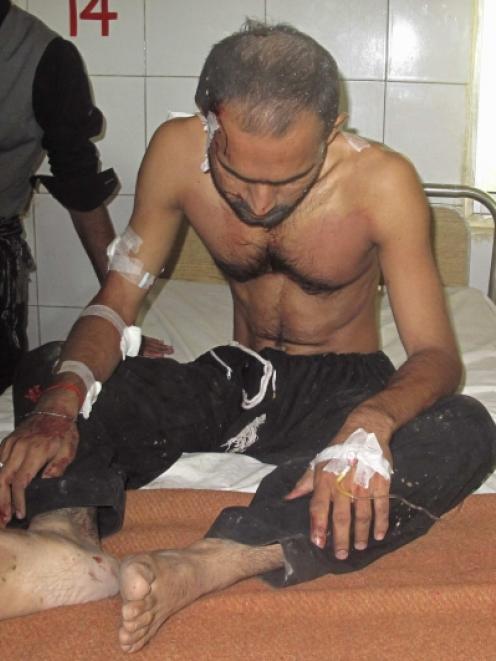
Four children were among those killed by an 8kg-10 kg bomb set off by a television remote control device because cellphones were not operational, police said. Khalid Aziz Baloch, a senior medical official, said 30 people were wounded.
The explosion was so powerful that it hurled a young boy onto a rooftop from a street, where a man later carried away half of his body, as a policeman with a bomb detector and residents stood near blood stains.
Intelligence information indicates more attacks have been planned for the coming days in the capital, Islamabad, Karachi and Quetta. Mobile phone service will be suspended for hours in the three cities and dozens of others over the weekend.
For the most part, Shi'ites and Sunnis live in harmony, but extremist groups have increased tensions.
This week's violence against Shi'ites prompted Amnesty International to criticise the Pakistani government.
"Amnesty International has recorded at least 39 attacks on Shi'a Muslims since the start of 2012," it said in a statement.
"But despite the frequency of such violence, the Pakistani government has a poor track record of bringing the perpetrators - and those who incite them - to justice."
In Pakistan's biggest city Karachi, more than 5000 police are expected to patrol the streets during Muharram events over the next two days. Tens of thousands are expected to take part in processions in Islamabad.
Muharram marks the anniversary of the Battle of Karbala, where the grandson of the Prophet Mohammad and his family members were killed.
Western intelligence agencies have mostly focused on anti-American groups like al Qaeda and the Taliban in Pakistan, paying far less attention to sectarian hardliners who are becoming an increasing deadly and effective force.
Pakistani intelligence officials say extremist groups led by Lashkar-e-Jhangvi have intensified their bombings and shootings of Shi'ites in the hope of triggering conflict that would pave the way for a Sunni theocracy in U.S.-allied Pakistan.
The schism between Sunnis and Shi'ites developed after the Prophet Muhammad died in 632 when his followers could not agree on a successor.
Sunnis recognise the first four caliphs as his rightful successors. The Shi'ites believe the prophet named his son-in-law Ali. Emotions over the issue are highly potent in modern times, pushing some countries, including Iraq five years ago, to the brink of civil war. Pakistan is nowhere near that stage.
But officials worry that LeJ and other groups have succeeded in dramatically ratcheting up tensions and provoking revenge attacks in their bid to topple the U.S.-backed government, which faces a host of other challenges as well which fuel instability.
Pakistan's economy is weak, chronic power cuts cripple vital industries like textiles, and frustrations are growing over a lack of basic services and crumbling infrastructure.