The tax was the most contentious element in the country's sixth successive austerity budget, part of a drawn-out bid to balance the books under the terms of an EU-IMF bailout taken after a property crash ravaged the economy.
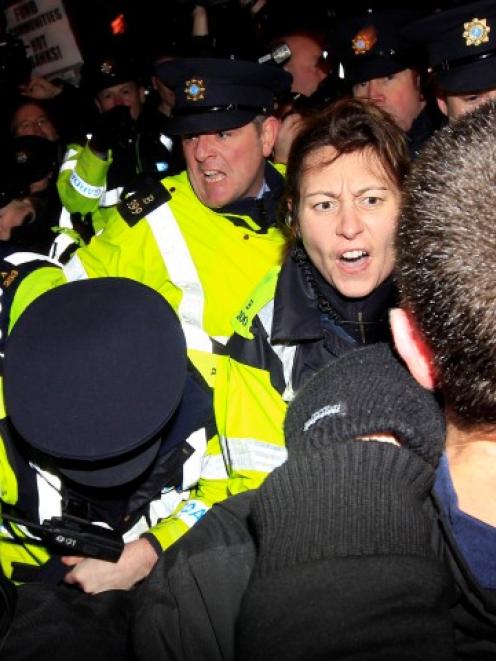
The annual charge of 0.18 percent of a property's value will replace a flat 100 euro annual charge for local services introduced at the start of the year that sparked large protests and spawned a national non-payment campaign.
Some 500,000 people, or 31 percent of households, have yet to pay that charge and campaigners say they will resist the new charge too.
"The jump from a 100 euros household charge to a much higher bill will be too much for many families," said Ruth Coppinger, a spokeswoman for the campaign against higher household and water charges who will lead fresh protests to fight the tax.
"They are expected to pay more and more each year that they just haven't got."
In a bid to block a new campaign of non-payment, the government will deduct the tax from the wages of employees when it is introduced in July.
Ireland's battle with property-related charges extends back to 1978 when a local tax was scrapped. Similar charges were reintroduced from 1983 for almost a decade, only to be discarded amid widespread defaults and claims that it was unfair.
During the boom the government secured a significant portion of its revenues from a stamp duty on property sales. After the crash, it cut it significantly to try to revive the market.
"Four years after a property crash, the government still can't think outside the box to generate revenue ... it all comes back to property," said Tom Daly, a homeowner from Rathgar, a middle class Dublin suburb.
The property crash hit young first-time buyers the hardest, with many now struggling to hang onto their homes in negative equity, paying for mortgages often higher than the value of their homes.
Over half of all Irish mortgages are in negative equity, as a result of the deepening European crisis and the stagnant economy.
The typical price of a property in Ireland is about 150,000 euros, and based on that figure the average property tax bill will amount to about 300 euros, which will be collected by revenue commissioners.
"This will be a divisive tax, which will hit all home owners but especially penalises home owners in Dublin, Cork and other major urban centres," said Michael McGrath, the shadow finance minister.
"Thousands of families and individuals will simply be unable to pay."