"Syria stresses again, for the tenth, the hundredth time, that if we had such weapons, they would not be used against its people. We would not commit suicide," Deputy Foreign Minister Faisal al Maqdad told Lebanon's Al Manar television, the voice of the pro-Assad Hezbollah movement.
"We fear there is a conspiracy to provide a pretext for any subsequent interventions in Syria by these countries that are increasing pressure on Syria."
As darkness fell in the embattled capital, the highway to Damascus international airport was closed by fighting, witnesses said. Rebels said they would not storm the airport but would encircle it to stop flights supplying the army.
Fighting in Syria's 20-month civil war has intensified around the capital in the past week, prompting Western commentators to speak of an "end-game" that could soon see Assad toppled soon.
Several Western countries have issued coordinated warnings this week to Assad's government not to use chemical weapons, many citing secret intelligence that U.S. officials said showed the Assad government might be preparing to use poison gas.
Syria has not signed the international chemical weapons treaty that bans the use and storage of poison gas, but has repeatedly said it would never use such arms on its own people.
NATO also decided this week to send U.S., German and Dutch batteries of Patriot anti-aircraft missiles to Turkey's border with Syria, meaning hundreds of American and European troops deploying to the frontier for the first time.
Western countries have so far resisted conducting the sort of intervention in Syria's civil war that saw NATO air strikes help topple Libya's Muammar Gaddafi last year.
Germany approved the Patriot missile mission on Thursday. NATO says it is a defensive step to prevent cross border missile strikes on alliance member Turkey, but Syria fears it could be a prelude to imposing a no-fly zone over its territory.
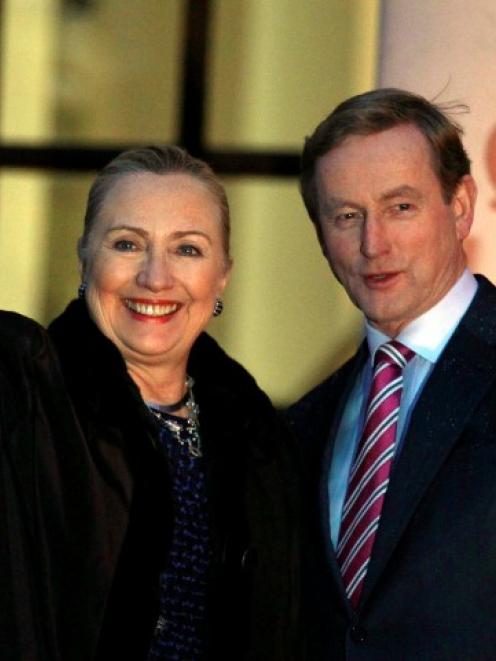
With conditions worsening on the ground, Russian Foreign Minister Sergei Lavrov, U.S. Secretary of State Hillary Clinton and Syria mediator Lakhdar Brahimi were in Dublin to try to put get a U.N. peace process on track.
Russia, backed by China, has so far blocked U.N. resolutions against Assad in a war that has killed more than 40,000 people. But there are signs that Moscow's patience with its ally may be wearing thing.
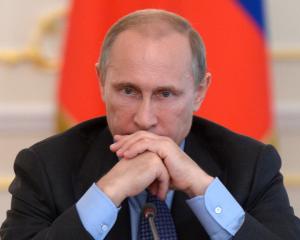
A Russian lawmaker and ally of President Vladimir Putin on Thursday said "time has shown" that Syria's government has lost the strength to function as it should.
AIRPORT BLOCKADE
Rebel spokesman Abu Nidal said the army was pinned down along the airport highway by nightfall on Thursday by rebel fighters manoeuvring to mount a blockade. The airport is not closed but commercial traffic has almost ceased.
"We know that arms have been going to the regime through the civilian airport," he said. A blockade would be "a good tool to put more pressure on the regime, which is part of strategy of trying to drain their strength".
Western powers have shown no enthusiasm for armed intervention in Syria, preferring economic sanctions, diplomatic pressure and limited aid to rebel forces, who get most of their guns and ammunition paid for by sympathetic Arab powers.
Britain said on Thursday it will increase practical support for the rebels to include training and equipment such as body armour and night-vision goggles. But they will not get the anti-aircraft and anti-tank missiles they are crying out for.
Exactly what Syria's army has done with suspected chemical weapons to prompt a surge of Western warnings over the past two days is not clear. Reports citing Western intelligence and defence sources are vague and inconsistent.
Clinton said on Wednesday Washington was concerned both about the possible use of chemical arms by "an increasingly desperate" Assad, and about the government losing control of such weapons to extremist armed groups.
While Western countries support the rebel aim of toppling Assad, they are also uncomfortable with some rebel groups, which espouse radical Sunni Islamist views. The prospect of some rebels obtaining chemical weapons could be more frightening to Western policymakers than Assad.
U.S. officials said the Obama administration was considering blacklisting Jabhat al-Nusra, an influential rebel group accused by other rebels of indiscriminate tactics that has advocated an Islamic state in Syria and is suspected of ties to al Qaeda.
An explosion at the Damascus headquarters of the Syrian Arab Red Crescent killed at least one person on Thursday, Syrian state television said. It blamed "terrorists from al Qaeda" - a term the government often employs to refer to rebel forces.
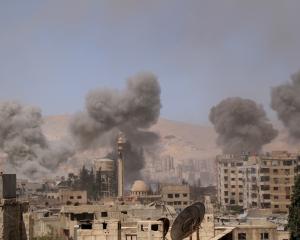
Opposition activists said army artillery pummelled several eastern suburbs of Damascus, where the rebels are dominant. Suburbs have been cut off for weeks from water and electricity, rebels say, accusing the government of collective punishment.
Residents of the cosmopolitan capital - until now largely spared the ravages of a war concentrated in the provinces and other cities - speak of a city under siege.
"I wanted to run a simple errand, to pay my cell phone. It should have taken 7 minutes but it took 25 because they've blocked the main road and the detour road," said one woman. "So we took a route all the way round the city that was very crowded with the traffic of everyone trying to get home. People are very resentful - and the VIPs must be very scared."
Rebels say they have also surrounded an air base 4 km (2-1/2 mikes) from the centre of Damascus, a fresh sign the battle is closing in on the Syrian capital.
Maqdad denied that. "What is sad is that foreign countries believe these repeated rumours," he said.
Rebel and state claims about the military situation cannot be verified independently. But residents in the capital say the sound of shelling on the outskirts has become a constant backdrop and many fear the fight will soon come to Damascus.
Fighting was reported on Thursday in the rural outskirts of Damascus and in many parts of the country. A crucial supply line for the army, the Damascus-Aleppo road, was hit by clashes.