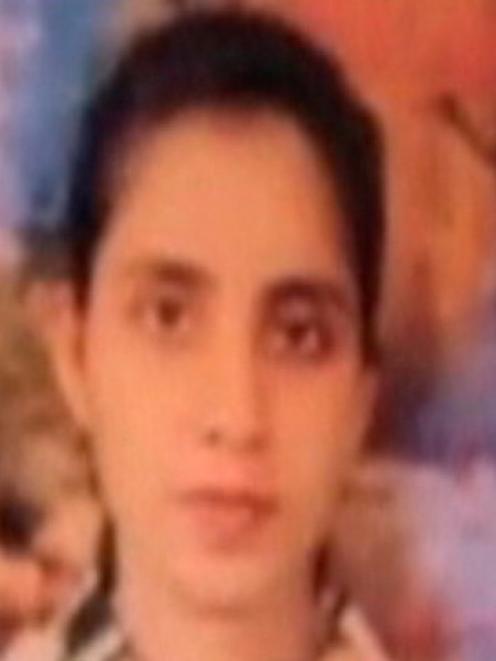
There has been renewed soul-searching over media ethics after Jacintha Saldanha, 46, the nurse who was duped by the station's call to the King Edward VII hospital, was found dead in staff accommodation nearby on Friday (local time).
The owners of Sydney's 2DayFM said it had done nothing wrong and no one could have foreseen the tragic outcome of the stunt, but two leading Australian firms suspended their advertising.
The hoax, in which the radio hosts - posing as Britain's Queen Elizabeth and Prince Charles despite Australian accents - successfully inquired after Kate's medical condition, has made worldwide headlines.
The hospital's chairman, Lord Glenarthur, urged the station's owners to ensure that such an incident could never happen again.
"It was extremely foolish of your presenters even to consider trying to lie their way through to one of our patients, let alone actually make the call," he said in a letter to Southern Cross Austereo Chairman Max Moore-Wilton.
"Then to discover that, not only had this happened, but that the call had been pre-recorded and the decision to transmit approved by your station's management, was truly appalling."
The immediate consequence had been the humiliation of two "dedicated and caring" nurses, he said. "The longer term consequence has been reported around the world and is, frankly, tragic beyond words," Glenarthur added.

Two large companies suspended their advertising from the popular Sydney-based station and a media watchdog said it would speak with 2DayFM's owners. Users of social media sites such as Twitter expressed outrage.
The hoax also raised concerns about the ethical standards of Australian media, as Britain's own media scramble to agree a new system of self regulation and avoid state intervention following a damning inquiry into reporting practices.
Southern Cross Austereo Chief Executive Rhys Holleran told a news conference in Melbourne on Saturday that the company would work with authorities in any investigation, but that it was too early to draw conclusions. He said he was "very confident" that the radio station had done nothing illegal.
"This is a tragic event that could not have been reasonably foreseen and we are deeply saddened by it. Our primary concern at this stage is for the family of Nurse Saldanha."
Holleran added that 2DayFM radio hosts Mel Greig and Michael Christian were "completely shattered" by Saldanha's death. The pair will stay off the air indefinitely, he said.
Two high profile Australian firms, the Coles supermarket group and phone company Telstra, said on Saturday that they were suspending advertising with the station. Others were expected to follow suit.
Austereo said all advertising on 2DayFM had been shelved until at least Monday in a mark of respect to advertisers whose Facebook pages were inundated with thousands of hate messages.
The Twitter accounts of Greig and Christian were removed shortly after news of the tragedy in London broke.
SOCIAL MEDIA OUTRAGE
Social media were inundated with angry messages to the radio station and its hosts in what has become the latest shock radio story to rile the Australian public.
Earlier this year 2DayFM was reprimanded by Australia's independent communications regulator after a radio host talked a 14-year-old girl into revealing on air that she had been raped, prompting community outrage and an advertiser backlash.
So-called "shock jock" radio announcers are frequently denounced in Australia for their deeply personal and often derogatory attacks on politicians and ordinary citizens.
Communications Minister Stephen Conroy said that the independent broadcast regulator, the Australian Communications and Media Authority (ACMA), had received complaints about the royal hoax.
Saldanha lived with her husband and two children in the western English city of Bristol. She moved to Britain from India around 10 years ago, British media reports said.
Her husband's family, who live in the southern Indian state of Karnataka, told news agency Asian News International they would miss their "good-natured and beautiful" relative.
"At eight o'clock in the morning, he (Saldanha's husband) rang up to say that she is no more, more than that we do not know about what actually happened. She is dead, that's all," said Camril Barboza, Saldanha's mother-in-law.
The British royal family has long had an uneasy relationship with the media, which sank to its lowest after the 1997 death of Prince William's mother Diana in a Paris car crash.
Palace officials acted swiftly this summer when a French magazine printed topless photos of Kate on holiday, taking legal action to curb republication for fear of a repeat of the relentless media pursuit of Diana.
Saldanha's death threatens to cast a pall over the enthusiastic public welcome given to Kate's pregnancy, which dominated newspaper front pages this week from her admission to hospital on Monday to her departure on Thursday.
The royal family has emerged from years of criticism that it was a dated and out of touch institution and is enjoying a surge in popularity in Britain following Kate and William's wedding last year. The impending royal baby will only boost public affection.
Elaborate celebrations marking the 60th anniversary of the queen coming to the throne and her appearance at the opening of the London Olympics this summer - where a stunt double parachuted into the stadium - have all contributed to a more positive royal relationship with Britons.