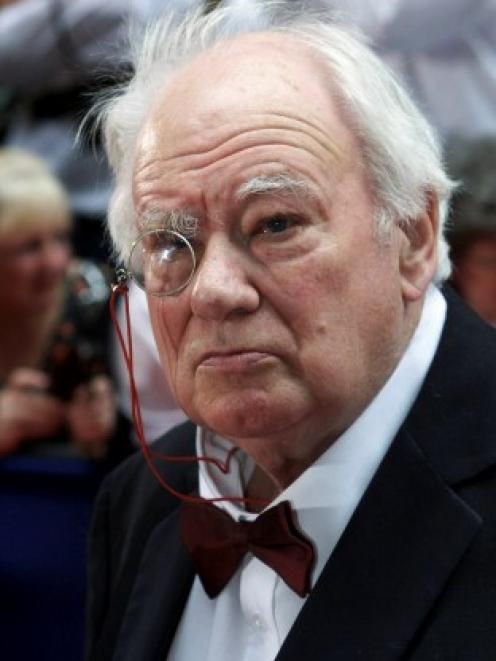
Moore presented BBC television's landmark "The Sky at Night" programme for more than 50 years, making him the longest-running presenter of a single show in broadcasting history.
His old-fashioned appearance and rapid-fire delivery endeared him to television viewers and captured the imagination of future astronomers who paid tribute to the presenter and prolific author.
"Patrick would just sit in front of the camera for a whole episode ... and just tell you about a constellation, about the stars, their names, their history," British astronomer David Whitehouse told Sky News.
"It was captivating and the best example of communication and an expert sharing his enthusiasm that I have ever experienced."
A space enthusiast from his early childhood, Moore's television career coincided with the start of the space race between Russia and the United States.
"He was broadcasting before we actually went into space and he saw a change in our understanding of the universe," British space scientist Maggie Aderin-Pocock told the BBC.
Moore, rarely seen without his trademark monocle, was also an enthusiastic musician and xylophone player and once accompanied a violin-playing Albert Einstein on the piano.
He never studied for a degree, building up his expertise through his own single-minded enthusiasm, constructing an observatory in the garden of his southern England home.
His television show marked many astronomical landmarks, and he was broadcasting live when the first picture of the far side of the moon were returned by a Russian satellite.
Television schedulers were not always sympathetic to the significance of developments in space.
During the NASA Apollo 8 mission, Moore told viewers they were about to hear the voices of first men round the Moon in "one of the greatest moments in human history," only to be interrupted by BBC switching the broadcast to a daily children's show.