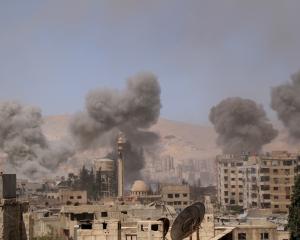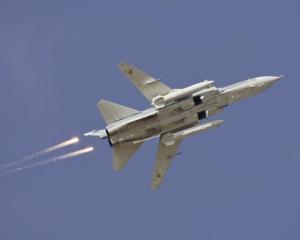
Syrian fighter jets have bombed the Palestinian Yarmouk camp in Damascus, killing at least 25 people sheltering in a mosque in an area where Syrian rebels have been trying to advance into the capital, opposition activists say.
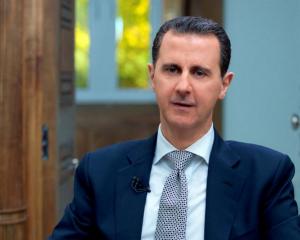
The attack was part of a month-long campaign by President Bashar al-Assad's forces to eject rebels fighting to overthrow him from positions hemming in Damascus. It came a day after warplanes bombed rebels on the road to Damascus international airport.
Yarmouk, on the southern fringes of Damascus, falls within a swathe of territory running from the east to southwest of the Syrian capital from where rebels hope to storm into the main redoubt of 42 years of Assad family rule over Syria.
In the latest of a string of military installations to fall to the rebels, the army's infantry college in northern Aleppo was captured on Saturday after five days of fighting, a rebel commander with the powerful Islamist Tawheed Brigade said.
Opposition activists said the deaths in Yarmouk, to which refugees have fled from other fighting in nearby suburbs, resulted from a rocket fired by a warplane hitting the mosque.
A video posted on YouTube showed bodies and body parts scattered on the stairs of what appeared to be the mosque.
The latest battlefield accounts could not be independently verified due to tight restrictions on media access to Syria.
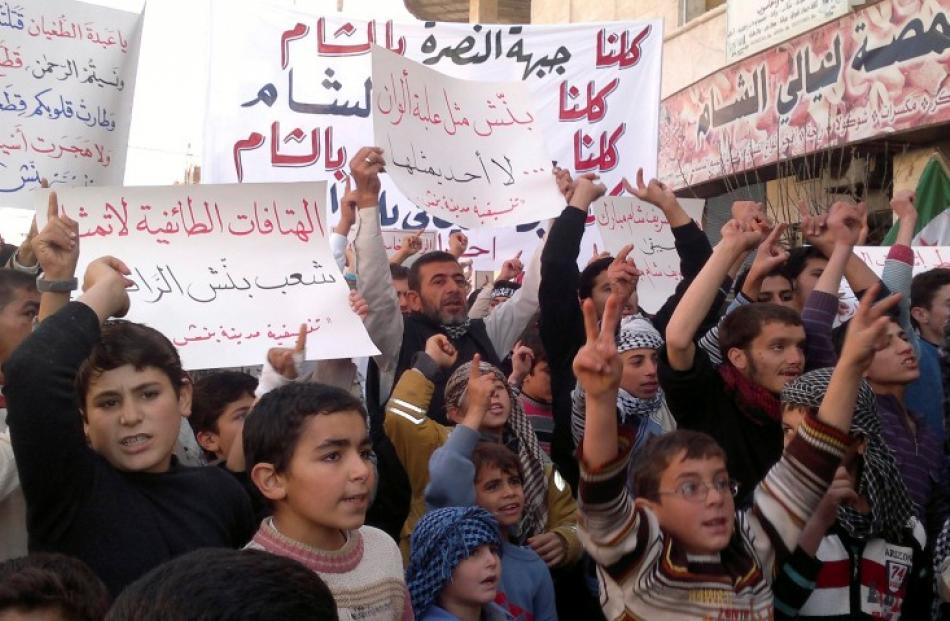
It was the first reported aerial attack on Yarmouk since a popular uprising against Assad erupted 21 months ago and evolved, after he tried to smash it with military force, from peaceful street protests into an armed insurgency.
Syria is home to more that 500,000 Palestinian refugees, most living in Yarmouk, and both Assad's government and the mainly Sunni Muslim Syrian rebels have enlisted and armed Palestinians as the uprising has mushroomed into a civil war.
Heavy fighting broke out 12 days ago between Palestinians loyal to Assad and Syrian rebels, together with a brigade of Palestinian fighters known as Liwaa al-Asifah (Storm Brigade).
Clashes flared anew after Sunday's air strike between Palestinians from the pro-Assad Popular Front for the Liberation of Palestine-General Command (PFLP-GC) and Syrian rebels together with other Palestinian fighters, according to the Syrian Observatory for Human Rights monitoring group.
Some PFLP-GC fighters were killed, the London-based Observatory said.
Opposition activists and the Observatory said many families were trying to escape the internal Yarmouk clashes.
INFANTRY COLLEGE CAPTURED
Insurgents had first reported seizing the infantry college on Saturday, but the Syrian Observatory for Human Rights said later that day there was still fierce fighting going on.
The commander whose Tawheed brigade took part in the assault said the rebels had surrounded the college, located 16 km (10 miles) north of Aleppo, Syria's largest city, three weeks ago.
"At least 100 soldiers have been taken prisoner and 150 decided to join us. The soldiers were all hungry because of the siege," the commander, who spoke on condition he was not further identified, told Reuters by telephone.
Forty thousand Syrians have now been killed in what has become the most protracted and devastating of the Arab popular uprisings that have toppled several dictators since early 2011.
Desperate food shortages are growing in parts of Syria and residents of Aleppo say fistfights and dashes across the civil war front lines have become part of the daily struggle to secure a loaf of bread.
Damascus has accused Western powers of backing what it says is a Sunni Islamist "terrorist" campaign to topple Assad, a member of the minority Alawite sect affiliated with Shi'ite Islam. It says that U.S. and European concerns about Assad's forces possibly resorting to chemical weapons could serve as a pretext for preparing military intervention.
But, unlike NATO's air campaign in support of Libya's successful revolt last year against Muammar Gaddafi, Western powers have been wary of intervening in Syria. They have been deterred by the ethnic and religious complexity of a major Arab state at the strategic heart of the Middle East - but have also lacked U.N. consensus due to Russian support for Assad.