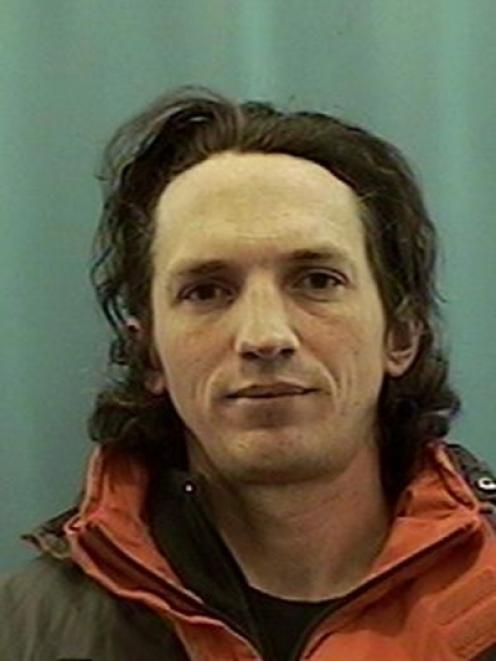
Israel Keyes, in jail since March for the kidnapping and murder of 18-year-old coffee stand server Samantha Koenig in Anchorage, Alaska, confessed to that and other violent crimes.
Then guards found him dead on December 2 after he committed suicide by cutting his wrists and choking himself with a bed sheet. He was 34.
Keyes, a U.S. Army veteran, lived a quiet life in one of Anchorage's best neighborhoods, doing well-regarded handyman work for unsuspecting customers. He had been due to go on trial in March for Koenig's death, and investigators believe he killed eight to 11 people, if not more.
A picture of Keyes' double-life emerged from his own words - authorities released excerpts from 40 hours of interviews with investigators to reporters - and from interviews and news conferences given by investigators, who said they believed his confessions were sincere.
"Everything that he told them has been borne out," Lieutenant Dave Parker of the Anchorage Police Department said on Sunday.
Keyes admitted that he committed numerous killings, bank robberies and other crimes across the country. He admitted to plans for more killings. He admitted to several unreported crimes and acts of cruelty committed before he started killing people, including the rape of a teenager in Oregon in the late 1990s and torture of animals when he was a child.
His suicide ended the revelations and made him a rarity - a confessed serial killer who was never convicted of murder.
"It gives us no pleasure to dismiss the charges against Mr. Keyes, but that's what the law requires," said Kevin Feldis, the assistant U.S. attorney leading the prosecution.
The criminal investigation will continue indefinitely, even if there is no prosecution, "because there will inevitably be many, many unknowns," Feldis said.
Keyes was caught in Texas in March with a debit card stolen from Koenig, whom he abducted from her coffee stand in February. Keyes admitted to kidnapping, raping and killing her, then dismembering her body and dumping her remains in an icy lake before traveling out of Alaska.
Once in custody, he also confessed to the 2011 killings of Bill and Lorraine Currier of Essex, Vermont, and the disposal of four bodies in Washington state and one in New York state.
Only three homicides have been definitively pinned to him - those of Koenig and the Curriers - in large part because Keyes could not identify victims by name.
His motivation was enjoyment, said Monique Doll, an Anchorage homicide detective who worked on the investigation. Throughout his months of jail interviews, Keyes was utterly unapologetic and remorseless, she said.
"Israel Keyes didn't kidnap and kill people because he was crazy. He didn't kidnap and kill people because his deity told him to or because he had a bad childhood. Israel Keyes did this because he got an immense amount of enjoyment out of it, much like an addict gets an immense amount of enjoyment out of drugs," Doll told a news conference.
He also enjoyed staying under the radar, officials said. He targeted total strangers, avoiding anyone with any possible connection, traveling hundreds of miles to target random victims at secluded parks, trail heads and other remote locations.
He broke some of his own rules when he killed Koenig, abducting her at her workplace on a busy Anchorage street, where security cameras caught some of his actions, and killing her at his own house, officials said. Keyes admitted he considered merely robbing Koenig - whom he did not know - and instead gave in to his compulsions, Doll said.
"In prior cases, he had enough self-control to walk away from it," Doll said. "But with Samantha, he didn't."
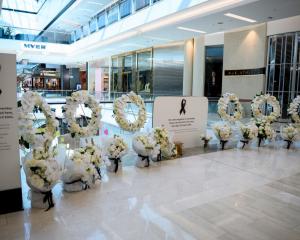
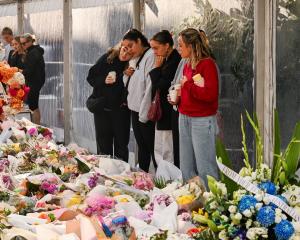
Koenig's case dominated local news, and supporters raised a reward fund, held candlelight vigils and gave self-defense lessons to coffee stand servers.
Keyes got a thrill from following the news coverage, so long as his name was not linked to the case, investigators said. When he was identified by a Vermont television station in the s u mmer as the suspect in the murder of the Curriers, he became so angry he stopped speaking to investigators for two months.
White supremacist background
Keyes grew up in Washington state in a fundamentalist Christian family that, in the past, attended a white-supremacist, anti-Semitic church but later moved out of the region and became affiliated with other congregations, according to the Southern Poverty Law Center civil rights group.
Keyes served in the U.S. Army for three years, including a brief stint in Egypt, and was discharged from Fort Lewis Army Base in Washington state in 2001. In his interviews, he said he was anxious for his military service to end so that he could start murdering people, Feldis said.
He moved to Alaska in 2007 and lived with his daughter and a girlfriend in Anchorage's Turnagain neighborhood, near many of the city's most prominent citizens, top attorneys and law-enforcement officials, operating a one-man contracting business.
"He was well-known in Anchorage as a really good handyman," said state Senator Hollis French, who lived around the corner from Keyes.
All the while, Keyes said in his interviews, he was "two different people."
"There's no one who knows me or who has ever known me, who knows anything about me, really," Keyes said in one of the interviews.
Keyes told authorities he almost killed a young couple and an Anchorage police officer at a beach overlook, about a month before killing the Curriers in Vermont.
Keyes said he was hiding in the park with a gun and a silencer and ready to ambush his victims; he wanted to test the silencer that he would later bring to the East Coast on his trip to kill the Curriers. He stopped when a second police officer arrived on the scene.
"It could have got ugly, but fortunately for the cop guy, his backup showed up," a chuckling Keyes said one interview. "I almost got myself into a lot of trouble on that one."
The silencer wound up in a stockpile of murder supplies that Keyes stashed in upstate New York, near a home he owned there. Keyes admitted to placing several such caches around the country, investigators said.
Officials have found two so far - the New York stockpile and one in the Anchorage suburb of Eagle River that contained a shovel and bottles of liquid clog remover, material for concealing a body and speeding decomposition.
Until he was arrested, Keyes' plan was to leave Alaska this year and work as an itinerant contractor making repairs in hurricane-struck areas of the United States, Feldis said.
"That would allow him to move from place to place and commit murders," Feldis said.