Rizana Nafeek was beheaded in the town of Dawadmy, near the capital Riyadh, on Wednesday morning (local time) after being sentenced to death in 2007. She was accused by her Saudi employer of killing his infant daughter while she was bottle-feeding.
"(This is) to show our displeasure for not hearing the government's appeal to save Rizana Nafeek," Karunatilake Amunugama, secretary of the External Affairs Ministry, told Reuters. "He (the envoy) has been recalled with immediate effect."
The Sri Lankan government appealed against the death penalty but the Saudi Supreme Court upheld the sentence in 2010.
The infant's mother rejected a request to forgive the maid, which is the most important criteria in considering the release of a murderer in Saudi Arabia, said a top Sri Lankan government official, speaking on condition of anonymity.
The Saudi Interior Ministry has said the infant was strangled after a dispute between the maid and the baby's mother.
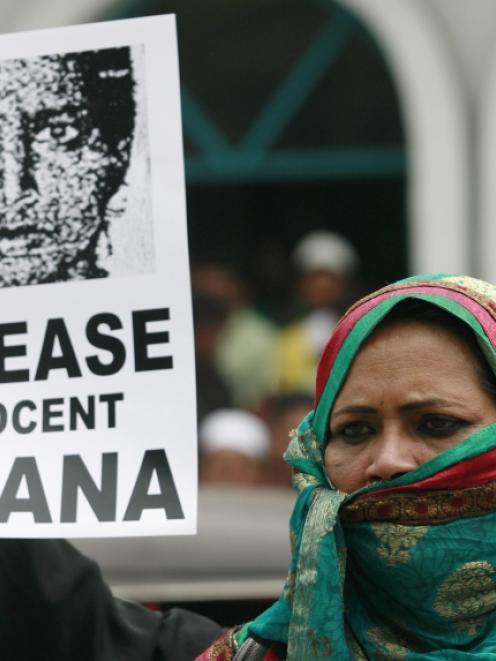
Hundreds of Sri Lankan women in the island nation's capital Colombo protested against Nafeek's execution on Thursday and said the government should have done more to seek her release. More protests were planned for Friday.
The maid's mother asked the government to help her to bring her body back to Sri Lanka, local media reported. But government officials said she had been buried in Saudi Arabia.
Saudi households are highly dependent on housemaids from African and South Asian countries. There have been cases reported of domestic abuse in which families mistreat their maids, who have then attacked the children of their employers.
Human Rights Watch on Wednesday condemning the execution and said Nafeek was a victim of flaws in Saudi Arabia's judicial system.
Saudi Arabia, a U.S. ally, is an absolute monarchy that follows the strict Wahhabi school of Islam. Judges base decisions on their own interpretation of sharia, or Islamic law, rather than on a written legal code or on precedent.