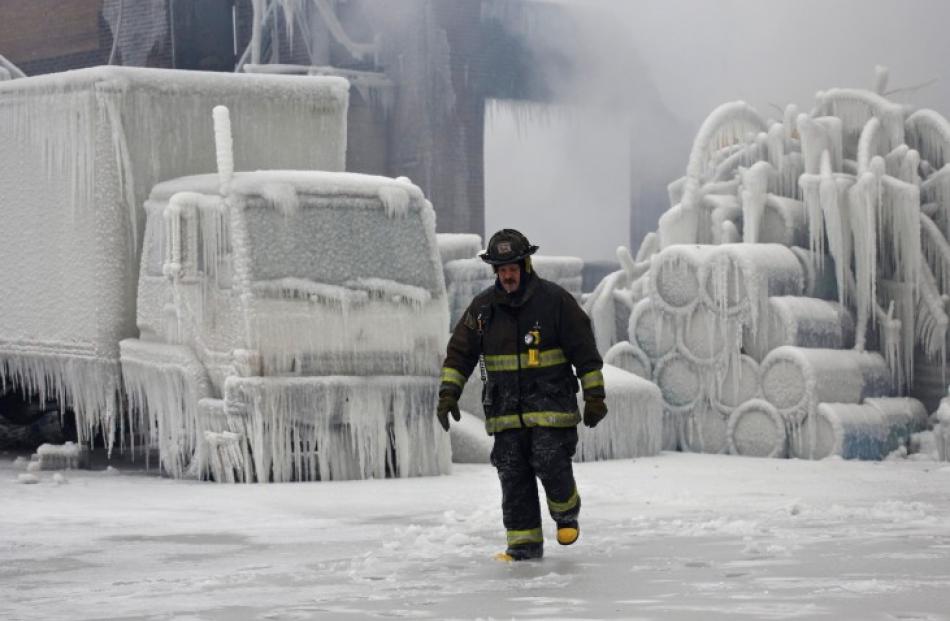
The large and deadly blazes that Chicago firefighters have battled this week have posed an additional challenge, courtesy of the city's coldest temperatures in nearly two years: ice - and lots of it.
Ice can undermine efforts to extinguish flames. It can seal hydrants, crack hoses, make stairs and ladders treacherous, and weigh down buildings and firefighters, Deputy Fire Commissioner of Operations John McNicholas said.
"Things that normally work well in regular, normal, warmer temperatures, when you start to encase them in ice, you can have (problems)," McNicholas said.
Hundreds of Chicago firefighters responded to two large blazes this week in sub-freezing temperatures, including one high-rise apartment fire that left two people dead.
In the fire that broke out on Tuesday morning (local time) in a Chicago condominium building, ice wasn't a big factor because the fire was mostly fought inside the building. Though the National Weather Service estimated the temperature hovered around zero, very little hose was exposed and the fire was contained within an hour, Langford said.
That was not the case for a fire that engulfed a large Chicago warehouse around 9pm on Tuesday. Since the building was unstable, firefighters decided to fight the rare 5-11 alarm fire from the outside, using a "surround and drown" approach, Chicago Fire Department spokesman Larry Langford said.
Although firefighters encountered some frozen hydrants, water supply was not difficult to establish on the street, allowing responders to dump hundreds of thousands of gallons of water on the burning building.
So much water was used, in fact, that a small weather system developed over the fire, dropping light snow on the scene, Langford said.
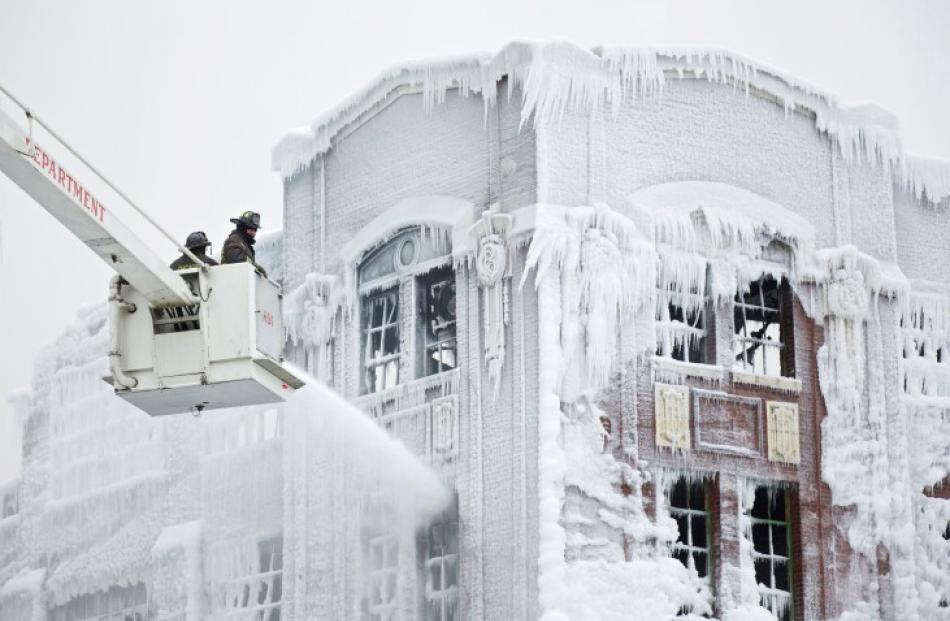
The water on the ground quickly turned to ice, coating the firefighters, hoses, engines, ladders and the building.
"It's safe to say we had about 8 inches of ice in the front of the building because there's equipment, a hose that was on the street, that was buried by the ice. And then of course the building, itself, probably had a coating of three or four inches of ice on it," McNicholas said. "Some described it as a very large ice castle."
By Wednesday afternoon, a handful of firefighters were still attempting to put out flames hidden beneath the frozen rubble.
The ruined buildings remained shrouded in white, icicles jutting along the glassless windows.