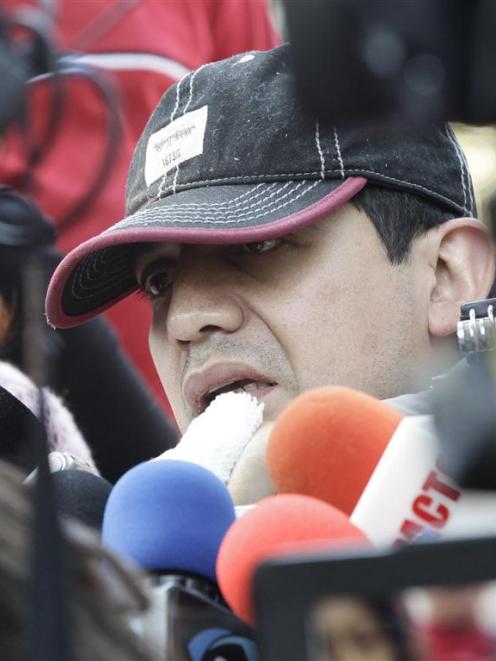
Scenes of confusion and chaos outside the downtown tower block in Mexico City have dealt another blow to Pemex's image, just as Mexico's new president is seeking to court outside investment for the 75-year-old monopoly.
Thursday's blast occurred at a Pemex building next to the 50-story skyscraper, and chief executive officer Emilio Lozoya said the number of confirmed dead now stood at 32, up from 25 overnight. A further 121 were injured, he added.
Officials have been unable to say how many people may still be trapped within the wreckage of the office block. A military paramedic at the scene said there were likely many, and that he expected the death toll to continue increasing.
Lozoya said it was not clear what caused the mid-afternoon explosion, which has been the subject of speculation ranging from a bomb attack, to a gas leak, to a boiler blowing up.
"A fatal incident like yesterday's cannot be explained in two hours, we are working with the best teams in Mexico and from overseas, we will not speculate," he told a news conference.
Pemex, both a symbol of Mexican self-sufficiency and a byword for security glitches, oil theft and frequent accidents, has been hamstrung by inefficiency, union corruption and a series of safety failures costing hundreds of lives.
President Enrique Pena Nieto has said overhauling the company is a top priority, and investors have been closely following how far he will go in enticing private capital to boost flagging oil output in a country that is the world's number seven producer.
"This incident speaks very poorly of the image of Pemex management, and that's interpreted as additional risk in the market," said Miriam Grunstein, an energy researcher at Mexico's CIDE think tank.
One government official, speaking on condition of anonymity, said a preliminary line of inquiry suggested a gas boiler had blown up in the building to the side of the main Pemex tower, which houses administrative offices.
However, he stressed nothing had been determined for sure.
Investigators have cordoned off the blast site, and a local Red Cross official, Isaac Oxenhaut, said the ceiling had collapsed in three lower stories of the building.
Lozoya said the four floors worst affected by the explosion normally had about 200 to 250 people working on them. That compared with about 10,000 staff in the entire Pemex complex.
The blast followed a September fire at a Pemex gas facility near the northern city of Reynosa which killed 30 people. More than 300 were killed when a Pemex natural gas plant on the outskirts of Mexico City blew up in 1984.
Eight years later, about 200 people were killed and 1,500 injured after a series of underground gas explosions in Guadalajara, Mexico's second biggest city. An official investigation found Pemex was partly to blame.