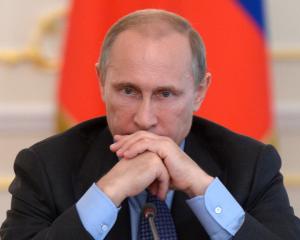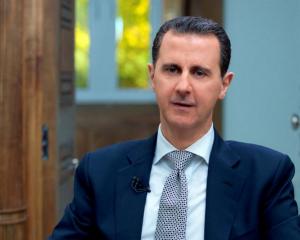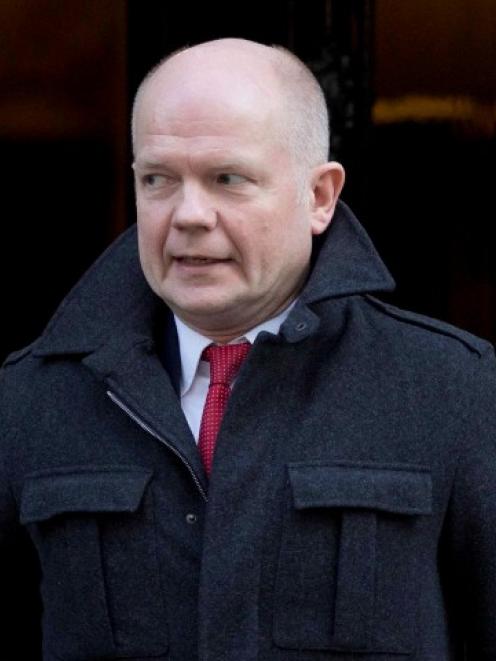
Hague aimed his comments at Russia, which has had its own problems with attacks by Islamist militants, and has along with China repeatedly blocked U.N. Security Council action against Syrian President Bashar al-Assad.
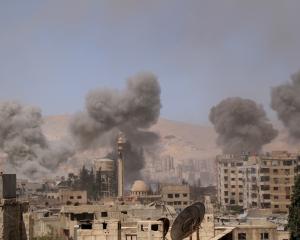
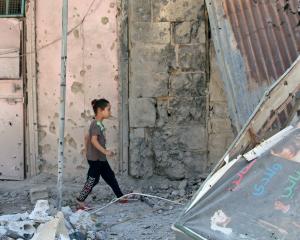
Assad is locked in an almost two-year war with rebels that has killed nearly 70,000 people and has become a magnet for foreign jihadists intent on replacing Assad's mostly secular rule with a radical Islamic state.
Hague said Britain had not lost faith in the Arab Spring revolutions that in the last two years have deposed four autocratic leaders, but warned that Syria was the most acute case of the movement being "hijacked" by militants.
Hague, in a speech outlining British counter-terrorism strategy, labelled Syria the "number one destination for jihadists anywhere in the world today".
"This includes a number of individuals connected with the United Kingdom and other European countries," he told reporters at London's Royal United Services Institute (RUSI) defence think-tank.
"They may not pose a threat to us when they first go to Syria but if they survive some may return ideologically hardened and with experience of weapons and explosives," he said.
"The longer the conflict continues, the greater this danger will become, a point that should not be lost on policymakers in Russia and elsewhere," he added.
Hague urged Russia and China to back U.N. Security Council efforts for a negotiated solution to the conflict involving the opposition and "elements of the regime", or face the growing risk of the use of Syrian chemical or biological weapons.
Syria sits in a volatile region of Middle East conflict, with neighbours including Iraq, Lebanon and Israel.
At an EU foreign ministers meeting in Brussels next week, Britain will urge counterparts to review an EU arms embargo on Syria, which rolls over on March 1, to allow more help for the Syrian opposition seeking Assad's ouster.
RIGHTS AND INTELLIGENCE
Hague highlighted the potential risk from Syria in the context of a new policy framework on how to cooperate on intelligence with countries suspected of human rights abuses.
Britain has long wrestled with how to uphold its opposition to all forms of torture while ensuring it can gather information about planned attacks by militants, some of which might have been obtained through ill-treatment of suspects.
That has led to accusations of collusion in torture and a number of embarrassing legal defeats.
In December Britain agreed to pay more than 2 million pounds ($3.1 million) to the family of a leading opponent of late Libyan leader Muammar Gaddafi who said Britain was involved in his rendition to Tripoli where he was tortured.
Setting out the government's counter-terrorism strategy, Hague argued that Britain faced a dilemma over whether to work with states unable to guarantee suspects won't be abused.
He said many countries would be able to give "credible assurances" that they will not mistreat suspects.
"Where this is not the case, we face a stark choice. We could disengage, or we can choose to cooperate with them in a carefully controlled way while developing a more comprehensive approach to human rights adherence.
"This approach brings risk, but I am clear that the risks of the first option, of stepping back, are greater still, placing our citizens at greater risk of terrorist attack," he added.
Hague outlined formal safeguards and conditions for cooperating with countries with poor human rights records, a plan experts say is a way of trying to avoid the legal battles and controversy such collaboration has resulted in the past.
"There's an awareness that we have to have our legal back covered somewhat more, that we have to have a framework in place that will not leave us firefighting after the fact," said Shashank Joshi, security expert at RUSI.
"There's no choice. In every serious theatre of counter-terrorism, you always have regimes that will never meet the human rights standards William Hague has outlined."