The ruling enraged residents of Port Said, at the northern entrance of the Suez Canal, by confirming death sentences imposed on 21 local soccer fans for their role in the riot last year when more than 70 people were killed.
But the court also angered rival fans in Cairo by acquitting a further 28 defendants that they wanted punished, including seven members of the police force which is reviled across society for its brutality under deposed autocrat Hosni Mubarak.
Security sources said two people, a man in his 30s and a young boy, died in Cairo from the effects of tear gas and rubber bullets. A total of 65 people were injured.
Saturday's protests and violence underlined how Islamist President Mohamed Mursi is struggling - two years after Mubarak's overthrow - to maintain law and order at a time of economic and political crisis.
The presidency said in a statement that the protests were not peaceful and condemned any violence against any property.
On Thursday Egypt's election committee scrapped a timetable under which voting for the lower house of parliament should have begun next month, following a court ruling that threw the entire polling process into confusion.
The stadium riot took place last year at the end of a match in Port Said between local side Al-Masry and Cairo's Al-Ahly team. Spectators were crushed when panicked crowds tried to escape from the stadium after a pitch invasion by Al-Masry supporters. Others fell or were thrown from terraces.
Judge Sobhy Abdel Maguid, listing the names of the 21 Al-Masry fans, said the Cairo court had confirmed "the death penalty by hanging". He also sentenced five more people to life imprisonment while others out of a total of 73 defendants received shorter terms.
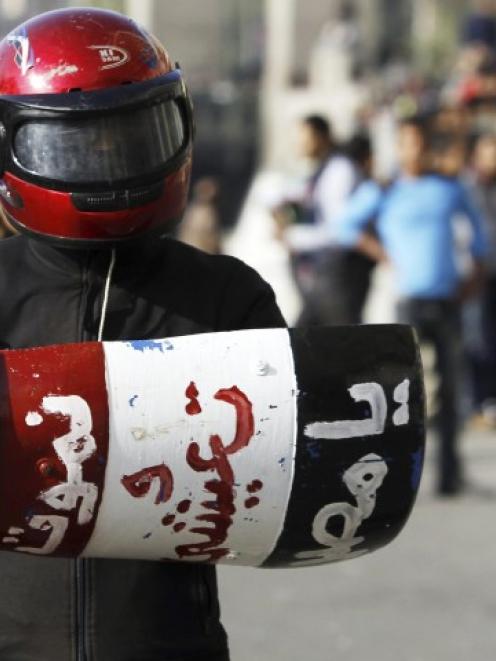
In Cairo, local Al-Ahly fans vented their rage at the acquittals, setting fire to a police social club, the nearby offices of the Egyptian soccer federation and a branch of a fast food chain, sending smoke rising over the capital.
A military helicopter scooped up water from the nearby Nile and dropped it on the burning buildings.
"Ultra" fans, the section of Al-Ahly supporters responsible for much of the violence, said they awaited retribution for those who had planned the Port Said "massacre".
"What is happening today in Cairo is the beginning of the anger. Wait for more if the remaining elements embroiled in this massacre are not revealed," the Ultras said in a statement.
PROTESTERS TARGET CANAL
In Port Said, where the army took over security in the city centre from the police on Friday, about 2,000 residents who want the local fans spared from execution blockaded ferries crossing the Suez Canal. Witnesses said youths also untied moored speedboats used to supply shipping on the waterway, hoping the boats would drift into the path of passing vessels.
Military police recovered five speedboats and brought them back to shore, but two were still drifting, one witness said.
Authorities controlling the Canal, an artery for global trade and major income source for the Egyptian government, said through traffic had not been affected. "The canal ... is safe and open to all ships passing through it," Suez Canal Authority spokesman Tarek Hassanein told the MENA news agency.
The canal is a major employer in Port Said and, until now, protesters had declared it off-limits for the demonstrations apart from on one occasion when red balloons marked "SOS" were floated into the waterway.
In a separate security threat, the Interior Ministry ordered police in the Sinai peninsula to raise their state of emergency after receiving intelligence that jihadists might attack their forces there, MENA reported.
Officials have expressed growing worries about security in the desert region which borders Israel and is home to a number of tourist resorts. In August last year Islamist militant gunmen killed at least 15 Egyptian policemen in an assault on a police station on the border with Israel, before seizing two military vehicles and attempting to storm the frontier.
Last Thursday, Bedouin gunmen briefly held the head of U.S. oil major ExxonMobil in Egypt and his wife. The Britons, who had been heading for a Sinai resort, were released unharmed.
General unrest is rife as Egypt's poor suffer badly from the economic crisis. Foreign currency reserves have slid to critically low levels and are now little more than a third of what they were in the last days of Mubarak.
The Egyptian pound has lost 14 percent against the dollar since the 2011 revolution and the budget deficit is soaring to unmanageable levels due to the huge cost of fuel and food subsidies. Egypt agreed a $4.8 billion loan with the International Monetary Fund last November, but Cairo requested a delay due to street violence the following month.
Analysts say the chances of an IMF deal are slim until the electoral chaos is sorted out, but question how much longer the government can hold out without international funding.
Unrest has plagued Port Said since the death sentences were handed down to the Al-Masry supporters in January. At least eight people have died this week, including three policemen.
The Cairo court also jailed two senior police officers for 15 years on Saturday for their handling of the riot.
However, some fans in Cairo were happy with the confirmation of the death sentences. "This is a just verdict and has calmed us all down," Said Sayyid, 21, told Reuters.