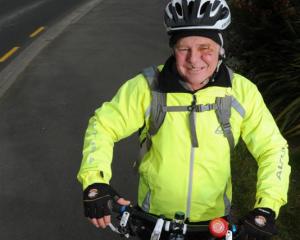
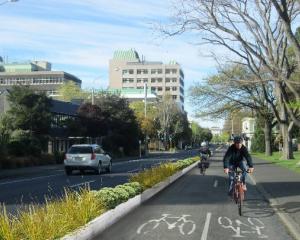
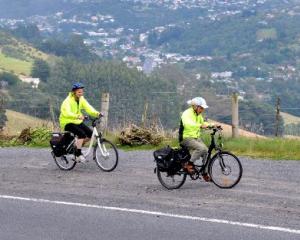
A University of Otago academic is looking to an American city with 500km of cycleways as a model for transport planning in New Zealand.
Director of the injury prevention research unit Prof Hank Weiss said Portland, Oregon, was "widely recognised" as a world leader in urban cycling.
The city of 2.2 million people has just released its 20-year plan for cycling and Prof Weiss said "what they did" and "how they got there" would be the subject of a "webinar" or internet seminar this morning.
The seminar would consist of Prof Weiss conducting an internet interview with Portland Bureau of Transportation project manager Ellen Vanderslice.
Prof Weiss said he had a professional interest in "active transport" because of its health and sustainability benefits.
However, he noted serious bicycle injuries were increasing among New Zealand adults and he considered there was a need "to pull together planners, advocates and health people" to deal with the issue.
He believed planning for cycle and walking needed to occur in conjunction with other vehicle transport planning.
"They are all linked together and should be treated as interrelated parts of the whole issue of moving people and goods safely and sustainably - not one against the other."
Prof Weiss said Portland evolved as a "car-centric" city, but began diversifying 15 years ago.
It was now one of the leading cycle-friendly cities in the United States, with a large, interconnected bicycle network supported by policies and programmes to encourage cycling.
Portland got more snow than Dunedin each year, had many hills and many bodies of water.
Prof Weiss would like the Dunedin City Council to adopt a Portland policy designed to "create conditions" that made cycling more attractive than driving for trips of 5km or less.
The "webinar" will be available at sustainablecities website.