It is many years since New Zealand has advertised for such a highly-salaried officer as the ''general manager of railway'', whose 3000 a year is now agitating quite a number of well-posted officials in all the British railway companies (says our London correspondent).
The sum is a good one for a first-class man, especially with a five years' engagement and passage for his wife and family.
The High Commissioner is circulating to inquirers a quantity of information about the New Zealand system, its mileage, employment (14,000 hands), capital invested (32,000,000), and ratio of expenditure to receipts.
The circular continues: ''The policy in railway management is determined by the Government, and is communicated to the General Manager through the Minister of Railways, who is the supreme head of the department, but who directs the policy only. The General Manager exercises administrative control in respect to the operation of the lines; he would thus make recommendations to the Minister regarding the fixing of rates and charges, and wages payable to the railway staff, and the general conditions governing its employment.''
''Efficiency and economy in management'' are the essentials. The date of closing of receipt of applications is indeterminate.
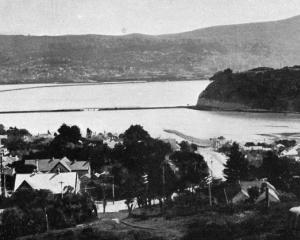
• Residents of Port Chalmers are naturally expecting great things from the introduction of electric power into the borough, and at last night's meeting of the council Cr Anderson moved the following motion of which he had given notice: ''That this council, in view of the electric power being introduced into the borough at an early date, appoint a deputation to wait on the Harbour Board and consider the immediate necessity of reclaiming the whole area of the bay for the encouragement and expansion of local industries.''
Cr Powell seconded the motion pro forma. Cr Fail pointed out that the borough had not yet got the electric power, and said it would be very foolish to set up such a committee before the thing was settled one way or another. He moved that the motion be simply received. Other councillors expressed the view that the motion was premature, and that the time would be inopportune to approach the Harbour Board with such a scheme. At the request of Cr Anderson it was decided to let the motion lie on the table for a month.
Another link in the chain of progress in connection with the dairying industry was formed at Edendale when the manufacturing of butter from whey was duly inaugurated. This is the third dairy factory in Southland to follow this course, the other two being Woodlands and Mataura.
The Edendale Dairy Factory Company, however, was the first to seriously discuss the proposal. Owing to the structural nature of the main factory a new building had had to be constructed for the whey-butter plant, and on this account the arrangements are not so compact as is the case at the Mataura factory, where the whole concern is under one roof.
ODT, 24.12.1912.
COPIES OF PICTURE AVAILABLE FROM ODT FRONT OFFICE, LOWER STUART ST, OR WWW.OTAGOIMAGES.CO.NZ