The claims of the Gore-Hedgehope Railway were brought under the notice of the Minister of Public Works (Hon. W. Fraser) by the Gore and Waimumu branches of the Gore-Hedgehope Railway League on Friday afternoon.
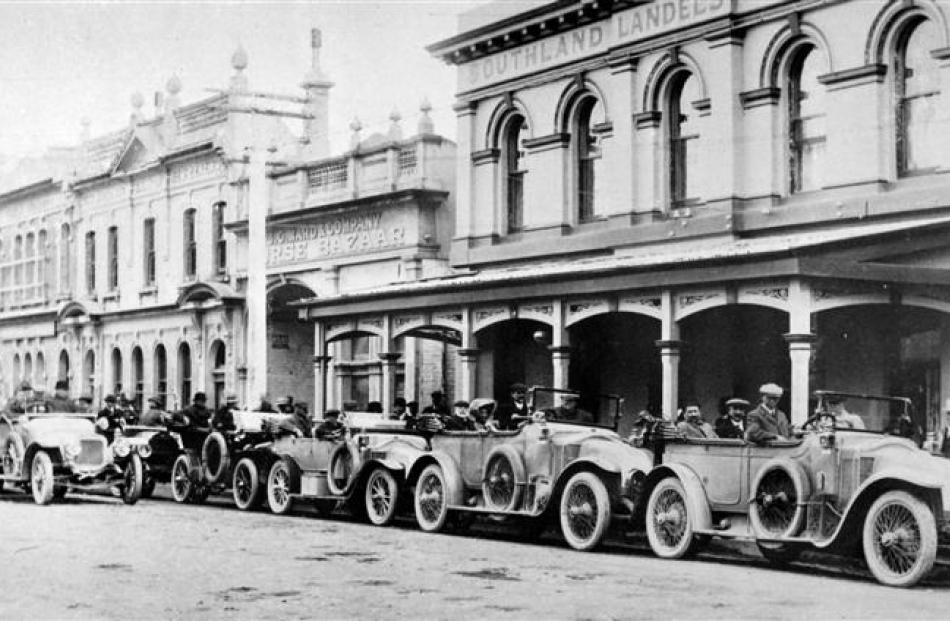
Unfortunately the weather was very bad, but the Minister is not the man to be diverted from a promise given to see the proposed route of the line for himself, and accordingly a representative party left Gore by motor cars shortly after 2 p.m., arriving at Waimumu about an hour later. The chief spokesman was Mr D. L. Poppelwell, Mayor of Gore, and in his reply the Minister said he had been very much pleased with what he had seen. He did not know any district where a light line promised to be more successful.
He hoped the time was not far distant when they could spare an engineer for a flying survey, a report on the route, and the probable cost of construction. In speaking of a light line he was referring to a 3ft 6in gauge of lighter construction than usual which meant slower travelling. No one would be more pleased than he to see them get such a line.
• An escape from the lock-up at the Christchurch police station was almost effected on Sunday (says the Press) by a girl 16 years of age, who was in custody on a charge of stealing a bicycle. The attempt was frustrated by the appearance of Constable Dunnett (watch-house keeper) just as the girl's task was nearly accomplished.
The girl had been arrested on Saturday, and about noon the next day Constable Dunnett had occasion to visit the lock-up. the outer door, as of course he expected, was bolted. On entering he lifted the panel through which food is passed to the cell in which the girl had been placed, and saw that the cell was empty. At once he examined the bolts of the cell door and was surprised to find they had not been tampered with. An other glance into the cell satisfied him that the girl had escaped, and on going to the lavatory at the end of the corridor the constable found the girl in the act of removing the last pane of glass in the window.
The removal of this pane of glass would have provided the girl with an exit. The girl was returned to the cell to await trial. The circumstances surrounding the escape of the prisoner are extraordinary. The panel in the door is only about 10in by 6in, and yet this is the only exit through which the girl could have made her way out of the cell. She is a particularly slightly-built girl, but one would hardly credit her performance. The removal of the panes of glass in the window of the lavatory had been cleverly carried out by the girl. - ODT, 18.2.1913.