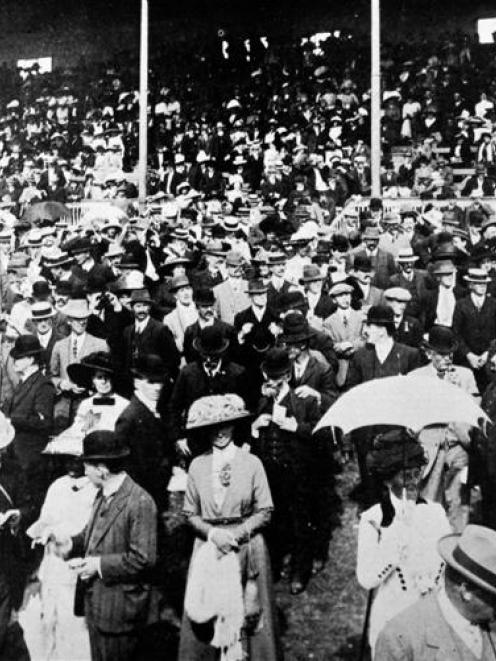
The Nelson Hospital and Charitable Aid Board wrote the following resolution: ''The Nelson Board desires to call the attention of the Government to a resolution unanimously passed at a conference of Hospital and Charitable Aid Boards in Wellington in June, 1911, requesting the Government to found some State colony or farm where wastrels, confirmed drunkards, and other worthless individuals could be sent and earnestly requested that such a question shall be brought before Parliament for early consideration.''
The Chairman (Mr Horrell) said that the resolution did not go quite far enough. It did not deal with deserting husbands, who, when arrested, were put in prison. That was no satisfaction to the board, which was obliged to support the dependants. It was felt that these men should be obliged to work and support their dependants. He would suggest that wife-deserters should be added to the scope of the resolution.
This suggestion received some support. Mrs Cunnington, referring to her English experience, said that a training farm should be added to the farm for wastrels. Mr Moore said he was convinced that the resolution should go further, and deal with those who refused to recognise their responsibilities for the support of their dependants.
Their support was becoming quite a burden on the community. He would certainly support the resolution, but he considered it should go further. Mr Turnbull questioned even if the men were on the State farm whether they would work. Mrs Cunnington added that the chief points were the detention and the compulsory work on public works. Mr Hall asked if the Charitable Aid Committee would report on the subject and give the figures of desertion, because the subject was too big to be dealt with lightly. A motion in this direction was carried.
• The dark lantern, or bull's-eye, traditionally associated with the police force, is doomed-at least that is the belief of many members of the force in the dominion (says the New Zealand Herald). It is pointed out that the lantern is cumbersome, out of date, and, particularly in the Auckland district, uncomfortably hot to carry. This latter objection is put forward as one of the principal arguments against the use of lanterns, while, in addition, it is stated that the lanterns frequently get out of order, and, becoming smoky, form an excellent danger signal to the burglar with a keen nose. The adoption of electric torches, which could be stowed away comfortably like the baton, is considered essential.
• An experiment in beach bathing which has been tried by the Auckland City Council this season in the interests of the fair sex has not proved a success. The bathing shed at Shelly Beach, Ponsonby, which is divided into two compartments, and which has hitherto been used by both sexes, was this year reserved for the sole use of ladies in the mornings. The bathkeeper has now reported (says a message to the Post) that the ladies favoured mixed bathing, for on three mornings there were, respectively, four, six, and three women bathers from the shed, while dozens of men were unable to obtain dressing accommodation. It has, therefore, been decided to revert to the former arrangement. - ODT, 26.2.1913.
• COPIES OF PICTURE AVAILABLE FROM ODT FRONT OFFICE, LOWER STUART ST, OR WWW.OTAGOIMAGES.CO.NZ