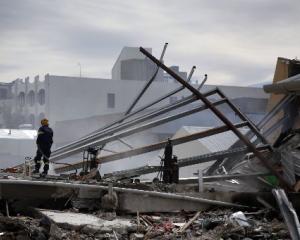
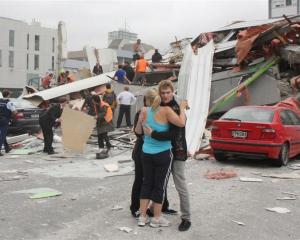
Today will bring fresh disclosures of the extent of the damage to Christchurch and its surrounding towns and villages following Saturday's earthquake.
It is certain to be more substantial than early examination has shown, certain to require much prioritising of repairs which will take months to complete, and certain to cost more than preliminary estimates.
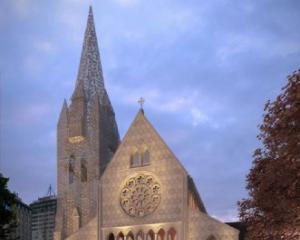
No earthquake in our developed history may have caused more damage on a more widespread scale to a larger urban area: Christchurch is our second largest city, sprawling not far short of the 40km distant from Cathedral Square to the earthquake's epicentre at Darfield.
The catastrophe in Hawkes Bay in 1931 was the most destructive of life, killing 256 people, and the most destructive, at 7.9 on the Richter scale, largely destroying Napier and Hastings.
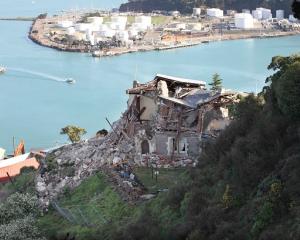
Saturday's event, at 7.1 on the scale, miraculously seems to have caused no loss of life but very severely damaged at least 500 buildings and wrecked much underground infrastructure.
That there was no loss of life is truly something at which to marvel. Fortunately, most people were in their beds when the earthquake occurred, at 4.36am.
The Hawkes Bay event occurred at 10.47am on a Tuesday, when people were about their normal daily business; it lasted for an extremely damaging two and a-half minutes and was centred just 15km from Napier.
Though comparable in terms of damage and strength, the Christchurch earthquake appears to have had several unusual features.
Christchurch has not had a popular reputation for severe earthquakes, being some distance from the New Zealand Alpine Fault and lying on an alluvial plain.
Although scientists have long been mapping active faults under the plain and in the foothills, this earthquake appears to have occurred along an unknown fault line, and may have been a close combination of several movements.
It will certainly belie any complacency in the country that some regions are less prone to such events than others.
In this regard, much praise is due to the Civil Defence and emergency services in Christchurch, which appear to have functioned with skill and good organisation from the moment the emergency began.
No doubt the eventual debriefing will discover areas where weaknesses in the Civil Defence Plan occurred, but the general impression is of a well-designed response, implemented with care, and a structure that responded to aspects of the emergency in concerted fashion.
There was no panic on the streets, virtually no looting, the people have been kept well informed throughout, and aid appeared to be available virtually immediately.
The presence of the Mayor of Christchurch, Bob Parker, and the Prime Minister and other members of the Government set a reassuring note that all will be done to restore the city and its surrounding areas.
In a national sense, this natural disaster represents an economic reverse on an unprecedented scale. The Prime Minister and the Treasury are already talking in terms of billions of dollars and it is difficult to believe the cost will be less.
The damaged buildings so far notified were spread across the city, with only about 90 in the central business district; of the more than 200 water leaks, half are considered "significant"; the disruption and damage to sewer pipes is serious in areas such as Brighton, Brooklands and parts of Avonside and in rural towns on the city's outskirts, such as Kaiapoi; some roads and bridges have been damaged, and parts of the main trunk railway line will need replacing.
On a more positive note, it is also clear there was little structural damage to modern buildings, surely a tribute to construction codes designed to resist the consequences of such events.
Christchurch will recover, and will be rebuilt and that process alone will provide an economic boost to the city and region. It is abundantly clear community spirit is dominating the collective response to the disaster.
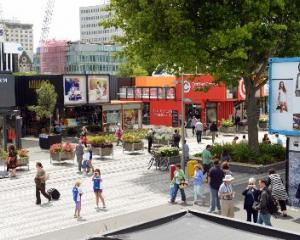
Remarkably, with the restoration of fresh water to 80% of the city and electricity to 90%, "normality" may well return sooner than many residents might have expected on Saturday morning as they surveyed the chaos.
Attention will now turn to repair and restoration. The Earthquake Commission has a significant role to perform here, and the creation of a mayoral fund to support those who are not covered by insurance will doubtless attract the traditionally generous response of New Zealanders, all of whom, we trust, will now pay much more serious attention to providing and maintaining their own earthquake survival kits - just in case.