Pardon me for swimming against the tide, for presuming to contradict the commentariat's bellowing consensus, but the whole Darren Hughes-Labour debacle, as it has been claimed to impact on the leadership of Phil Goff, is not quite as clear cut we would be led to believe.
Yes, regardless of any forthcoming decision by the police on whether to lay charges or not, allegations of a sexual nature against a senior politician cannot but be bad for the party to which he belongs.
That's not telling anyone anything.
And, yes, it does seem something of a lapse that Mr Goff did not inform his party president of the incident, but who knows what the dynamics there are. (Whether this amounts to a cataclysmic rift between leader and president is an entirely different matter.)
And, yes, it is perfectly possible to make the case that when, roughly two weeks ago, the promising 32-year-old list MP and Labour's chief whip went to his leader and told him he was the subject of a police investigation involving a naked 18-year-old university student, Mr Goff should have stood him down on the spot.
The conventional - "beltway" - wisdom of political crisis management favours just such a scenario.
It has the advantage of being "ahead of the story", of being proactive rather than being reactive, of being seen to manage firmly and openly, rather than keeping tight-lipped and hoping for the best.
That he didn't has Mr Goff being accused of being indecisive, swayed by his friendship with the young MP, damaging the party, and undermining his own leadership to the extent that he is now - it is confidently trumpeted without a shred of substantiating material - the target of a leadership coup led by any number of potential contenders.
But what evidence is there that had Mr Goff done just as the pundits want to suggest, there would not have been a media maelstrom to rival that which has dominated the headlines over the past few days?
It is fantasy to suggest had Mr Goff fronted a media conference to announce Mr Hughes was standing down pending the outcome of a police investigation that there would not have been a frenzy of speculation and innuendo just as fierce as that which ensued without it - if not more so ... until we had the full, unmitigated story of a night out on the town and a young man allegedly running down a road naked in the early hours of the morning one hand over his genitals, having apparently fled the residence of a senior opposition politician.
It doesn't come much more salacious than that ... and, to make matters worse, could not the Labour leader have been accused of potentially prejudging the outcome of the police investigation by the very act of going public?
Had he, by alerting the hounds to the wounded hare, in fact just helped ruin the career of one of Parliament's most able and well-liked young MPs?
Should he not have put political expediency aside and allowed the investigation and the process of justice to follow its course?
The reality is that Mr Goff, like other leaders before him faced with similar circumstances in today's invasive, anything goes political-media culture, was caught between a rock and hard place.
Damned if he did and damned if he didn't, regardless of what Paul Holmes or his Q&A panel on TV One at the weekend might have had to say.
Mr Holmes was at his belligerent worst, attempting to make the issue all about Paul Holmes, asking questions, demanding answers, shouting down the subject of his inquisition, refusing Mr Goff the courtesy of an uninterrupted response.
Not much better was the supercilious Matt McCarten to whom it was all so obvious.
A smiling Sir Don McKinnon held the conventional line, not without some force, but the normally urbane Victoria University politics lecturer Jon Johannson, seemingly caught up in the hype of the affair, and delighted that he could repeatedly use the word "hubris", could not help being "disappointed" by Mr Hughes, a graduate of his own politics programme.
Good grief.
What is it with these people?
Give them a platform and they know it all: Politics 101.
Simple.
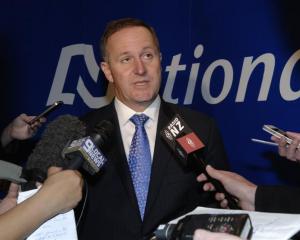
Outside the beltway, Mr Goff might have received a better hearing had anyone heard what he had to say: he maintained he put the interests of "justice" and "fairness" before politics.
Insiders would say this is unconscionably naive.
Others, who are neither students of politics nor blooded on the mere whiff of scandal, might say: actually, that's honourable.
Simon Cunliffe is deputy editor (news) at the Otago Daily Times.