It took a week of haggling in Qatar to bring all the fractious Syrian rebel groups together, and it would not have happened at all without great pressure from the Gulf Arab countries and the United States. Basically, the Syrian rebels were told that if they wanted more money and arms, they had to create a united front.
So they did, kind of, but the fragility and underlying disunity of the new government-in-exile is implicit in its cumbersome name: the Syrian National Coalition for Opposition and Revolutionary Forces. It's really just a loose and probably temporary collaboration between different sectarian and ethnic groups whose ultimate goals are widely divergent.
This new body has already been recognised by the Gulf states as "the sole legitimate representative of the Syrian people", in the words of Qatar's Prime Minister Sheikh Hamad bin Jassim. France, Syria's former colonial ruler, has done the same, and other Western countries may follow suit (although probably not the United States). But it won't end the war.
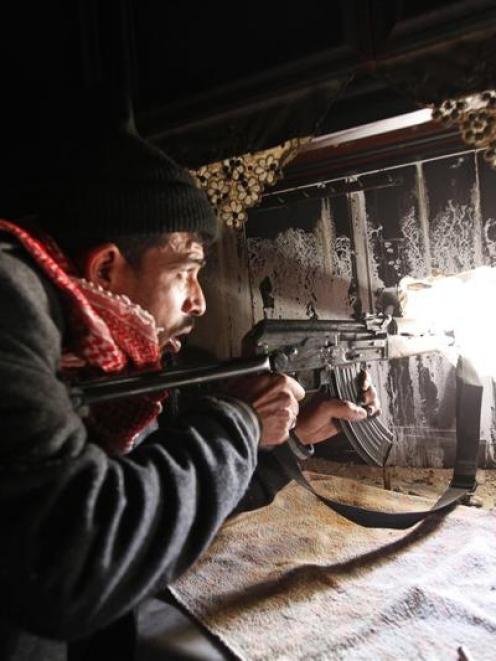
It is a real civil war now; the days of the non-violent Syrian democratic movement that tried to emulate the peaceful revolutions in Egypt and Tunisia are long past.
Moreover, it is a civil war whose ultimate outcome is unclear. It is by no means certain Assad and the Ba'athist regime will finally be defeated.
The Syrian Government has all the heavy weapons, but it does not have enough troops to establish permanent military control over every rural area in a country of 24 million people.
However, it does have the strength to smash any attempts to create a rival authority with the powers of a real government in those rural areas, and it still holds most of the cities: the front line in Aleppo has scarcely moved since last summer.
How has Assad managed to hang on so long when other Arab dictators fell so quickly in the early days of the "Arab spring"?
Partly it is the fact that he's not a one-man regime.
The Ba'ath Party which he leads is an organisation with almost half a century's experience of power, and plenty of patronage to distribute to its allies. It began almost as an Arab Communist party (without the atheism), and although its economics are now neo-liberal, it retains its Communist-style political discipline.
Moreover, the Alawites who populate its higher offices know that they have to hang together, or else they will hang separately.
The other thing Assad has going for him is the highly fragmented character of Syrian society. Seventy percent of the population are Sunni Muslims, but the other 30% include Shias, Alawites (a Shia heresy), Druze (an even more divergent sect with Islamic roots) and Christians. All of them are nervous about Sunni Muslim domination in a post-Assad Syria, and the presence of various foreign jihadis on the battlefield only deepens their anxiety.
Moreover, the main suppliers of arms and money to the insurgents are Sunni Muslim countries in the Arabian peninsula, like Saudi Arabia and Bahrain, that are not known for being tolerant of non-Sunni minorities. This has persuaded most non-Sunni Syrians that they are under attack - and 30% of Syria's population, with a big, well-equipped army and air force, can probably fight to a standstill 70% of the population with only light weapons.
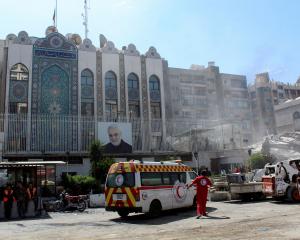
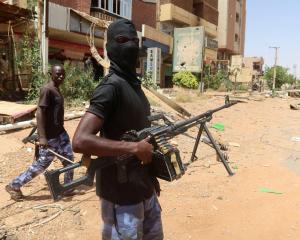
In fact, the Syrian battlefield, after only a year of serious fighting, is already coming to resemble the Lebanese battlefield after the first year of the civil war there. Large tracts of the countryside are under the military control of the religious or ethnic group that makes up the local majority, while the front lines in the big cities have effectively congealed into semi-permanent boundaries.
In Lebanon, the level of fighting dropped a lot after that first year, apart from the period of the Israeli invasion and occupation in 1982-83, but the country continued to be chopped up into local fiefdoms until the Taif accord in 1989 led to the end of the fighting.
There are obviously differences between the Lebanese and Syrian cases, but they are not big enough to justify any confidence that Syria's future will be different from Lebanon's past. Assad will continue to have access to arms and money from Iran and Russia, and there will be no large-scale military intervention from outside to tilt the balance decisively one way or the other.
A split in the Ba'ath Party or a military coup could open the way to national reconciliation if it happened relatively soon, but that is not likely.
Apart from that, the only thing that might really change all these calculations and break the stalemate is an Israeli attack on Iraq and a general Middle Eastern conflagration. That is not a price anybody wants to pay.
• Gwynne Dyer is an independent London journalist.