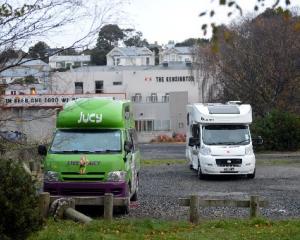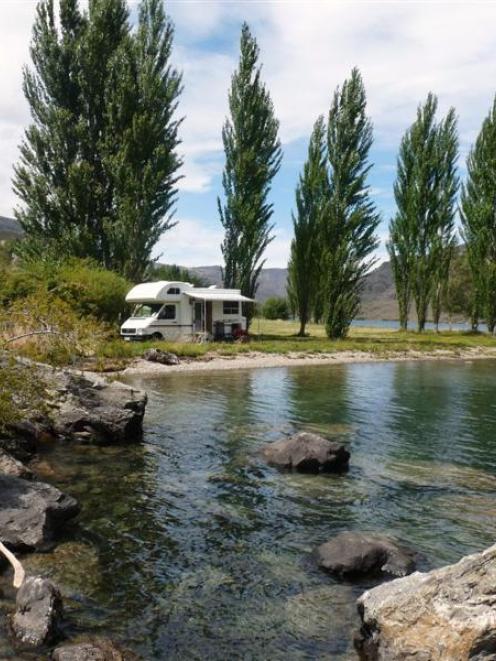
Summer is upon us and during the coming months what the New Zealand Motor Caravan Association refers to as a ''town on the move'' will take to the roads in motor homes, caravans and fifth-wheel units in search of the perfect rest and recreation spot. It's a mobile town because the association now has more than 46,000 members and because motor caravans provide their own accommodation along with most of the other services a town provides like energy, water and waste disposal.
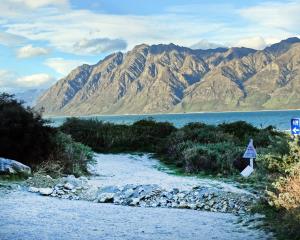
Motor Caravanners, or ''grey nomads'' as they are called in Australia, prefer a variety of options on where they stay during their travels, but many prefer the Kiwi tradition of freedom camping at a beach, forest park or lakeside. It has been suggested that ownership of a mobile home is now preferred over the traditional Kiwi batch or crib by the ''baby-boomer'' generation, and the rapid growth in the association's membership seems to bear this out. ''Boomers'' have the health, time, money and desire to travel, according to the Tourism Industry Association, and already represent the largest domestic tourist market segment.
When this generation was growing up, family summer holidays usually meant pitching a tent at a favourite spot with a ''long-drop'' dug for a toilet, a food safe and a solar-heated shower hung from the nearest tree. Beer crates provided the furniture and a Tilley lantern and Primus stove light and cooking.
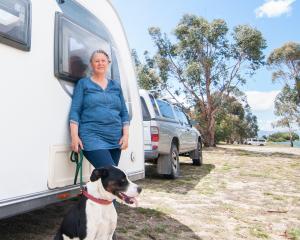
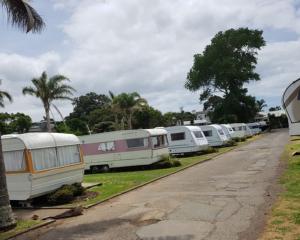
Clearly, times have changed and for a range of reasons such primitive camping is no longer acceptable, but these great family holidays are part of our fondest memories and heritage and a resurgence is being encouraged by government. Modern freedom campers looking to recreate those memories often do not choose to stay at holiday parks because the size of today's motor homes, caravans and fifth-wheel units cannot be accommodated by their sites. Camping ground site costs tend to reflect the facilities provided and many are resistant to paying for facilities not required by certified self-contained mobile homes. Also, many travel with pets, which are not permitted at camps.
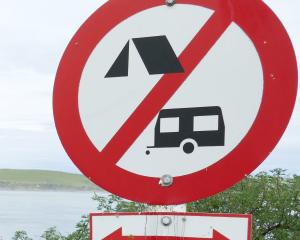
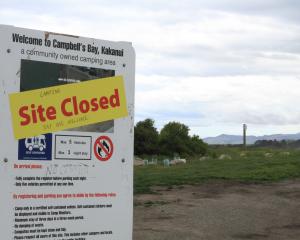
Unfortunately, the reaction of some councils to this pastime has been to throw up the shutters and introduce restrictive bylaws banning freedom camping over large tracts of publicly owned land or reserves. While it is conceded there may have been some indiscretions by overseas and local tourists in vans without any facilities and youngsters touring on the cheap, these are largely anecdotal and inclined to exaggeration by some with vested interests.
The reality is that areas popular for this activity are also popular with others such as picnickers, trampers, surfers, and fishers, and at times the facilities provided are simply inadequate for the popularity of the site. The vast majority of freedom campers are law abiding and keen to preserve the local environment they enjoy so much, and in the case of NZMCA members, more than 65% have already voluntarily achieved the NZS:5465:2001 certified self-containment standard.
Freedom camping is a permitted activity under the Freedom Camping Act passed in 2011, and allows local government to prohibit or restrict areas for defined reasons, and to spot-fine anyone adversely affecting the environment such as littering, damage to flora and fauna or endangering public safety. They have been provided with the tools to manage and enable responsible freedom camping for the economic benefit of their community without the need to place blanket bans on entire areas.
For those struggling to understand why motor caravanners feel so strongly about their rights to responsibly freedom camp in appropriate public places, the NZMCA invites a comparison between those in fully self-contained motor caravans and the country's more than 500,000 boaties.
Both have on-board accommodation and facilities, yet it is universally accepted that boaties have the right to access and enjoy their form of recreation on almost any beach, sound, river or lake throughout New Zealand. Boaties can drop anchor for the night (or a succession of nights) anywhere they choose, so the NZMCA members question why their equivalent land-based recreation is being discriminated against by some councils.
The smarter town business associations and councils in New Zealand and Australia are realising the potential that such a large body of responsible travellers, mostly senior and with time on their hands and disposable income, can bring to their communities. They are finding ways to attract them such as by aligning with the NZMCA and CMCA's (the Australian equivalent) Motorhome Friendly Town initiatives and providing facilities and convenient areas for self-contained vehicles to park overnight.
In both countries, some rural towns have even erected toilet blocks and added rubbish collection facilities to popular areas to attract the non-self-contained travellers, such is the effect they can have on the local business and tourism communities struggling in difficult economic times. The NZMCA believes this increasingly popular recreational activity deserves a more enlightened approach by communities and councils wishing to tap into the huge potential of domestic travellers.