Who's trampling on our environmental standards? The fingers seems to be pointed fairly and squarely at the Government, writes Neville Peat.
Ten years ago, the corporate world was being encouraged to add ''environment'' to company annual reporting and talk about initiatives to do with sustainability and biodiversity enhancement.
Triple bottom line accounting - financial/economic, social and environmental.
It was trendy.
It felt good then; not so good now. Economy and ecology are connected big ideas out of the same etymological stable. But at times of economic constraint - like this year - you don't hear much about that other ''eco'' word.
For a country that boasts ''Clean, Green'' and ''100% Pure'' spin in overseas promotion, you would think ecology and the environment would be agenda-toppers. But no. Lip-service is about as good as it gets. Natural capital has not looked so vulnerable in decades.
Natural capital - clean water and air, and healthy soil - is the basis of ecology. The environment will not rate with any priority for people who see themselves as separate from the natural world; but it is certainly as important as the economy. The next generation will not thank us for trampling on it, for degrading or reducing resources and limiting options for sustainability.
To drive economic indicators in supposedly the right direction, the Government is going flat out to increase extraction, from inshore oil to offshore fish to any mineral worth an export dollar. Just about everywhere you look in the environmental public policy arena, the present Government is sounding an ideological retreat from sustainability. And to disguise what it is doing, the Beehive has ordered the Ministry for the Environment to abandon the five-yearly State of the Environment round-up report, our 100% Pure reality check.
At the same time, resource management legislation is going soft. The Government seems to want to irrigate till the cows come home, never mind instream or aquifer ill-effects. Government action on climate change - what climate change would that be, and why should we worry? - is backtracking to the point where carbon polluters are unlikely to be called to account in the near future.
New Zealand, on climate change and other environmental issues, was once a mover and shaker among the so-called developed nations. At this month's Qatar talks, we sat on our hands.
At home, the latest round of radical restructuring going on at the Department of Conservation is creating massive uncertainty. It looks like Doc's world-leading expertise in nature conservation will be required to pay its own way through private-sector sponsorship, or pack up.
Among the OECD block of nations, New Zealand is an oceanic standout. Sea dominates. We should be a world leader in marine science, reliably assessing and protecting fish stocks, looking for ways to combat acidification, bending over backwards to protect seabirds and marine mammals from fishing effects, and working out what to do with the several thousand New Zealand nationals who live on South Pacific atolls (Tokelau and the Cook Islands) threatened by sea-level rise. It's coming.
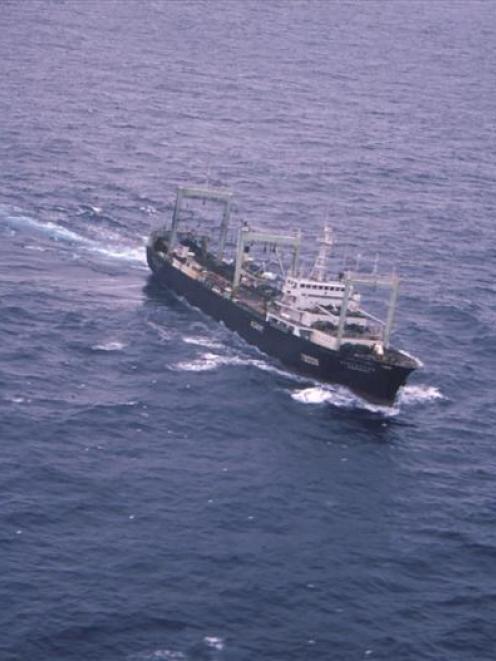
Instead, we dish out permits to overseas companies to look for deep-sea oil in our waters. Instead, we permit trawlers with nets up to 160m long to fish the squid stocks in the feeding grounds of the ''nationally critical'' New Zealand sea lion; a fishing regime based on a discredited if not shoddy scientific model. Then there is the Ross Sea affair. It's the Antarctic, why should we care?
At a recent conference of the international agency overseeing fisheries sustainability below latitude 60deg south, there was a whiff of progress towards protecting the world's least-polluted, least-fished large stretch of ocean, 2000km directly south of New Zealand. But New Zealand, at one time a champion of nurturing the high seas (saving whales, opposing drift nets and so on), was in two minds, prevaricating over whether to collaborate with the United States on a joint proposal to protect the Ross Sea.
A prized fishery was at stake: Antarctic cod (toothfish).
Reluctantly it seemed, we came around to the idea of partial protection of the Ross Sea, and this joint proposal with the United States will be presented again to the 25-member Commission for the Conservation of Antarctic Marine Living Resources in Germany next July. At least two countries, Russia and China are hotly opposed to any Ross Sea marine protected area and they are likely to lead a veto lobby against the proposal.
They want to fish everywhere, target anything of commercial value; a view that suggests no place on the blue planet is worth keeping pristine, not even the so-called ''Last Ocean'', the Ross Sea. Will the meeting in Germany become a standoff between eco-centric and anthropocentric values?
The latter represents the self-interest gene, which triggers unmitigated greed. The meeting could be one of humanity's last opportunities to demonstrate respect for global natural capital, for keeping a good-sized sea free from extraction. Meanwhile, at home, Government decisions are rolled out undermining the environment.
The really sad fact is, from industrial emissions to Antarctic cod and many natural indicators in between, we are no nearer the sustainability goal, no nearer even to finding ways of measuring progress.
The environmental component of triple bottom line accounting is waning.
- Neville Peat is a Dunedin writer on geography, natural history and the environment, and a former Otago regional councillor.