The Christmas story gets told differently by each generation but the fundamental plot remains unchanged, writes John Roxborogh.
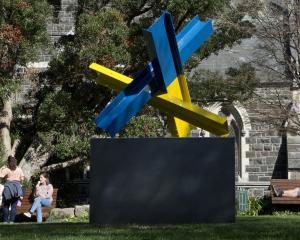
The refurbished Toitu Otago Settlers Museum has been reopened. The ''No peeking we're changing'' signs are down.
We can go and see how the stories of Dunedin have been retold for a younger generation and for the visitors we hope will keep coming on cruise ships.
In retelling the story of Dunedin, it is not just a story of Scottish forebears and their portraits on the walls, but of a lively interaction with Maori, English, Chinese, Indian, Polish and other forebears and with the many cultures and religions that are part of who we are.
It has been funny driving past the museum these past few years while it has been closed.
It was not that I wanted to go in it all the time - I have not been for years - but I wanted it to be there in case I did. Perhaps a bit like some people feel about churches; they don't want to go there necessarily, but they want them to be there in case they do.
Now I am looking forward to it. It is like Christmas had been cancelled for a few years and we were waiting to see what it would be like after it was refurbished. Because Christmas also is a story that gets told in different ways for different generations.
The memories we may have of family Christmases and what we ate and what we did are shifting. We know that much of how we do Christmas is inspired not only by the story of Jesus but by Charles Dickens, by the way the story of St Nicholas turned into Father Christmas, by the tradition of a tree brought to England from Germany by Prince Albert and popularised by Victoria and the Royal Family.
Every year, somebody rediscovers that Christmas was a pagan festival which Christians hijacked for a midwinter celebration of the birth of Jesus.
It is actually what is still going on - and it is still part of the fun both to share our celebrations in families and communities and tell the story of Jesus.
We should feel good about simple things we do as individuals and communities: Christmas music, medieval and modern, advent candles and advent calendars.
Christmas plays imagining the animals and wise men and shepherds. Singing the Messiah, making connections in our hearts and words between the gifts we share and the gift of Jesus.
There is a certain gift of freedom to let our imagination go wild about what universal peace and the love of God for all people might look like and what it might have felt like to share the drama of Jesus' arrival as God with us.
Things evolve: now it is email letters rather than Christmas cards, but they too will change; family news rather than verses and pictures; how we do presents, decorations which turn into light shows on houses.
What will a Facebook Christmas come to look like?
Our understanding of the story also evolves.
Every year is different. Every year we are different and our circumstances are different. We see things we did not see before.
The repetitions and the rituals year by year enable this. There is security in the familiar. There is also growth in understanding.
Some parts of the Christmas story may not connect the way they once did. The problems of the miraculous and the unusual may become less of an issue, or more.
Our points of connection change as we move from childhood to the anxieties of love to the responsibilities of parenthood, to those who care for animals like the shepherds, or run accommodation which gets full at times of the year like the innkeeper, or who think about the signs of the times and travel to discover what God is doing and worship the Lord in strange places.
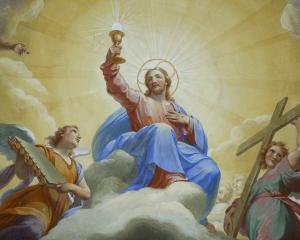
Luke tells two parallel stories: the story of Elizabeth and the story of Mary. Elizabeth is pregnant. Her cousin Mary has experienced a message from God that she is also to become a mother. Elizabeth's child we know as John the Baptist, Mary is to become the mother of Jesus. Both pregnancies are unexpected, both are associated with prophecies about God's role in what was happening and who these children might be.
Everything we read about the invasive speculations into Kate and William's expected baby is here as well. Where was it conceived?
Where will the child be in the line to the throne?
There is also tragedy and the suffering of the innocents. Mary is not yet pregnant. Even though she and Joseph have plans for their future, her child will not only be related to King David through Joseph, but will have a bigger role in God's scheme of things than she could possibly imagine.
The contrast between her humble status in life and what this seems to be about is too much. It is not surprising that she is ''deeply troubled''.
She does two sensible things: first, she accepts the situation and God's will. Second, she goes to talk with someone who has had a similar experience who will understand something of what is happening to her, her cousin Elizabeth.
When they meet, John the Baptist gives his mother a kick, and they take it as a sign. Then we have Mary's song of praise, the Magnificat, from the first word sung in Latin. As a hymn it is still sung frequently. It was one of the scriptures I was expected to learn at a Presbyterian school in the late 1950s.
Of course it is a Jewish statement of faith, but it is also one in which Christians and others can see themselves. It is thanking God for coming to call ordinary people to take part in the purpose of creation and the vision of a world at peace.
For Mary that was God with her in her relationship with Joseph, in the hazards of the birth of Jesus and the threats from people like Herod, their years in exile in Egypt, and their return to their land, and all the joys and sadness of parenthood, its responsibilities and helplessness, as we watch, pray and do what we can for our children. But I think it is the story of people like us as well: it is in praise of God and humble obedience that we find ourselves and find God and find salvation for ourselves and for our communities.
This is the story of Jesus and the story of Christmas, and our story, too.
John Roxborogh is a Presbyterian minister and church historian living in Dunedin.