To begin on a happy note, the world didn't end this year.
December 21 came and went without a sign of the Four Horsemen, leaving the Mayans (or rather their ancestors) with egg all over their faces. It just goes to show the perils of prediction - but why would we let that deter us? Nobody is keeping score.
So, instead of the usual trek through the events of the past year, why don't we use this yearender to examine the entrails of recent events for portents of the future? Like, for example, the vicissitudes of the Arab revolutions in the past 12 months.
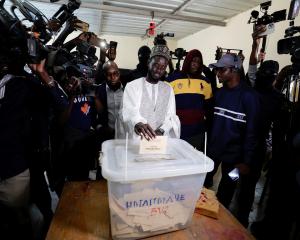
On one hand, there were the first truly free elections in modern Egyptian history. On the other hand, judges inherited from the old regime dismissed the lower house of parliament on a flimsy pretext, and then the Islamist president retaliated by ramming through a new constitution that entrenched conservative ''Islamic'' values against the will of more than a third of the population. Is this glass half full or half empty?
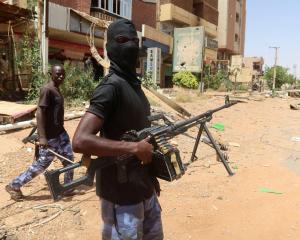
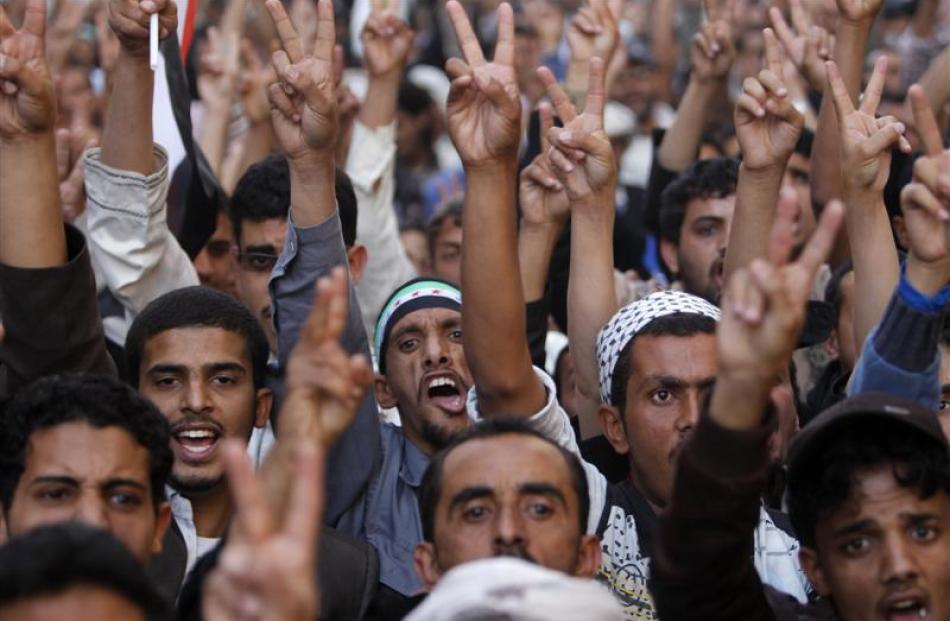
On one hand, Libyans managed to hold a free election even though the country is still overrun by various militias, and Yemen finally bid farewell to its dictator of 30-odd years. On the other hand, Syria has fallen into a full-scale civil war, with government planes bombing city centres and 40,000 dead. Did the ''Arab spring'' succeed, or did it fail?
Well, both, of course. How could it have been otherwise, in a world of fallible human beings? But the mould has been broken, and already half of the world's Arabs live in countries that are basically democratic.
The political game is being played pretty roughly in some Arab countries, but that's quite normal in new democracies - and in some older ones, too. In the years to come the transformation will deepen, amid much further turbulence, and most Arab countries will emerge from it as normal, highly imperfect democracies, just like most of the world's other countries.
The European Union staggered through a year during which the common currency of the majority of its members, the euro, tottered permanently on the brink of collapse. The financial markets have been talking all year about ''Grexit'', the expected, almost inevitable withdrawal of Greece from the eurozone, and speculating on which country would leave next.
It's a mess and Europe certainly faces years of very low economic growth. But the EU was always mainly a political project, intended to end centuries of devastating wars in Europe, and the euro was invented to reinforce that political union.
So the EU will survive, and will even recover its financial stability, eventually. It will also remain a major economic player in the world, although the centre of gravity of the global economy will continue to shift towards Asia. There is even reason to think that Asia's triumph will arrive somewhat later, and in a rather more muted fashion, than the enthusiasts have been predicting in recent years.
In the last months of 2012 China went through the 10-yearly ritual in which power is handed on to a new generation of leaders, and both Japan and South Korea elected new right-wing governments. North Korea, the nuclear-armed rogue state that lies between them, put its first satellite into orbit, thus demonstrating its ability to build long-range ballistic missiles. And China was almost continuously embroiled in border disputes with its neighbours (Vietnam, the Philippines, Malaysia) in the South China Sea.
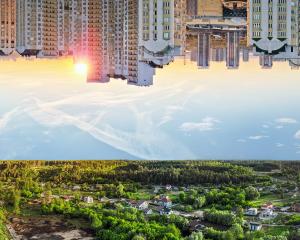
The world's drift towards global catastrophe due to climate change is becoming impossible to deny. This northern summer saw prolonged droughts and heat waves ravage crops from the United States Midwest to the plains of Russia, and soaring food prices as the markets responded to shortages in food supply.
This September, Arctic sea ice cover was observed to fall to its lowest level: and that was only half of the total area covered by ice in September 10 years ago. And October saw Hurricane Sandy devastate much of the US east coast, causing 100 deaths and more than $30 billion in damage. It was the second-costliest tropical storm in American history (after Katrina, in New Orleans, seven years ago).
Yet the global response is as feeble as ever. The annual round of global negotiations on cutting greenhouse gas emissions, held this month in Qatar, merely agreed nations would try to get some sort of deal by 2015. Even if they do, however, it won't go into effect until 2020.
So for the next eight years the only legal constraint on warming will be the modest cuts in emissions agreed at Kyoto 15 years ago. Moreover, those limits only apply to the old industrial powers. There are no limits whatever on the rise of emissions by the fast-growing economies of the emerging industrial powers in Asia, Africa and Latin America. Even lemmings usually act more wisely than this.
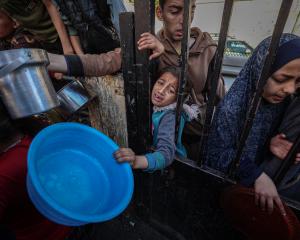
November brought a week of massive Israeli air and missile strikes against the Gaza Strip, allegedly in retaliation for Palestinian missile attacks against Israel, but the tit-for-tat has been going on for so long that it's pointless to discuss who started it. And nothing Israel does can stop the growing support for a Palestinian state: in late November the United Nations General Assembly granted Palestine non-voting observer state status by a vote of 138-9.
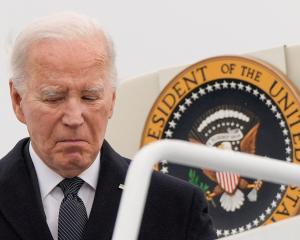
And then there's the United States, where Barack Obama, having accomplished little except health care reform in his first presidential term, was re-elected, anyway. The Republican candidate concentrated his campaign on Mr Obama's slow progress in overcoming the deepest recession in 70 years (which had been caused by the previous Republican administration), but just in time the numbers started to turn upward for Mr Obama.
The economic recovery will probably strengthen in the coming year (unless the United States falls off the ''fiscal cliff'' in the next week or so), and strong growth will give Obama enough political capital to undertake at least one big reform project. The highest priority is obviously global warming, but there is a danger that he will fritter his resources away on hot-button issues like gun control.
So much for the big themes of the year. There was also the usual scatter of promising changes, like Burma's gradual return to democracy, the start of peace talks that might bring an end to the 60-year-old war between Government and guerrillas in Colombia, and the return to the rule of law in growing areas of anarchic Somalia.
Similarly, there was a steady drizzle of bad news: the revolt by Islamist extremists that tore the African state of Mali in half in April, the pogrom against Burmese Muslims in July, and the police massacre of striking miners in South Africa in August.
Business as usual, in other words. 2012 wasn't a particularly bad year; if you think it was, you've been reading too many newspapers and watching too much CNN. Their stock-in-trade is crisis and tragedy, so you can always count on them to give you the worst news possible. It wasn't all that great a year either, but there'll be another one along shortly.
Gwynne Dyer is an independent London journalist.