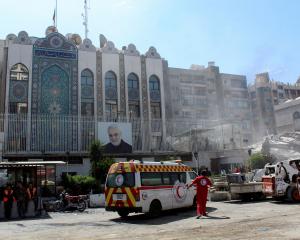
''We are making air raids the whole time,'' French Defence Minister Jean-Yves Le Drian said.
''They are going on now. They will go on tonight. They will go on tomorrow.''
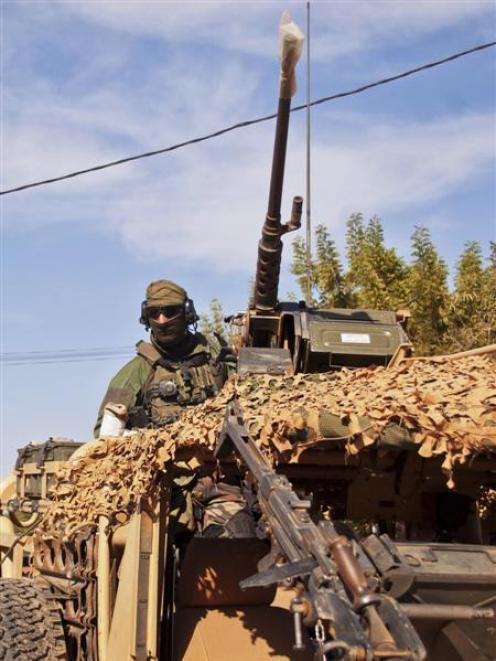
About 550 French combat troops are on the ground already, with up to 2500 more to follow. Contingents of soldiers from the neighbouring countries of Nigeria, Benin, Burkina Faso, Niger and Togo are scheduled to arrive as early as next week. It has turned into a real war.
It has also turned into a Western-run war in a Muslim country, despite the discouraging precedents of Afghanistan and Iraq. The Government of Mali asked for French help, and on Monday the United Nations Security Council unanimously supported France's military intervention. The army of Mali, such as it is, will theoretically be in charge of the war - but everybody knows the Malian army is useless.
In fact, the presence of Mali's army at the front is usually counterproductive, as it is brutal, militarily incompetent and prone to panic flight. The other African armies are of variable quality, but it is obviously French troops, and especially French air power, that will decide the outcome of the war. So has France bitten off more than it can chew? Is this going to end up like Afghanistan and Iraq?
The supporters of the war prefer to compare it with last year's Western military intervention in Libya, another French initiative that was decided over one weekend. They like that analogy better because the Libyan intervention ended tolerably well, with the overthrow of the dictator, a democratically elected government and no Western casualties. But the differences between Libya and Mali are greater than the similarities.
In Libya, the rebels were trying to rid the country of Muammar Gaddafi, a loony, friendless dictator, and create a democratic future. The decision to intervene was made in Paris in only two hectic days, when it appeared that Mr Gaddafi's mercenary troops were about to overrun Benghazi and massacre the rebels. Nato served as the rebel air force, but no Western troops fought on the ground. And it worked.
The West is supporting the Government, not the rebels, in Mali. That Government, behind a flimsy civilian facade, is controlled by the same thugs in uniform whose military coup last March, just one month before the scheduled democratic election, created the chaos that let the Islamist rebels conquer the northern half of the country. The young officers who now run the country are ignorant and violent, and having them on your side is not an asset.
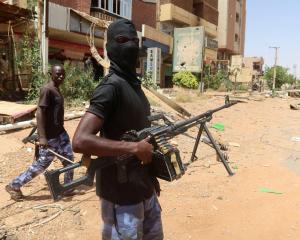
The Islamist rebels are fanatical, intolerant and violent, but they are well armed (a lot of advanced infantry weapons came on the market when Mr Gaddafi's regime collapsed) and they appear to be well trained. They have almost no popular support in 90%-Muslim Mali, whose version of Islam is much more moderate, but they have terrified the population of the north into submission or flight.
Until recently, the rebels seemed to be confined to Mali's desert north, but last week they began to advance into southern Mali, where nine-tenths of the country's 14 million people live. The Malian army collapsed, and Western intelligence sources estimated that the Islamists would capture the capital, Bamako, within two days. That would effectively give them control of the entire country.
Mali has long, unguarded borders with seven other African countries, and it is only 3000km from France. So President Hollande ordered immediate military intervention to stop the Islamist advance, and we'll all worry about the long-term consequences later. The next Western war against Islamist extremists has already started, and the question is whether it will end up like Afghanistan.
Nobody would like to know the answer to that more than the French. Except, of course, the Malians.
- Gwynne Dyer is an independent London journalist.