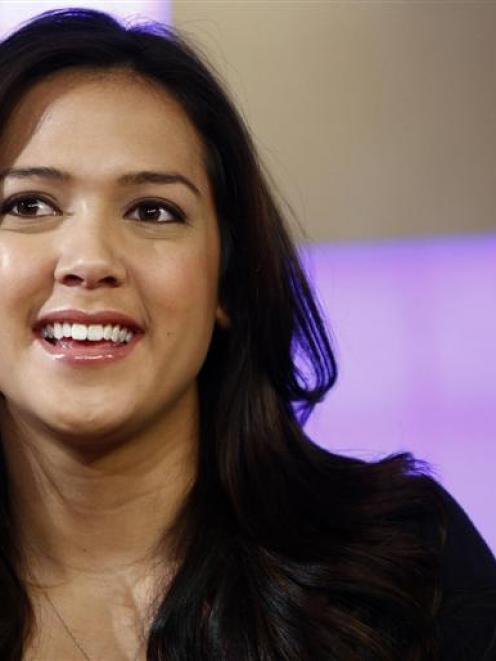
Earlier this month, when the website Deadspin.com broke the story of American footballer Manti Te'o's non-existent girlfriend, I heard from several friends, all with some version of the same message: ''That girl in the hoax photographs looks exactly like you.''
There was a reason for that. The photographs were of me, though I had no idea until the story broke that they had been used to create a false identity for a woman who never existed, Lennay Kekua.
Here's how it happened.
As someone in my mid-20s, I am of the generation that uses social media to connect with friends, family and business associates. Facebook, Twitter, Instagram: These are the ways we communicate. And like most of my generation, I didn't give a lot of thought to the word ''friend'' in the social media sphere. If someone sent me a friend request, more often than not I accepted it. As a result, I found myself with a lot of friends, including some I barely knew. One of them was a guy I had only a passing acquaintance with but who had gone to my high school.
I thought I had been careful with the privacy settings on my Facebook and Instagram accounts. I kept up with Facebook's privacy policies and took advantage of privacy tools. My private profile was not searchable by anyone who was not a ''friend of a friend''. I even limited access to photos of me that were posted by other people and tagged on my profile. And I made sure that every post and tag that was on my timeline was there because I allowed it to be there. But that wasn't enough. Even with restrictive settings, my wide circle of ''friends'' still had access to many pictures of me, and I had no control over what they did with those pictures.
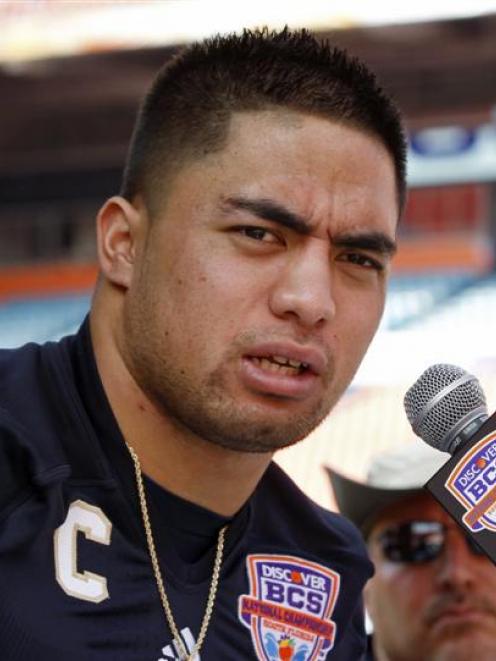
All that I've just described occurred without my knowledge, and I still can't quite believe it all happened. But looking back on it now, there are things I wish I'd done differently, even though the precautions I took exceeded those of many Facebook users.
A lot of the image theft would have been impossible if I'd been more selective about those I designated friends. Most of the photographs were simply copied from my postings by another social media user. But I also agreed after the man now suspected of creating ''Lennay Kekua'' asked me repeatedly to supply him with a photograph that wasn't on Facebook.
In a series of increasingly frantic messages in December, he asked me to get in touch with him, saying, ''It's an emergency'' and assuring me ''I'm not hitting on you''. When I finally did make contact, he told me that he was trying to cheer up his cousin, who'd been nearly killed in a car accident and was awaiting surgery for head trauma.
The cousin had seen my picture and thought I was pretty, and this man thought it would help his cousin's state to get a photograph of me. At the time, of course, I knew nothing of the whole Lennay Kekua affair, and, although I resisted several times, this man's story about his cousin made me feel guilty for not sending an innocent photo to a person awaiting surgery. So I sent a picture. He asked for others, but I sent no more.
I've shut down all my social media accounts. I realise that's not a long-term solution. I use social media to connect with a network of friends and family, and with business associates. I thought I was aware of the dangers and had done everything I could to protect myself. I now understand that the large corporations that control social media will never provide adequate protection by themselves. Users must take extraordinary steps to protect themselves.
Eventually, I'll go back to using social media. But I'll take an even more cautious approach. I'll have a new definition of who I agree to ''friend''. My friends will be those who I actually know and trust. There are a billion Facebook users, 140 million Twitter users and more than 90 million Instagram users. Some of them are predators. The face appropriated to be Lennay Kekua could have been yours just as easily as mine.
Ask yourself: Can you say for certain that pictures you've shared through social media have not been stolen to create another identity? A month ago, I might have answered that question 'yes'. If my story had not included a high-profile sports figure, I would probably have never known my image had been appropriated.
- Diane O'Meara is a media executive and consumer internet analyst and advocate based in Los Angeles. She wrote this for the Los Angeles Times.