Should public hospital cancer treatment have an unfunded - privately paying - stream? Mathew Zacharias offers a personal reflection on the debate.
In the past few days, several reports have been published in the Otago Daily Times on an Otago and Southland District Health Boards' discussion document to provide private treatment for fee-paying cancer patients when some treatments are not publicly funded.
It appears that our cancer specialists, those who have to deal directly with cancer patients, seem to support this concept.
As one would expect, the Labour Party and some of its affiliated unions and some others have objected to this recommendation by the health boards on the grounds that this would lead to inequality in the public health system.
Essentially, they are suggesting to those who are desirous of such treatments to get lost and to go somewhere else to get such treatments.
Superficially, this argument sounds logical: equality is an essential part of any well-functioning society.
Unfortunately, what is missing from the argument is a person's right to have all acceptable treatments when required.
What is equality without individual rights?
Let us put ourselves in the position of a person who has been diagnosed with a major cancer such as bowel cancer.
Tell him or her that there is a treatment, which will be of benefit and prolong life, but that such treatment is not funded and is not available in Dunedin hospital - in fact it is not available even in the private hospital in Dunedin.
Let us assume that this person is prepared to scrape up savings for the treatment because survival is important for the person and their family.
Let us tell that person the only option available is to go to a private hospital in Auckland, for a few days at a time, every three weeks, for six months, to receive the treatment, often an intravenous injection of chemotherapeutic agents under the supervision of experts.
Let us also hint that the only reason why such treatment cannot be delivered in Dunedin hospital is because of a political desire to proclaim equality in our health system.
What do you think that person would do? Accept that equality is more important than anything else or get the first plane to Auckland where the treatment can be administered privately?
I am sure many people with serious cancers would sympathise with this person's dilemma.
Most people with cancer may not be able to pay for additional treatments, but it is unlikely they would disagree with the choice to pay for the extra treatment.
Why can't the person have it in Dunedin, provided it is privately funded and does not directly interfere with treatment of other cancer sufferers?I have to admit that this is, in fact, a personal story: I am the person who was told three years ago that I had to go to Auckland for additional treatment for my bowel cancer because the rules did not permit me to have such treatment in Dunedin hospital.
The then minister of health was in no mood to break the code of equality in the health system, even though his department was unable to provide the treatment which many considered standard follow-up treatment for bowel cancer at that time.
The good part of the story is that the Dunedin Hospital management quietly overruled the minister and his department and allowed me to have the treatment in Dunedin hospital, provided I paid for everything and had the treatment after hours.
I wonder whether all those individuals objecting to this type of arrangement for cancer patients have ever thought about the possibility that it could be them one day?As far as I am aware, New Zealand is one of very few countries where fee-paying patients are not allowed anywhere near the entrance to a public hospital.
I am afraid there is very little to show for that in our hospitals.
The waiting lists and treatments are managed much better in most other countries where there is a public-private partnership in existence.
Those who insist that private treatment should not be offered in public hospitals should also insist that all modern treatments should be made available in the public hospitals; otherwise they are living in a socialistic utopian society.
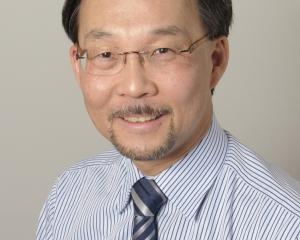
Dr Mathew Zacharias is a specialist anaesthetist at Dunedin Hospital.