And each autumn when he heads home, he takes some cash to help pay for his children's education and some solar panels so Vanuatan children have light to read by at night.
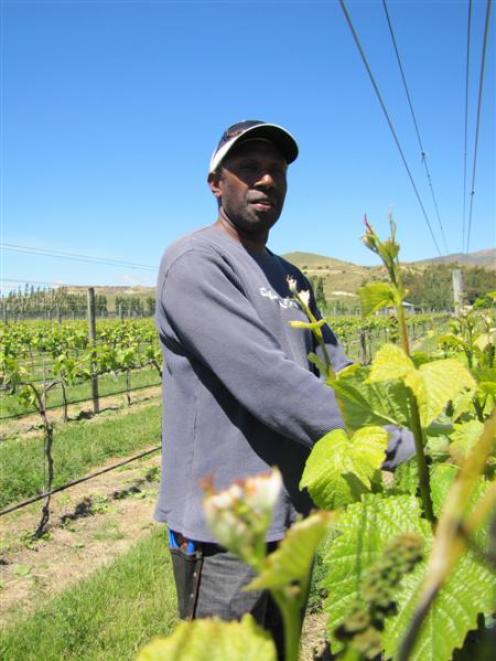
Mr Bumseng is one of 240 migrant workers from Vanuatu who come to Central Otago each year - about 13% of Central's seasonal labour force.
He says he likes the region's fruit and is happy with his accommodation and pay, but he is less enthusiastic about the weather. Even on a warm summer's day, Vanuatans wrap up.
''Back home it's hot but not too dry. It's humid. The weather has been a big change for us, especially when we are approaching the winter here. It's just a bit cold for us.''
And food-wise, he says, they miss the yams and taro. Mr Bumseng has lived in Port Vila (population 44,000) for many years but is originally from Vanuatu's fifth-largest island, Ambrym, an active volcano with a population of 8000.
He says the main crops there are kava, coconuts, taro, yams, bananas, mangos, pawpaw, grapefruit and vegetables, and some table grapes are being grown now, as well.
Mr Bumseng is one of 40 Ambrym men working in Central Otago, many of them regulars.
He says they all know that if they want to continue coming to New Zealand, they must be disciplined, particularly when it comes to alcohol.
''Alcohol has been one of the issues with the Vanuatan people working here because some of them can't control the alcohol.
''It's up to the boys, but if you are coming, you must be able to behave yourself.''
That's not to say some of them do not enjoy sampling the vintage in moderation.
Since 2007, University of Otago anthropologist Rochelle-lee Bailey has been studying a group of 22 Vanuatans here under the ''recognised seasonal employment'' scheme and has also spent time on Ambrym, where most residents live a subsistence life, with few chances to earn cash.
After a season in Central Otago, the workers can return home with more than $10,000 and Ms Bailey says the ''No1 goal'' is to pay for their children's education.
''That wouldn't happen without this opportunity, they have told me.''
Mr Bumseng says Vanuatans also take home tools, such as chainsaws, they can use to set up their own businesses.
Ms Bailey says the men are permitted to work only six days a week but would like to work seven.
''They want to work the big hours to earn the big money.''
Ms Bailey says her group takes a break from viticulture work to help pick cherries around Christmas and is now regarded as ''part of the landscape'' in Central Otago.