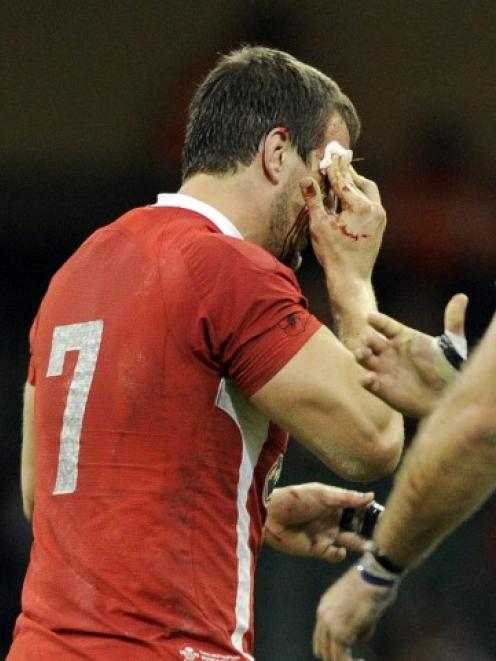
At first glance things might look rosy as Wales have won three Six Nations Grand Slams in eight years, reached the World Cup semi-finals 13 months ago playing an exciting brand of rugby and have a union that recently announced a record turnover of 63 million pounds.
However, behind that shiny edifice the game in the principality is crumbling, with a top-level player exodus, a "financially unsustainable" and poorly performing regional structure and an erosion of grass-roots interest that seriously threatens a sport which once prided itself on being the binding glue of the nation.
"The national game is on a high but domestically we are really floundering," Norster told Reuters in an interview at the Rugby Expo at Twickenham on Wednesday.
"We urgently need to find a better balance between our national game and the domestic front which is struggling for its very survival. The national team will always be the cash cow but in some ways we've become a group of functional chimneys trying to do our own thing. We need a complete restructuring."
Norster's comments come in the wake of a report by Price Waterhouse Cooper released last week that painted a damning picture of the sport in Wales and said the current system of four regional teams "is not sustainable without continued additional funding from benefactors or alternative funding sources."
PWC said the global economic downturn had hit the regions hard but also said that poor management of the Newport Gwent Dragons, Cardiff Blues, Scarlets and Ospreys and the country's history of political infighting was harming their chances of progress.
The report's conclusions came as no surprise to Norster, who has been closely involved with Welsh rugby all his life. A former Wales captain with 34 caps in the 1980s plus another three for the British and Irish Lions, Norster was Wales team manager for four years and spent another 10 as CEO of Cardiff, latterly the Cardiff Blues.
Now working for Engagesport LLP on the business side of the sport, Norster says everyone involved needs to overcome decades of enmity and work together.
"The game is rife with politics and always has been," he said. "We are somewhat tribal and parochial in Wales but we have got into a position that we need to rectify.
"The self-imposed salary cap might have stopped us haemorrhaging funds but it also makes the teams uncompetitive.
"However, it's not just a straight question of resources as there is no point throwing extra money at an environment that isn't geared to do anything other than spend it on larger more expensive squads.
"We need an executive board with an independent chair. The idea of a union of clubs is a bit antiquated but it still has a power to it and to be answerable to 250 or 300 clubs has a certain honesty. But I think the time has come to separate the sharp end of the professional game and the constitutional side.
"Maybe we can achieve that but we need to do it without throwing the baby out with the bathwater by alienating the grass roots of the game."
Welsh fans have never really taken to the artificially created regions foisted upon them nine years ago as in some cases clubs with a century of rivalry were effectively merged.
Those new teams have struggled to compete with the Irish regions, who in contrast have been operating since the 19th century and attract a fiercely loyal following, or the French and English clubs.
Somehow, despite those problems, the national team has enjoyed a boom period but, with the added threat of a growing soccer presence in the country, the signs are ominous.
"With Swansea into the Premier League and Cardiff getting close, our two biggest cities, that puts even greater squeeze on our youngsters," said 55-year-old Norster.
"We've also seen too many top players go overseas and there are a lot more under pressure to join them. I don't think we'll ever stop the top slice going to places like the south of France but it's when you start to lose a generation of players, and a young generation, that we will be in trouble.
"We have always had kids living the dream of playing rugby for Wales and we've had some great role models," he said.
"But we need to work very hard to ensure that continues and that means everybody recognising there is a problem - a problem that will eventually impact massively on all aspects of the game - and working together to solve it."